Microsoft revamps Copilot with new tools and frontier models
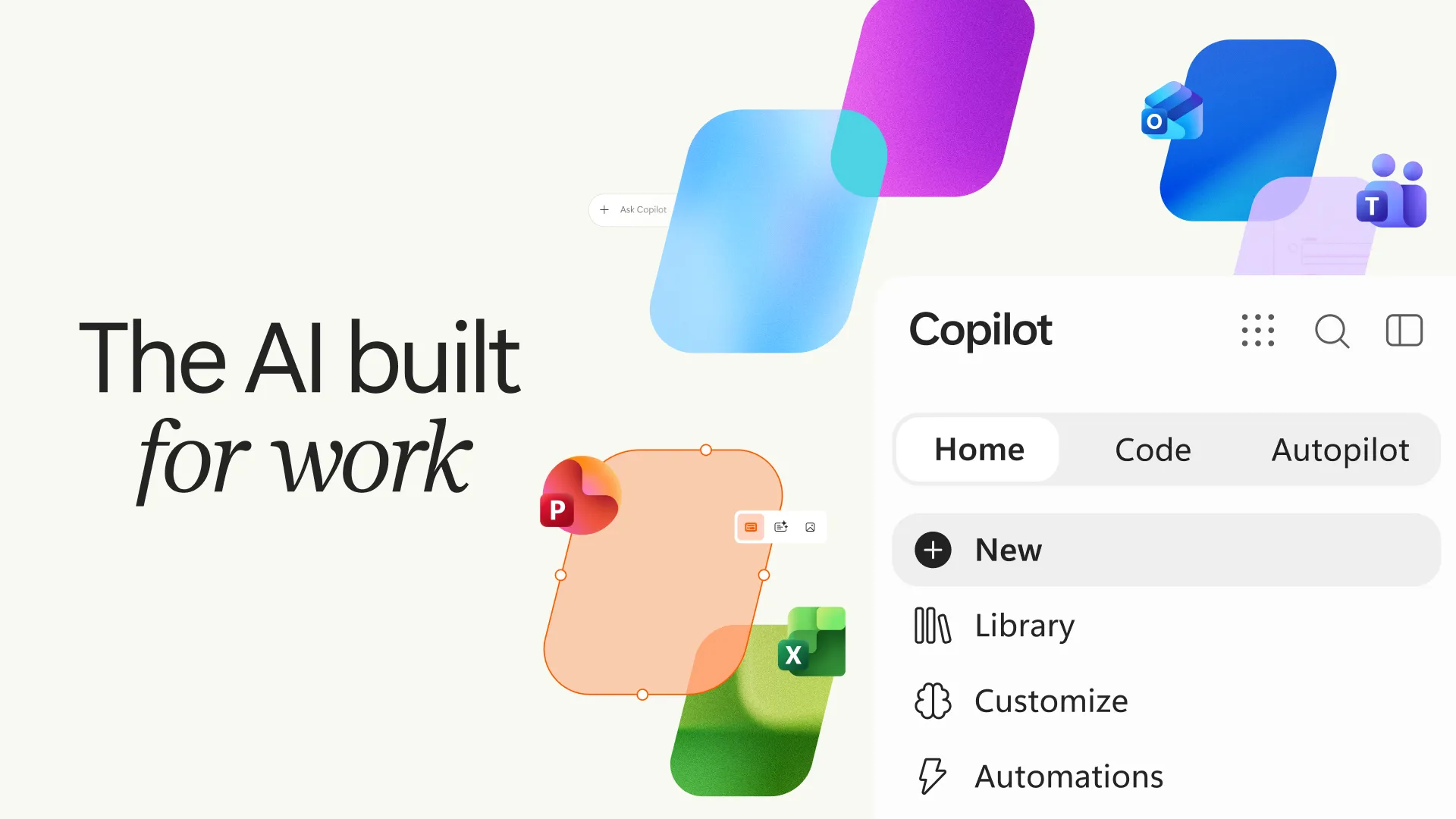
Copilot Evolves: Microsoft Unleashes a New Era of Agentic Business Tools
Microsoft is not just updating its AI; it is fundamentally reshaping the landscape by transforming Copilot from a single chat feature into a suite of specialized tools designed specifically for the modern workplace. This evolution positions Copilot to act less like a chatbot and more like a comprehensive digital assistant, blending conversational intelligence with practical, autonomous execution.
The new architecture divides Copilot into three distinct, powerful sections: Home, Code, and Autopilot. This segmentation allows the AI to tackle different professional challenges, ensuring that whether you are managing a calendar, writing code, or coordinating a team, you have a dedicated workspace for each task.
At the core of the professional experience is the Home area, which serves as the new starting point for organization. Here, Copilot merges chat and coworker functionality, integrating seamlessly with Office applications like Teams threads, calendars, and Outlook. Users can now command Copilot to build slides, model spreadsheets, and draft complex documents, effectively keeping entire projects aligned and streamlined.
For developers and coders, the Code section addresses the need for sophisticated coding assistance. Building on the foundation of GitHub Copilot, this area embraces the idea of “vibe coding” and creating small applications as accessible as writing a memo. Crucially, this is delivered within a secure, sandboxed environment. Through Microsoft’s new Copilot Managed Runtime, enterprises can host their code within their existing Microsoft 365 environment, with Microsoft managing the execution.
Perhaps the most revolutionary shift is the introduction of Autopilot, a rebranding of the previous Scout agent. Autopilot represents a semi-autonomous digital teammate that can be named and instructed to perform recurring tasks independently. Designed for workflow efficiency, Autopilot is capable of handling advanced work, including building complex schedules, managing meetings, and proactively reaching out to team members across an organization.
Underpinning these capabilities is Microsoft IQ, an intelligent framework designed to establish a clear business context, ensuring that all agents operate with organizational context in mind. Furthermore, the system is flexible in its financial structure. Organizations can leverage usage-based billing to select which powerful models—including those like Astra and Fable—they want to deploy, optimizing for accuracy, speed, and cost management.
While some may find the focus on enterprise functionality less immediately flashy for individual enthusiasts, this strategic overhaul signals Microsoft’s serious commitment to making AI the most popular and practical tool for business operations. It is a powerful move toward turning AI capabilities into indispensable, autonomous business agents.
Buy on Amazon
Credit
