Modder shifts GPU location for 19 degree cooler hotspot
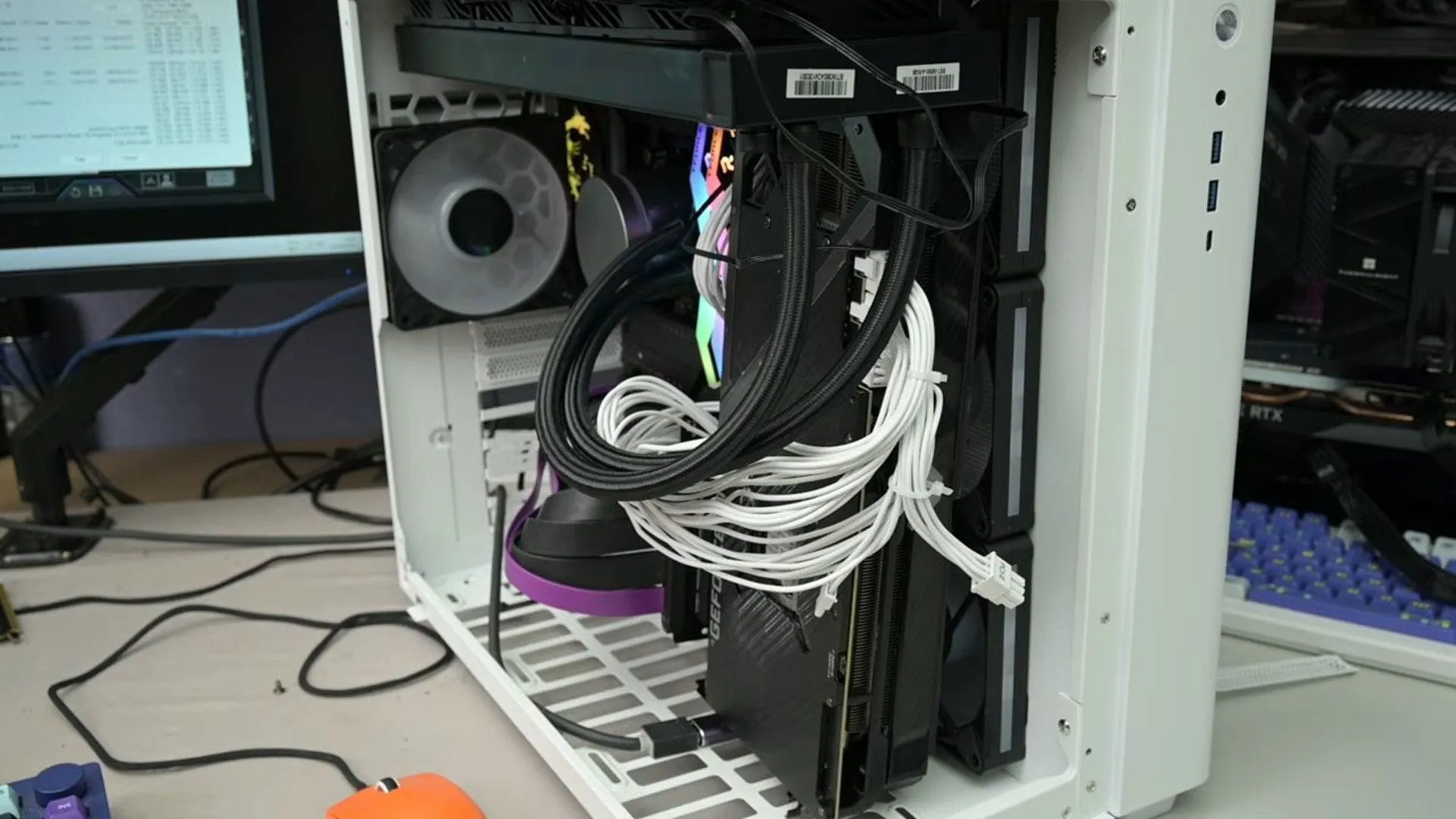
In the world of high-performance computing, cooling is often treated as a fixed variable, dictated by convention. Yet, for enthusiasts pushing the limits of hardware, the rules are often suggestions. This latest exploration into PC thermal management demonstrates that simply following the established norms might be holding back true performance—or at least, true temperature control.
A notable figure in this pursuit is the modder known as TrashBench, who recently embarked on an ambitious experiment designed to challenge accepted practices regarding GPU and CPU placement. The goal was simple: optimize thermal performance by completely ignoring conventional guidelines and simply moving the components around.
The initial setup was conventional: a baseline system featuring a 360mm All-in-One (AIO) CPU cooler and an RTX 3080 GPU slotted directly into the standard PCIe expansion slot. With this baseline established, the test began with the thermal load running constantly, simulating real-world performance benchmarks.
The experiment started by pushing the boundaries. TrashBench began moving the GPU, testing configurations where the graphics card was positioned at the bottom of the case or shifted to the side, attempting to find a thermal advantage. The initial results were mixed; while some arrangements yielded impressive reductions in GPU hotspot temperatures, they often came at the expense of the CPU’s thermal health.
However, the quest for the perfect thermal balance led to a crucial discovery. After testing various unconventional arrangements, the enthusiast pinpointed a sweet spot configuration. This optimized layout managed to deliver a significant cooling benefit across the board, achieving a 14°C reduction in GPU hotspot temperatures while simultaneously achieving a 3.3°C cooler CPU.
This finding proves that the relationship between components and cooling systems is far more nuanced than simple placement. The ultimate winning configuration involved mounting the CPU vertically against the side intake fans, while the CPU AIO cooler radiator was configured for traditional exhaust. This balance created a harmonious flow of air that maximized efficiency.
To achieve these dramatic repositioning feats, specialized equipment proved essential. The use of PCIe riser cables was a key element in enabling these creative arrangements, allowing components to be shifted freely within the chassis to find their ideal thermal zone.
The takeaway from this innovative testing is clear: when fine-tuning performance and cooling, established norms can be ignored in favor of bespoke solutions. For the next generation of builders, the lesson is that thermal mastery isn’t just about powerful components; it’s about understanding how those components interact with their environment.
Buy on Amazon
Credit
