MSI Katana 15 HX Gaming Laptop Review
The provided text contains data and analysis comparing three different laptop configurations: MSI Katana 15 HX, Lenovo Legion 5, and Asus TUF Gaming A16 (which features a Ryzen 7 260).
Here is a structured summary of the key data points and conclusions presented in the text:
—
1. Performance and Index Scores (Procyon Data)
This section compares the overall performance metrics based on a gaming benchmark.
2. System Performance and Thermal Data
The text analyzes the thermal performance of the three systems.
Average and Maximum Temperatures (°C)
GPU Frequency and Power
3. Battery Life Comparison
This section compares the long-term gaming endurance using the PCMark 10 gaming test.
4. Qualitative Review Summary
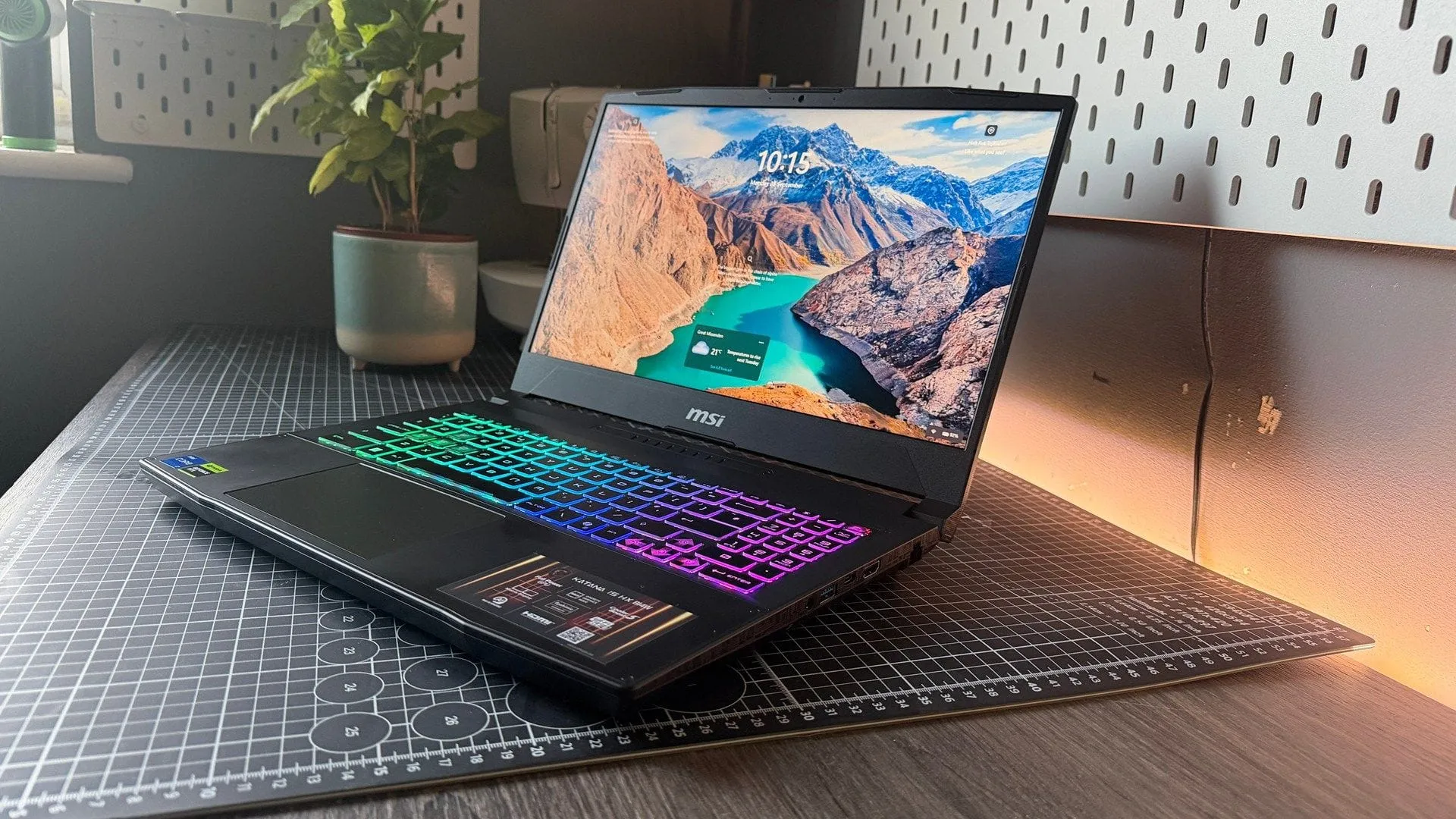
Aesthetics (MSI Katana 15 HX):
The design is seen as very much gaming-focused, featuring hexagonal bezels and ostentatious keycaps (including semi-transparent keys).
The reviewer notes that this design might be less suitable for a professional environment compared to simpler square/rectangle designs.
Software (MSI Katana 15 HX):
MSI’s software suite is deemed genuinely impressive, offering a centralized hub for multi-profile setups, Mystic Light control, and hardware monitoring.
The reviewer advises uninstalling pre-installed antivirus software (like McAfee) to free up system resources, recommending Windows Defender instead.
Battery Life Conclusion:
The reviewer expresses dissatisfaction with the battery life, noting that the MSI Katana achieved only 71 minutes.
The Asus TUF Gaming A16 (with Ryzen 7 260) performed the best in terms of endurance, achieving 112 minutes.
The review concludes that while the MSI system performs well, the need for better battery life exists, especially when compared to the potential performance advantages of the competitor models.
Buy on Amazon
Credit
