Museum builds supercomputer replica from 30 Mac minis
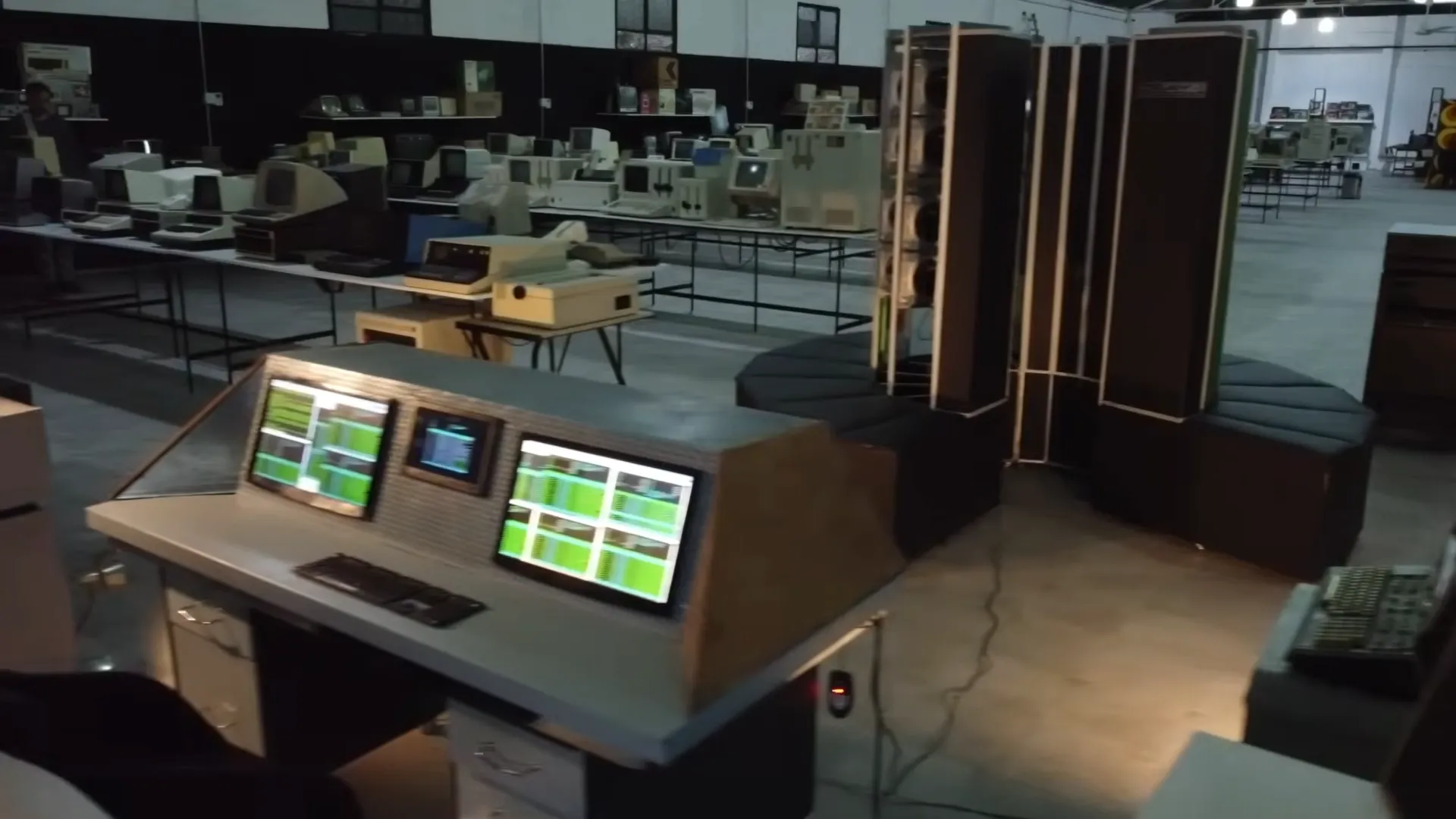
What happens when you marry obsolete hardware with audacious ambition? At the Museo de Historia de la Computación in Spain, the answer is a spectacular fusion of history, ingenuity, and cutting-edge performance. The museum recently turned a collection of forgotten machines into a functional supercomputer, proving that sometimes, the greatest power lies in resurrecting the past to build the future.
The project aimed to bring the legendary Cray-1 supercomputer—a pioneer in high-performance computing debuted in 1976—back to life. Rather than relying on brand-new silicon, the team opted for a wonderfully creative approach: they harnessed the power of 30 Mac Minis dating between 2012 and 2014 to resurrect the classic machine.
This wasn’t just a simple nostalgic display; it was a complex computational ballet. The Mac Minis were tasked with collaborative work, leveraging MacOS’ Message Passing Interface to seamlessly hand off computing tasks across the cluster. By pooling the power of five quad-core i7s and twenty-five dual-core i5s, the setup achieved an impressive 1.5 teraflops during testing.
The result is a fascinating intersection of old and new. While the underlying components were vintage, the operational system was modern, allowing the project to showcase how much computational progress has been made over the decades. This homage perfectly captures the spirit of innovation, remembering the origins of high-performance computing while pushing the boundaries of what is possible today.
The physical setup itself was a masterclass in clever engineering. The Mac Minis were housed in a unique “natural convection ventilation system” that managed temperatures effectively without mechanical fans, ensuring a cool, quiet environment within the museum space. Despite this sophisticated cooling, the team noted that the primary source of noise came from the two gigabit Ethernet switches, which emitted a manageable level of sound.
The control room for this computational marvel was equally charming. Everything was managed via a vintage-looking terminal that housed a Raspberry Pi running classic environment emulators and a cluster manager. At the heart of the operation was a Mac Mini, orchestrating the distributed computing tasks across the entire system.
This exhibition, which is already a permanent fixture, is far from complete. The team is now looking to build upon this foundation, seeking to crowd-fund the addition of about 80 more M4 Mac Minis. The ultimate goal? To construct a truly modern supercomputer capable of competing on the Top500 list, effectively turning yesterday’s relics into tomorrow’s computational titans. It’s a brilliant reminder that sometimes, the most powerful leaps forward come from giving old hardware a fresh lease on life.
Buy on Amazon
Credit
