New launcher starts 46% faster than Steam
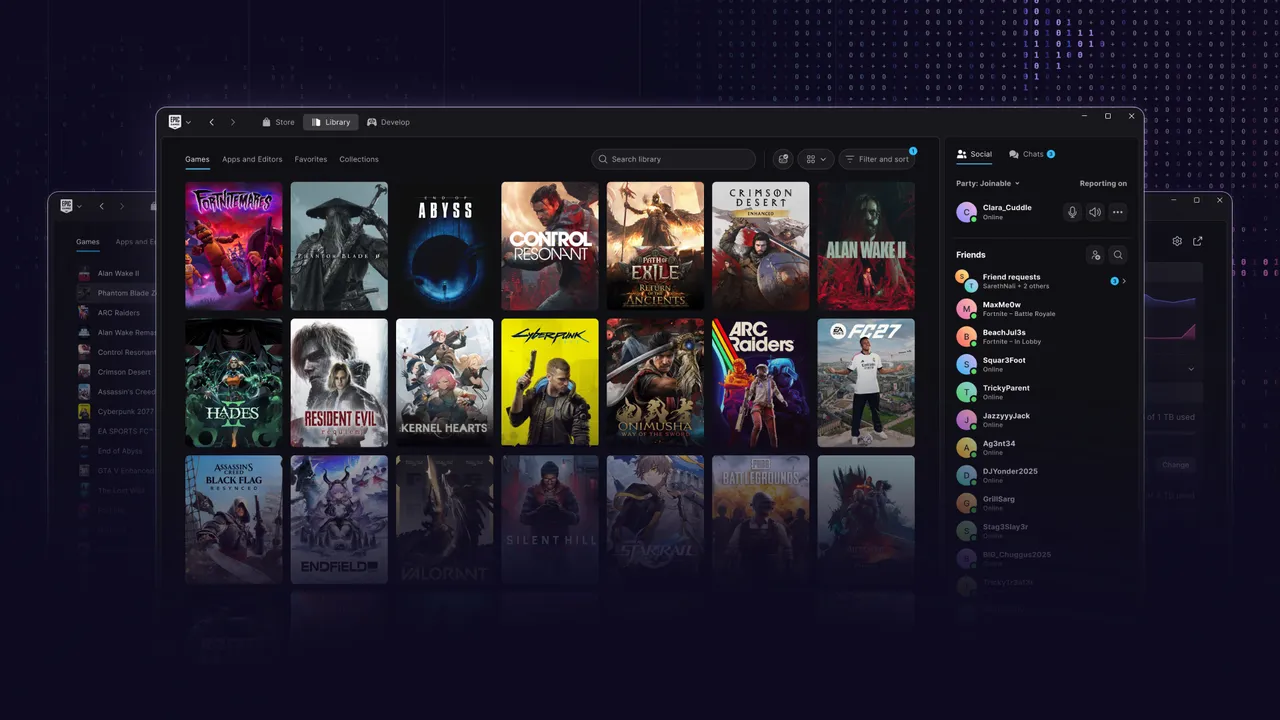
Epic Games has just dropped a seriously redesigned experience, tossing the old launcher aside and ushering in an era where software development is supposedly guided by intuition rather than endless coding. Dubbed the new Epic Games Launcher, the update is built on an AI-inspired philosophy, claiming the developers simply “vibe coded” the new interface for a smoother, more responsive journey.
The promise of speed is the headline. Epic Games asserts that the revamped launcher is significantly faster than its predecessor, boasting a staggering 46% faster startup time compared to Steam. This performance leap, which includes a modest 14% improvement when restoring from the system tray, is a testament to the company’s focus on optimization. Testing for these impressive benchmarks was commissioned by Keywords Studios, who helped gather data across 13 different Windows platforms.
Beyond the lightning-fast startup, the new launcher isn’t just about speed; it’s about organization. Epic has integrated several features previously found across different platforms, creating a unified hub for the user. This includes dedicated pages for games within the library, a centralized downloads section, and a robust collections feature—a nod to the powerful organizational tools users expect from platforms like Steam.
For competitive players and developers alike, these organizational improvements aim to simplify the massive task of managing a digital library. The goal is to make the library itself feel as streamlined as the game worlds housed within it, promising a library that is supposedly 30x faster to navigate.
However, as with many ambitious launches, the new launcher is still in the preview phase, and critics note that while the speed is stellar, some elements feel unfinished. The new social menu, for instance, follows the user from the store to the library without any obvious option to close or resize, raising questions about user control and interface design.
Furthermore, Epic has acknowledged that the experience is not yet perfectly aligned across the board. The company is actively working toward “feature parity,” recognizing that certain social features and account management options are still missing from the new application. This suggests that while the aesthetic and performance have been radically overhauled, the deep functionality is still under construction.
Despite these growing pains, the launcher is now available for download on Windows, macOS, and Linux, supporting modern operating systems. Epic Games is clearly signaling a shift, positioning itself as an AI-first company, a pivot that aligns with broader industry trends where developers are exploring how artificial intelligence can streamline the arduous process of creation. As Epic continues to gather feedback, the next phase will focus on refining the features to ensure that the “vibe coded” experience is not just fast, but fully functional and perfectly polished.
Buy on Amazon
Credit
