Noctua explores 2000W micro-channel cooling
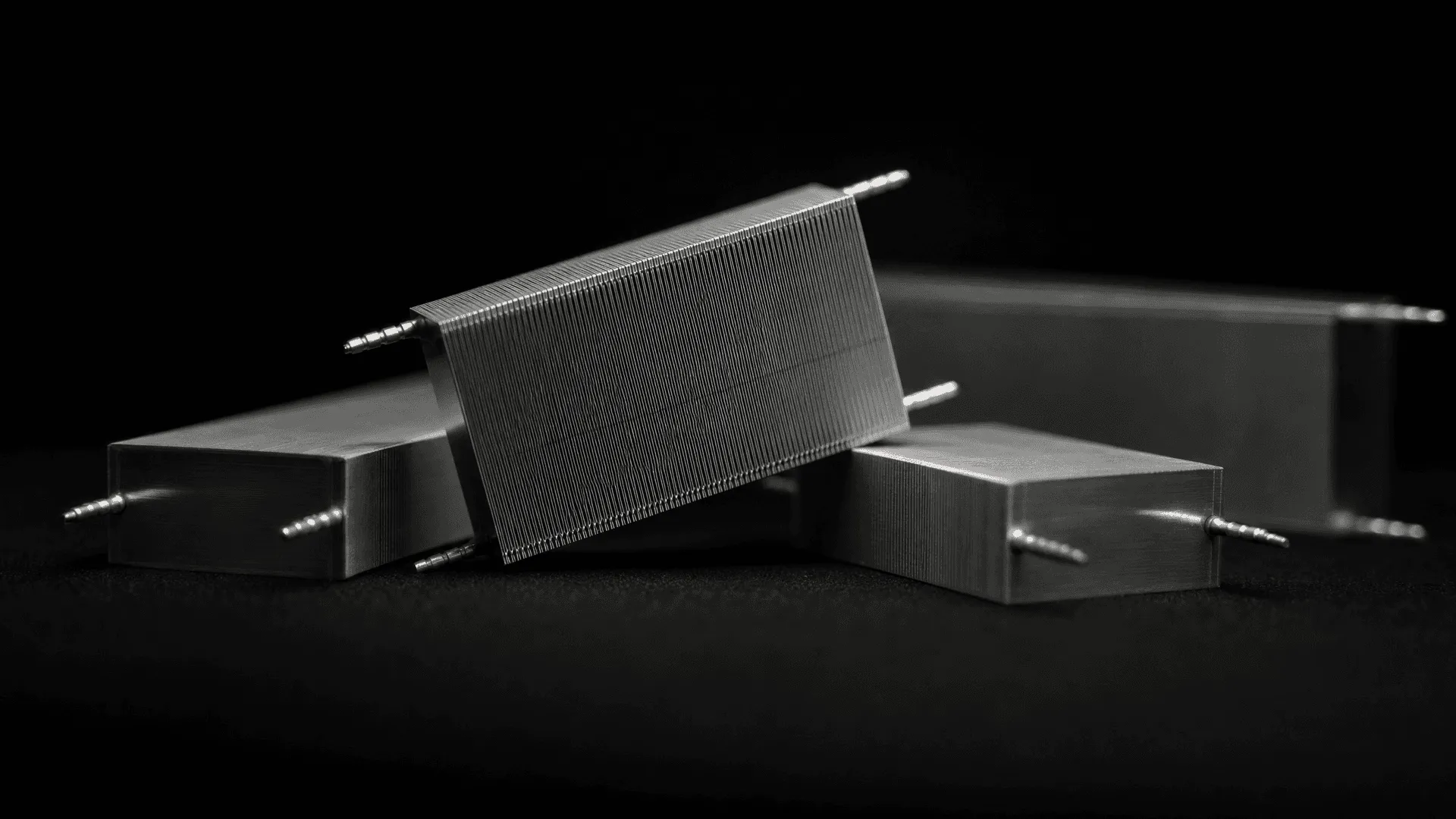
The quest for the ultimate PC cooling solution is entering a thrilling new phase. Leading PC fan legend Noctua is joining forces with Forced Physics DCT to tackle one of the toughest engineering challenges in thermal management: adapting revolutionary technology for the desktop.
At the heart of this collaboration is JouleForce, a cooling method that promises to redefine how heat is managed. Moving beyond traditional air and liquid cooling, JouleForce utilizes densely packed micro-channel arrays. This geometry is ingenious; it eliminates the boundary layer that usually forms on cooling surfaces, allowing heat to be extracted along the entire length of the channels. In theory, this innovation can handle over 2000W of thermal energy using only air, potentially ushering in a new era of efficiency.
However, moving this advanced technology from the laboratory to the desktop presents a significant hurdle. While the cooling method itself is powerful, the micro-channel arrays currently suffer from extremely high pressure drop—an order of magnitude greater than what conventional PC fans can handle. In their current state, activating JouleForce requires powerful, industrial equipment like blowers or vacuum pumps to push air through the system.
This is where the magic of partnership comes in. Noctua, renowned for crafting some of the world’s most performance-driven PC fans, brings invaluable expertise to the table. The collaboration aims to find ways to overcome these airflow and acoustic challenges. The goal is not just to make the system work, but to make it whisper-quiet—a goal that aligns perfectly with Noctua’s philosophy of superior thermal performance and minimal noise.
Roland Mossig, CEO of Noctua, noted that this challenge is a demanding, long-term engineering task. “The pressure levels this technology requires in today’s implementations are currently supplied by equipment nobody would want on or under their desk, so this is a demanding, long-term engineering task – and one that we are eager to tackle,” he stated.
Currently, the project remains in the early research stage. Both companies are focused on investigating how to reduce the necessary pressure or generate the required static pressure without sacrificing the quiet operation desktop users demand. If they succeed in cracking the complex airflow and acoustic puzzle, JouleForce could very well transform the landscape of desktop PC cooling. Should this adaptation be realized, Noctua would establish a formidable advantage in the heatsink manufacturing market.
Buy on Amazon
Credit
