Nvidia launches 64GB DGX Spark to end the AI RAMpocalypse
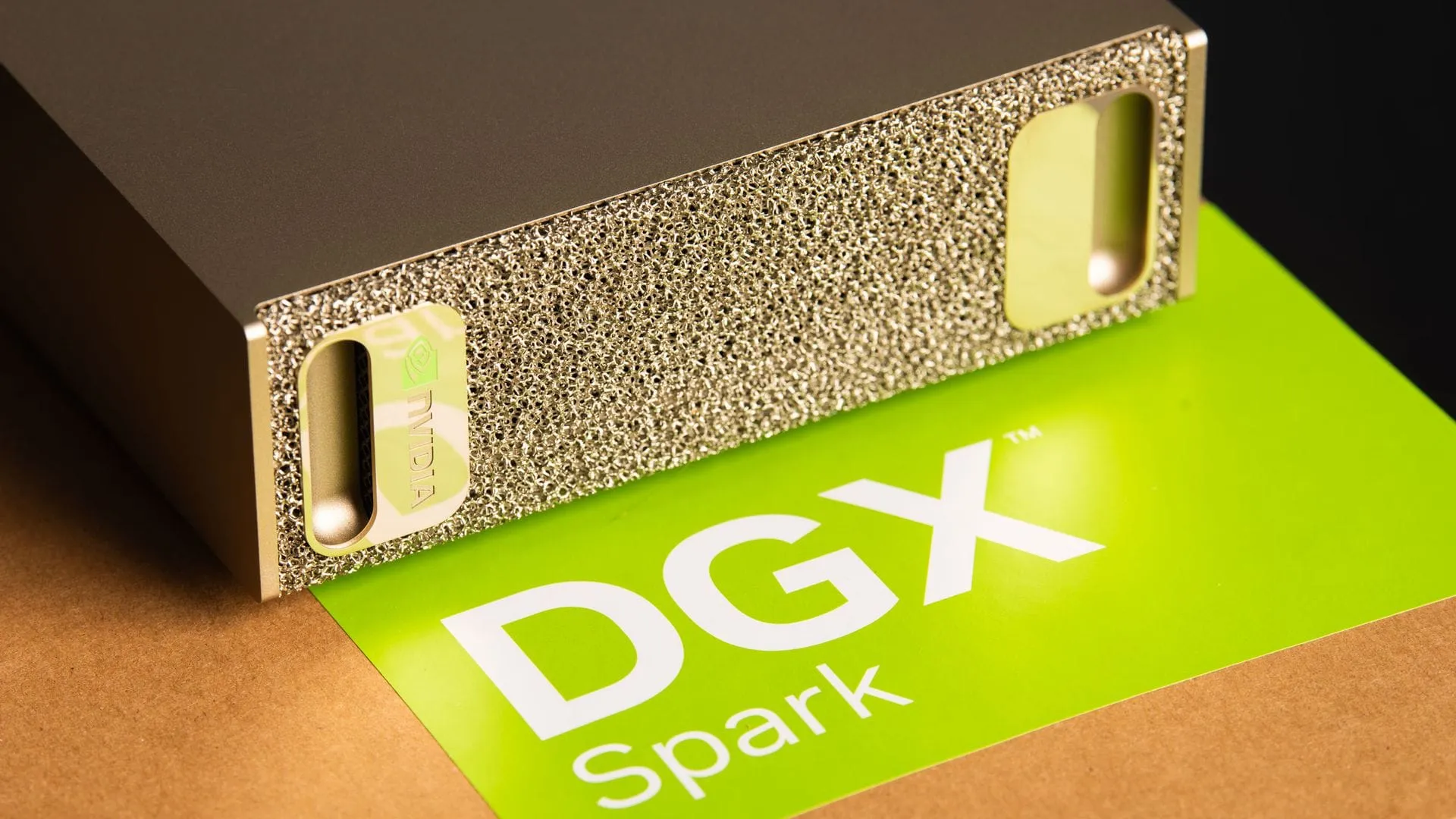
The race for true local artificial intelligence isn’t just about raw compute anymore; it’s about making powerful AI accessible and affordable for the innovators building the next generation of models. Nvidia is stepping up to the challenge by rethinking its popular DGX Spark platform and the GB10 SoC, tailoring them to fit the real-world demands of today’s AI landscape and the persistent global silicon supply crunch.
For a long time, the industry operated under the assumption that immense memory was the ultimate bottleneck. Systems built around unified memory architectures, whether leveraging AMD’s Strix Halo, Nvidia’s GB10, or Apple’s M-series chips, were expected to offer 128GB or more of memory to handle the most complex models. However, the pace of AI development has proven that this assumption is shifting. Highly intelligent dense models, such as the Qwen 3.8 27B, can now comfortably fit within 32GB of RAM, provided they are paired with efficient software and inference engines.
This shift has created a pressing economic reality: when RAM prices continue to soar, forcing users to pay a premium for expensive LPDDR5X memory, excessive capacity becomes a financial barrier rather than an asset. Nvidia recognized that for many local AI trailblazers, the need isn’t for 128GB of RAM, but for the core processing power and the supportive software stack of the GB10 Superchip.
To address this, Nvidia is introducing a more accessible 64GB version of the Spark. This move offers a budget-friendly entry point to the powerful GB10 ecosystem, targeting enthusiasts who need powerful local AI capabilities without the memory overhead.
The competition is already heating up. These more affordable 64GB Spark systems, offered by manufacturers like Acer, Asus, Dell, Gigabyte, HP, and MSI, are slated to launch on October 23, starting at a competitive price point of $4999. Given the current volatility in memory and storage pricing, this pricing positions the 64GB option as a significant advantage over the current market, especially compared to the estimated $7000 to $9000 price tag for 128GB systems currently available.
Despite the reduction in memory, the core performance remains robust. The 64GB Spark systems retain the high-speed ConnectX 7 RDMA NIC, ensuring that users can still cluster these systems together to boost collective memory and inference performance when needed. Furthermore, the powerful 20-core Arm CPU complex and the impressive 273 GB/s of shared memory bandwidth carry over unchanged.
Beyond the hardware, Nvidia is bolstering the software ecosystem to make clustering and model deployment seamless. A new tool called the Nvidia Sync Cluster Assistant simplifies the complex process of yoking multiple Sparks together, automating connectivity and management. This is supported by the existing Sync application, which allows users to leverage their Spark’s AI horsepower across various Macs and PCs.
The innovation doesn’t stop at connecting hardware. Nvidia is also adding a feature to Sync called Model Launcher, which automates the download and startup of large models—like the Qwen 3.8 27B—and links them directly to the OpenCode browser-based coding agent. This empowers users to immediately start utilizing local token factories for agentic workflows, accelerating the journey from hardware to high-level AI application.
Ultimately, the evolution of the DGX Spark lineup reflects a smart pivot: while the 128GB models remain essential for heavy model fine-tuning and large-scale clusters, the introduction of the 64GB option provides local AI enthusiasts with a vital choice. It ensures that the incredible power of the GB10 architecture is not reserved only for the largest budgets, but is available to anyone ready to explore the rapidly evolving world of local, powerful artificial intelligence.
Buy on Amazon
Credit
