Nvidia NVLink powers Apple’s next-gen M8 Ultra AI servers
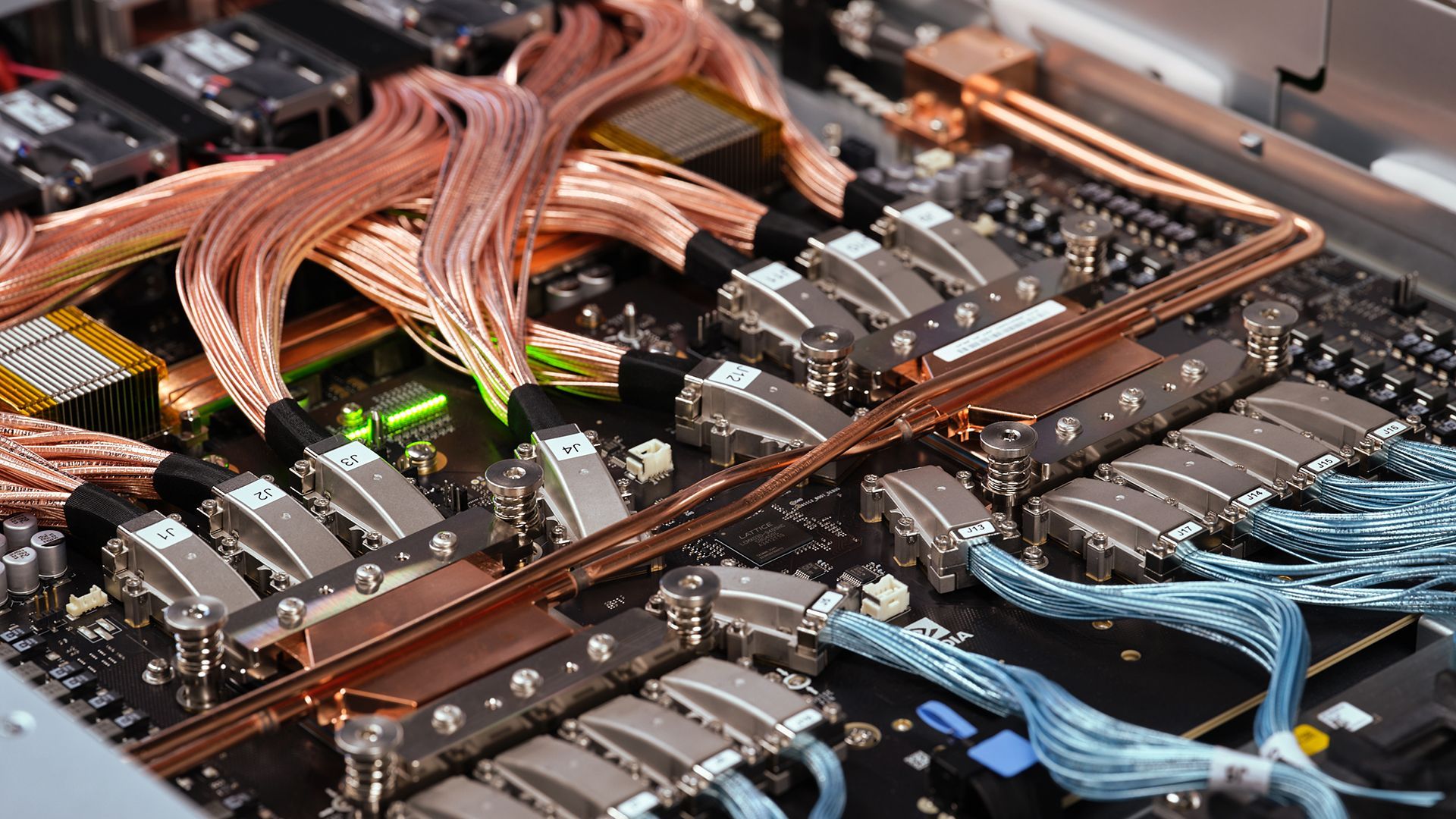
Apple Eyes Nvidia for AI Superhighway in Data Center Race
As the world accelerates into the age of advanced artificial intelligence, the backbone of the operation is the hardware. And right now, the titans of silicon—Apple and Nvidia—are quietly exploring a powerful alliance, looking to merge their cutting-edge chip designs with scalable data center infrastructure. Reports suggest that Apple is seriously evaluating Nvidia’s interconnect technologies, including the ambitious NVLink Fusion platform, to build the next generation of AI servers.
This isn’t just about faster graphics; it’s about solving the massive architectural challenges of scaling up computational power. Apple, long known for its integrated System-in-Package (SiP) approach, has developed proprietary solutions like UltraFusion to stitch its M-series processors together seamlessly. However, when scaling out multiple powerful processors into large clusters—the environment required for demanding AI workloads—the need for a robust, standardized fabric becomes paramount. This is where the complexities of Nvidia’s NVLink come into sharp focus.
The reported vision involves custom-built server configurations, potentially utilizing future M8 Ultra processors, which could arrive as late as 2029. Apple reportedly is considering systems that might feature two or four of these powerful chips, demanding an interconnect solution far beyond what internal Apple technologies currently offer for large-scale deployment. This is the crucial gap: Apple needs a method for scale-up and scale-out connectivity that transcends the limits of its existing internal standards.
The potential solution lies in leveraging Nvidia’s ecosystem. While NVLink is optimized for tightly coupled, scale-up performance—linking accelerators together—the broader data center demands scale-out networking, which typically relies on technologies like Ethernet or InfiniBand. Nvidia’s full architecture, including NVLink Fusion combined with Spectrum-X Ethernet or Quantum-X InfiniBand, offers a holistic approach to connecting massive compute clusters.
The speculation suggests Apple might choose to adopt this broader Nvidia architecture, effectively building its AI servers around Nvidia’s data center blueprint while retaining its own proprietary processors. This move could dramatically streamline development, allowing Apple to bypass the necessity of designing an entirely new, custom data center networking stack.
Of course, the relationship between Apple and Nvidia is far from simple. Their history is layered with disagreements and corporate friction, stemming from early disputes over intellectual property and hardware design decisions. Yet, in the current AI landscape, the logic of partnership may eventually override past rivalries. As Nvidia establishes itself as the de facto standard for AI acceleration, the logical step for Apple may be to integrate into that ecosystem to ensure its future AI platforms have the necessary global connectivity.
Ultimately, the exploration of NVLink Fusion signals a shift toward standardized, high-performance interconnects for AI hardware. If this path materializes, it won’t just redefine how Apple builds its future devices; it could powerfully signal that Nvidia is setting the de facto standards for the next era of AI data centers, regardless of the chips or CPUs deployed.
Buy on Amazon
Credit