Pimax unveils wireless VR headset and new streaming tech
The world of virtual reality is constantly evolving, and while many companies focus on incremental updates, Pimax is making a bold move, following Valve’s lead by dropping a suite of innovative products designed to redefine how we interact with gaming hardware. This latest wave isn’t just about new gadgets; it’s about tearing down the physical barriers of VR—and, crucially, eliminating the cable.
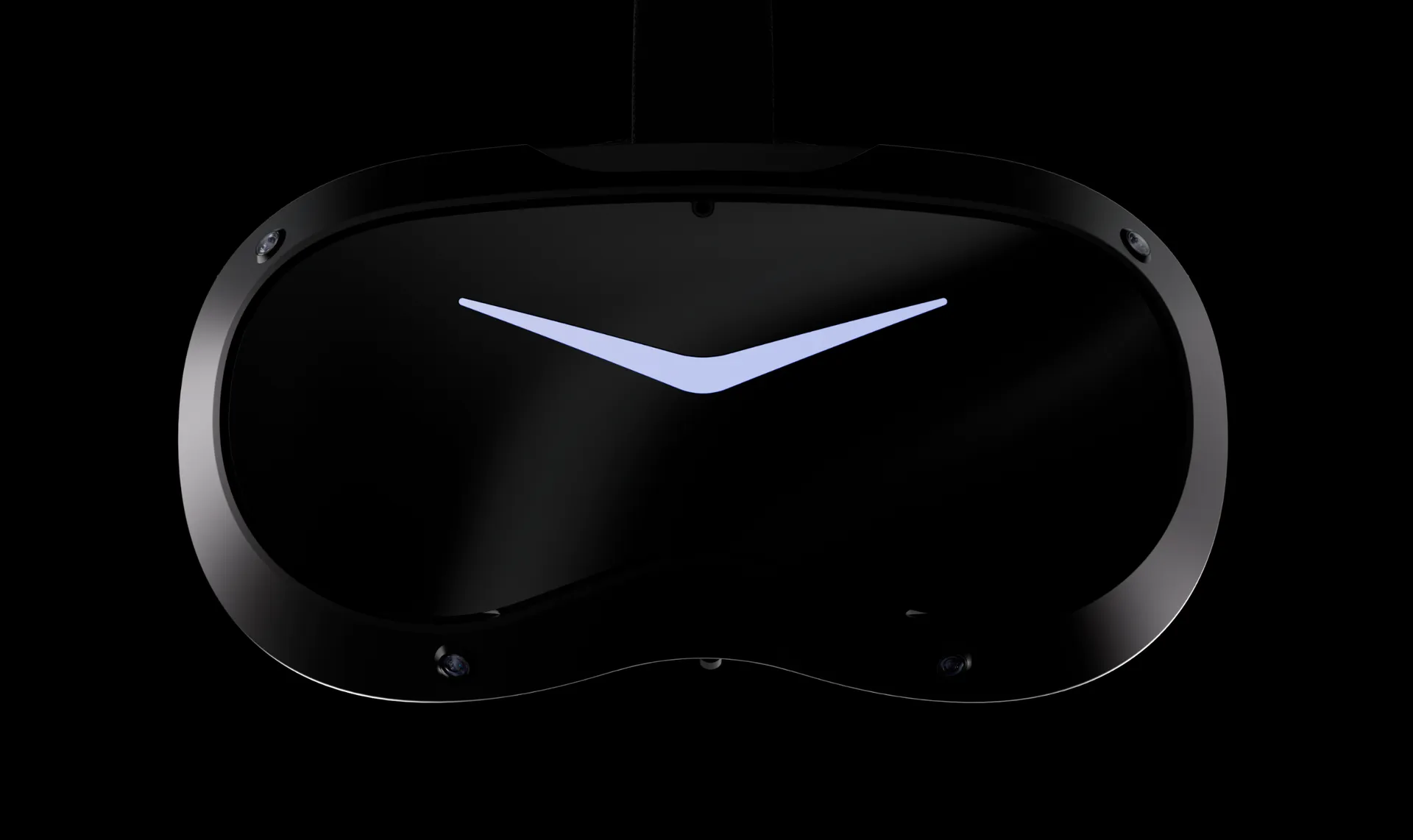
At the center of this revolution is the Crystal Pro VR headset, which boasts truly wireless capabilities. Pimax is pushing the boundaries of connectivity, not just by incorporating a Wi-Fi 6E adapter, but by offering an optional wireless streaming kit, the 60G AirLink. This high-bandwidth system utilizes 60 GHz 2×2 MIMO technology, promising a connection that is significantly more robust and faster than standard Wi-Fi.
The core philosophy behind this wireless freedom is eliminating the cable. As one of the designers put it, this system allows for the transmission of images with virtually no visual compression. This breakthrough is tied to Pimax’s implementation of Native Foveated Streaming. Unlike older methods that reduce quality across the board, this new technique uses the headset’s 120 Hz Omnivision eye tracking to stream the focal area at native resolution, while intelligently reducing detail outside the focus zone. This delivers pristine quality exactly where the user is looking, optimizing bandwidth without sacrificing visual fidelity.
The technical prowess extends to the display itself. The Crystal Pro utilizes twin QLED screens, each running at 2880 x 2880 resolution and a refresh rate of 120 Hz. Backed by Mini-LED technology with 576 local dimming zones per eye, the visual experience is sharp and immersive, even at 200 nits of brightness.
Beyond the visual experience, Pimax has tackled the physical design with surprising choices. They opted for aspheric glass lenses, which, while requiring a bit more physical space than pancake lenses found in competitors, are reportedly better suited for fine-tuned eye tracking. This commitment to advanced tracking is further bolstered by the integration of SLAM 2.0 inside-out tracking, which uses four cameras, motion sensors, and infrared illuminators for low-light, highly accurate positioning.
Input devices have also seen a significant upgrade. The new ringless VR controllers mimic the intuitive design of the Steam Frame, featuring dual triggers, grip sensing, and face buttons, allowing for versatile control inputs. Pimax further refined this by introducing a central module that merges the left and right pads into a single, cohesive controller.
To complete the package, Pimax has introduced the Pimax Spation, a gaming PC designed to serve as a powerful, dedicated Steam Machine. This entire ecosystem—from the wireless transmission and innovative tracking to the cutting-edge controllers—paints a picture of a future where VR is seamless, high-fidelity, and completely untethered. While these groundbreaking products are currently awaiting release, they signal an exciting trajectory for the next generation of virtual reality hardware.
Buy on Amazon
Credit
