Processor gets toasty while recording crypto calculations
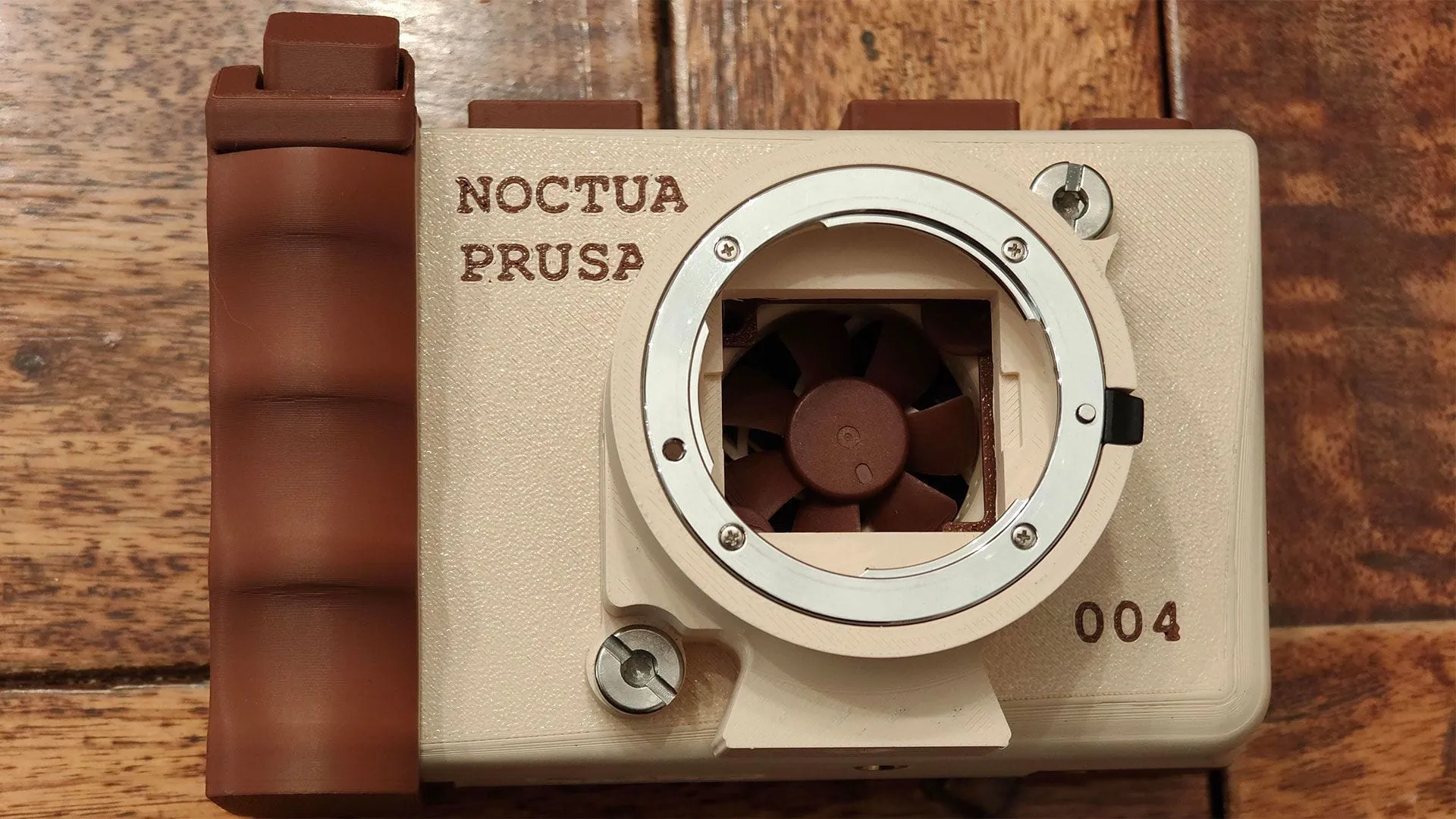
In the race to capture verifiable reality, some innovations are focusing not just on what they record, but how they protect the integrity of the recording. A specialized camera project, known as the CAIM1, is pushing the boundaries of visual proof by incorporating advanced security and cryptographic measures. But to handle the intense demands of this mission—simultaneously capturing high-bitrate 4K footage and generating cryptographic proofs—it faced a monumental challenge: extreme heat management in a compact design.
This need for precision cooling led the designers to seek out components renowned for their quiet efficiency and superior airflow performance. They landed on a fan from Noctua, a premium brand celebrated for its expertise in thermal design. The choice was clear: the Noctua NF-A4x10 5V PWM fan provided the perfect blend of quiet operation and high-performance airflow necessary to keep the system running without throttling.
The CAIM1 project is intentionally built to be resistant to manipulation. Its core functionality involves piping imagery directly from the sensor through an onboard hardware attestation system, generating cryptographic proof that verifies the origin of the media. This technology aims to ensure that the footage captured is undeniably real, free from alteration or generation by artificial intelligence.
The engineering feat is magnified by the thermal demands. Operating these complex imaging and cryptographic processes within a tightly enclosed shell pushes the processors to their thermal limits. Without adequate active cooling, performance would suffer, forcing the designers to rely on external, high-quality components to manage the heat generated by the intense data processing.
Noctua’s involvement was critical, providing the precise cooling solution required for this unique endeavor. They utilized the NF-A4x10 fan in a unified, single-airstream cooling design, strategically positioned behind the image sensor. This setup efficiently directs air across the heatsink, ensuring that the thermal load is managed while maintaining minimal noise and vibration, which is crucial for sensitive recording equipment.
Beyond thermal efficiency, the project embraced a design philosophy rooted in accessible fabrication. The physical structure of the CAIM1 prototypes were created using additive manufacturing techniques, specifically 3D printers utilizing materials like Noctua Beige and Noctua Brown PETG. This approach allowed the designers to rapidly prototype and refine the camera’s compact, handling-friendly shell.
These prototypes have already proven the concept, demonstrating that cutting-edge performance and meticulous thermal engineering can coexist within a surprisingly compact form factor. While the CAIM1 remains in the prototyping phase, the work is far from over. The project is slated to be showcased at upcoming trade shows in Japan, with commercial batches targeting availability in the first quarter of 2027.
Credit
