PsiQuantum turns photonics into an optical switch for AI GPU networks
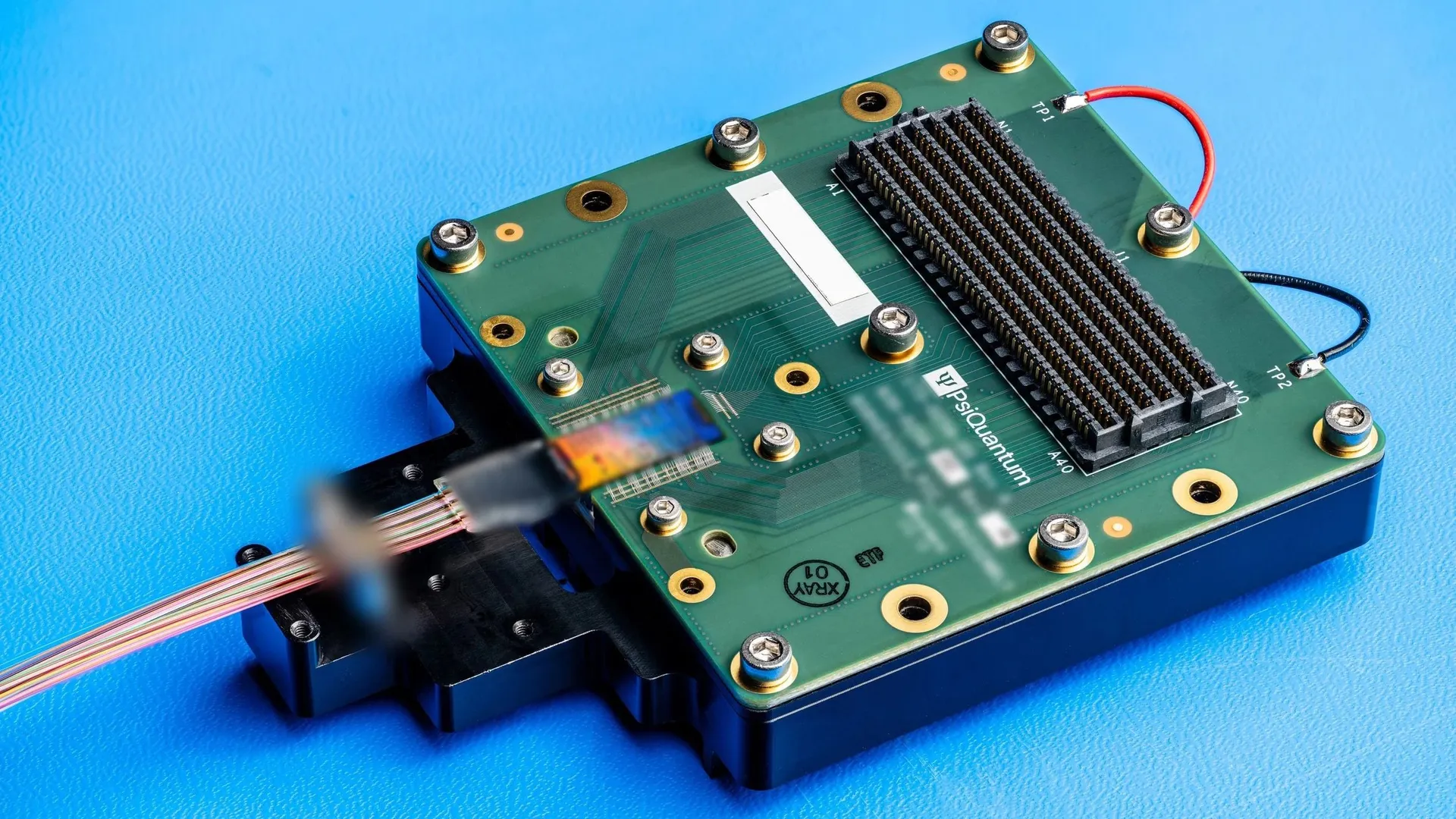
The race to power the next generation of artificial intelligence demands data centers that don’t just crunch numbers, but communicate them with lightning speed. As AI clusters grow, the bottleneck is no longer just raw processing power; it’s the physical speed at which data can travel between the processors. Enter the world of quantum photonics, where companies like PsiQuantum are pioneering a revolutionary solution to this massive connectivity challenge.
PsiQuantum has just unveiled a breakthrough optical circuit switch (OCS) built on advanced low-loss silicon photonics. This technology is designed to revolutionize how data flows in AI data centers by allowing light to pass directly from one fiber to another without being converted into electrical signals and back. Traditional switches require multiple conversions at every step, adding power consumption and latency. The OCS bypasses this complexity, maintaining a fixed light path until a change is explicitly ordered, making data transport radically more efficient.
The real magic lies in minimizing loss. Every time data is switched, some light is inevitably lost, measured in decibels. While conventional data center optics can tolerate a loss of 3 dB, PsiQuantum’s prototype switch achieved an astonishing 1.2 dB of signal loss—only about a quarter of the light is lost—all without needing external amplifiers. This ultra-low loss performance is critical because quantum computing systems, which underpin advanced AI, are extremely sensitive to signal degradation.
This innovative switch is fabricated on a silicon chip, eliminating the need for moving parts found in competing technologies like Microelectromechanical Systems (MEMS) mirrors. This solid-state approach promises greater stability and scalability. The initial demonstration, an 8×8 prototype, showed not only minimal loss but also rapid reconfiguration, achieving a switching time of under 3 milliseconds, significantly faster than many current solutions.
The implications for scaling are immense. While the 8×8 device is a proof-of-concept, PsiQuantum is actively developing larger devices, including 64×64 and 72×72 versions, suggesting that this low-loss architecture can scale up effectively. The team is pushing the boundaries of materials science, exploring compounds like barium titanate to create switching elements that can operate at speeds a million times faster than the initial demo, paving the way for future gigahertz communication.
The integration potential is vast. By streamlining the physical connections within the data center, OCS technology offers a path to unifying vast GPU networks, allowing separate racks of processing units to act as a single, cohesive supercomputer. This work aligns perfectly with major industry interests, as collaborations, including those with Nvidia, are pushing for the integration of quantum processing units (QPUs) and silicon photonics into high-performance computing infrastructure.
As the industry pivots toward hyper-bandwidth solutions, the focus shifts from merely adding more ports to achieving perfect efficiency. PsiQuantum’s commitment to minimizing loss and eliminating physical moving parts positions the technology to become a foundational element in the next generation of AI data center architecture, promising a future where data moves not just fast, but with unparalleled efficiency.
Buy on Amazon
Credit
