Razer Tartarus V2 Pro: Loved playing but needs a patch
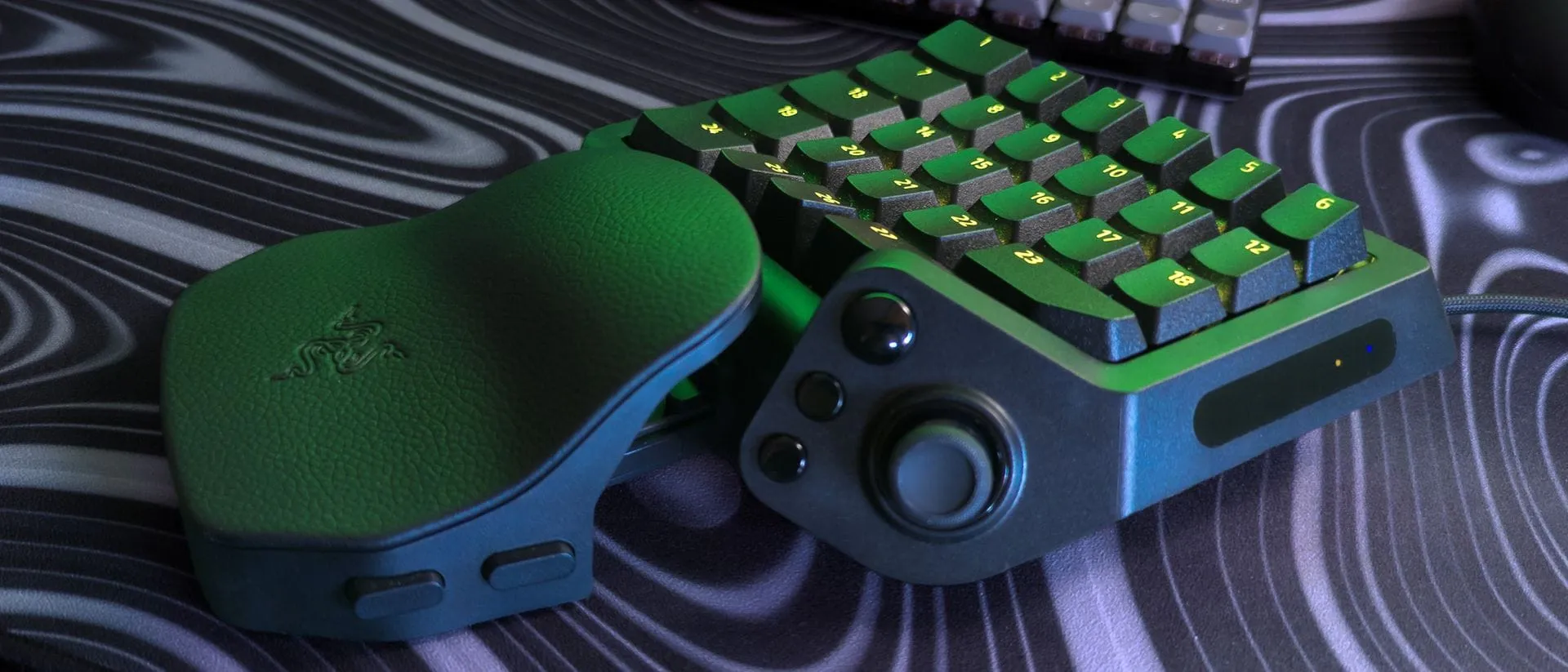
Among the multitude of gaming peripherals flooding the market, Razer’s Tartarus series has always stood out—less a conventional keyboard and more a bizarre, ergonomic command center. I’ve seen its predecessors, like the Nostromo and Orbweaver, cycle through the market, each offering a niche appeal, usually aimed squarely at the hardcore world of MMORPGs. But the Tartarus V2 Pro, announced in September, introduced a unique allure that drew me in, prompting me to explore what this strangely alluring design had to offer.
What captured my attention wasn’t just the form factor, but the promise of comfort. The combination of the curved shape and the integrated wrist rest immediately appealed to my wrists, which spend most of the day attached to a low-profile productivity keyboard. If you are playing half your gaming life through a keyboard, maximizing physical comfort is non-negotiable.
The pricing reflects its premium status: the Razer Tartarus V2 Pro retails for $199.99 MSRP, with comparable pricing in the UK and on Amazon. While direct purchases offer some convenience, I found that buying directly from Razer or visiting a physical store offered the best immediate availability.
The Tartarus lineage shows a clear evolution. Starting with the original Tartarus in 2013 for $79.99, the line progressed through the Chroma model, the V2, and the Pro, marking a steady climb in innovation and cost over the years.
Technologically, the V2 Pro is a revelation. It features Razer Analog Optical Switches Gen-2, providing linear, smooth keypresses, which feel incredibly responsive. This system, coupled with fully adjustable actuation and the ability to bind inputs using features like Snap Flex, transforms the input experience. For instance, I found clever applications, such as binding the W key to an analog accelerator pedal in games like Euro Truck Simulator 2 to allow for slow, creeping movement.
The design itself is inviting. The wrist rest, while deceptively faux leather, provides genuine comfort. The keycaps are double-shot PBT, ensuring they won’t fade, and the overall layout prioritizes the left hand, creating a true command station for complex inputs.
Yet, as with many cutting-edge devices, there are some quirks. While the core hardware is brilliant, the software, specifically Razer Synapse, introduced some friction. There is a noticeable mismatch between the tactile feel of the linear switches and the clicky response of the HyperShift button, which feels more like an Xbox controller bumper. Furthermore, the default mapping of the TMR thumbstick—designed to be drift-proof—was strangely oriented, forcing awkward vertical gestures to move forward, which is a frustrating experience for fluid gameplay.
Despite these software-centric gripes, the promise of analog optical switches and advanced features like Rapid Trigger genuinely appeals to a wider audience. For gamers seeking customization and enhanced responsiveness, the V2 Pro offers a compelling combination. It is an excellent solution for those who thrive on complex ability rotations and deep command input.
Ultimately, if you are a deep enthusiast of MMOs or MOBAs, or if you desire a unique, highly customizable peripheral experience, the Tartarus V2 Pro is worth considering. You should buy this if you enjoy gaming where precision and custom input are paramount. You should not buy it if you already own a previous model, as the V2 Pro represents a significant, worthwhile upgrade.
Buy on Amazon
Credit
