RME and Audigy Testing: New Audio Measurements on the Test Bench
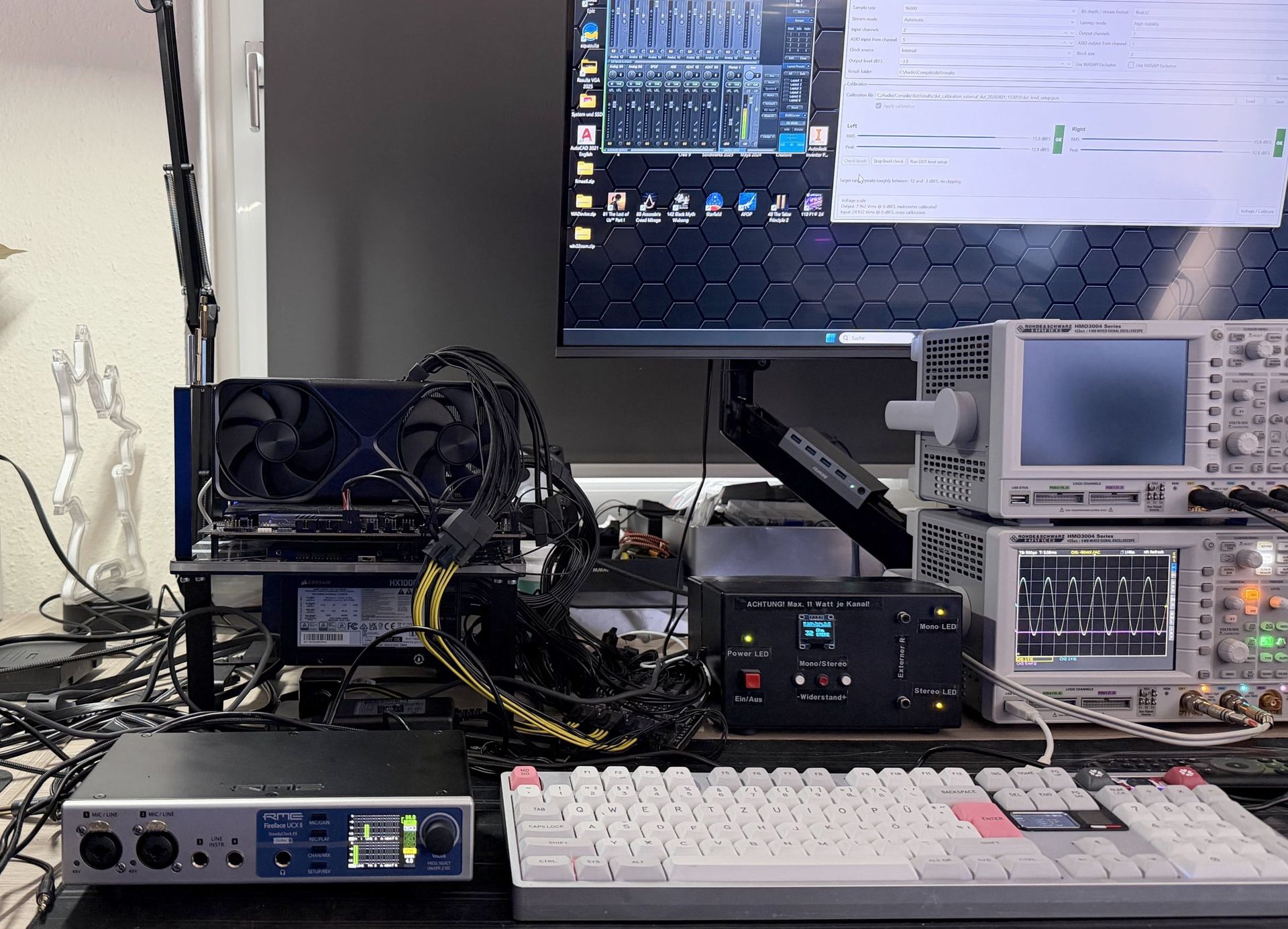
The quest for perfect audio measurement often involves a battle between the benchmark and the new. This is the story of a pivotal shift in audio evaluation, driven by a desire to redefine how we assess digital sound quality, and the resulting introduction of a revolutionary new measurement chain.
The testing began by establishing a new gold standard: the comparison between the Zoom UAC-232 and the RME Fireface UCX II. This switch provided a foundation for a fully calibrated measurement chain, setting the stage for a deep dive into the intricacies of digital audio performance. From this enhanced platform, a powerful new tool, the Audio Analyzer Next, was developed, pushing the boundaries of what is measurable in modern audio systems.
This innovative setup allowed engineers to revisit and re-evaluate long-standing statements about audio interfaces. When the new system was put to the test, the results offered a nuanced perspective on the performance characteristics of various hardware.
The evaluation revealed interesting discrepancies in how different systems handle critical audio metrics. One finding indicated that the onboard audio of the older Creative Sound Blaster Audigy FX Pro performed commendably in terms of basic noise levels and certain forms of distortion measurement.
However, the newer measurement chain highlighted where the older system fell short in more complex audio behaviors. Specifically, the Audigy showed measurable advantages in crucial areas such as channel separation, intermodulation distortion, and its behavior when operating close to full-scale output.
In contrast, the systems utilizing the Zoom and RME foundation demonstrated superior performance in the realm of noise reduction and basic distortion handling. This reveals a fascinating trade-off in audio engineering: efficiency in basic measurements versus fidelity in complex signal processing.
The development of the Audio Analyzer Next is not just an incremental update; it represents a complete revision of the measurement approach. It reframes the conversation, encouraging a focus not just on simple noise levels, but on the nuanced spatial and dynamic accuracy that defines truly high-fidelity sound.
Ultimately, the evolution of this measurement technology pushes the industry forward, ensuring that the evaluation of audio hardware is based on a more comprehensive, fully calibrated, and insightful understanding of what makes great sound.
Buy on Amazon
Credit