RTX 5080 needed for Witcher 3 4K path tracing visuals
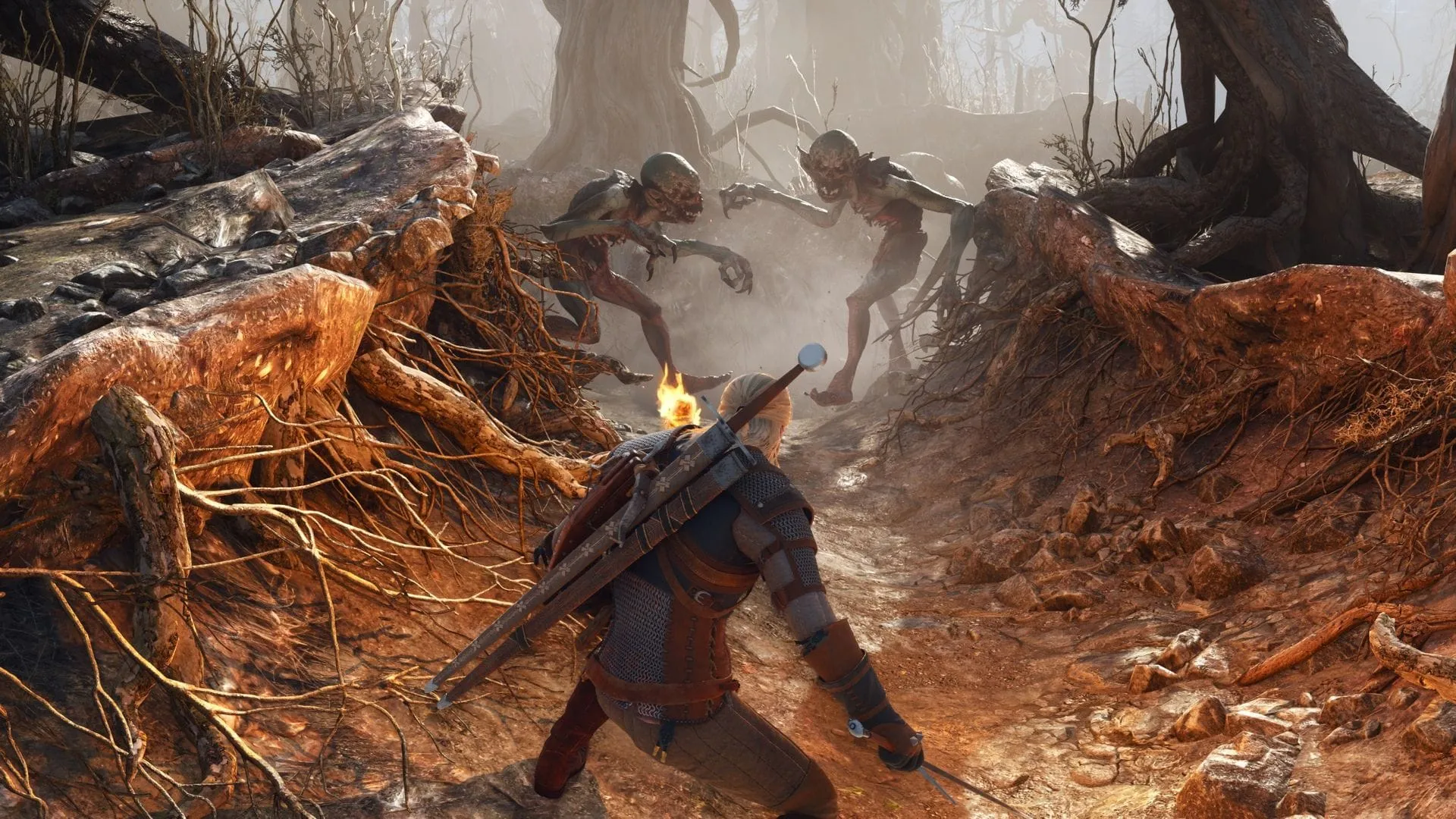
The Witcher 3 Remastered: Diving into the Power Demands of Path Tracing
When a game promises cinematic realism, it often demands a hefty price tag—and a hefty piece of hardware. Enter the world of path tracing, a graphical technique that pushes the boundaries of what a modern GPU can achieve. While this feature is fantastic for creating realistic shadows and highlights, it certainly puts a serious strain on system resources.
If you are planning to dive into the remaster of The Witcher 3: Wild Hunt and want to experience the full visual fidelity of path tracing, you need to understand the power requirements. The demands shift dramatically depending on whether you are aiming for a smooth, low-resolution experience or pushing for true, high-end 4K visuals.
For players seeking a baseline experience, running the game at low settings and 30 frames per second (fps) is achievable with relatively modest hardware. To get started, systems equipped with a Nvidia GeForce GTX 1660, AMD Radeon RX 550 XT, or Intel Arc A580, along with an Intel Core i5 8400 or AMD Ryzen 5 2600 are sufficient to handle the game at this lower graphical setting.
However, if you want to truly test the limits of path tracing, the performance expectations jump significantly. To push for smoother 60 fps at 4K resolution, the requirements become considerably more demanding. This level of visual intensity necessitates a powerful pairing, such as an Intel Core i9 13900K or AMD Ryzen 7 9800X3D, coupled with a high-end card like the Nvidia GeForce RTX 5080. To maintain that high frame rate, features like DLSS and frame generation are essential, regardless of your chosen upscaling method.
The choice between path tracing and ray tracing often boils down to personal taste. While path tracing aims to deliver more natural-looking shadows, whether the performance hit is worth the visual gain depends entirely on the user’s hardware and aesthetic preferences.
The technical specifications reveal a clear hierarchy of performance. While the minimum requirements are quite accessible, the recommended and ultra settings expose the real gap between a casual experience and a high-fidelity simulation. For instance, running at 1080p requires a solid foundation, but scaling up to 1440p or 2160p places immense pressure on both the CPU and GPU.
Looking at the full spectrum of requirements, the system needs are specific. The table below outlines the performance benchmarks for various settings and resolutions, showing how the demands change across the board.
A noteworthy detail in the requirements is the exclusion of some high-tier options. For example, the AMD Radeon RX 9070 XT is not listed as an option for the top-tier graphics mode, likely due to its performance limitations when handling intensive path tracing compared to equivalent Nvidia options like the RTX 5080.
Furthermore, the memory and storage requirements for the highest settings, such as the 24 GB RAM needed for ultra-settings, reflect the ongoing reality of the memory crisis. While lower-end setups are manageable, maximum graphical fidelity ultimately requires a substantial investment in both processing power and memory.
For those who already own the original game, there is a free option available, and the Complete Edition is currently on sale. If you are considering revisiting the world of Geralt, and are ready to tackle the demands of cutting-edge graphics, the path is open.
Buy on Amazon
Credit
