RTX 5090 Failure: Inside the Thermal Paste, Warranty, and Refund Value
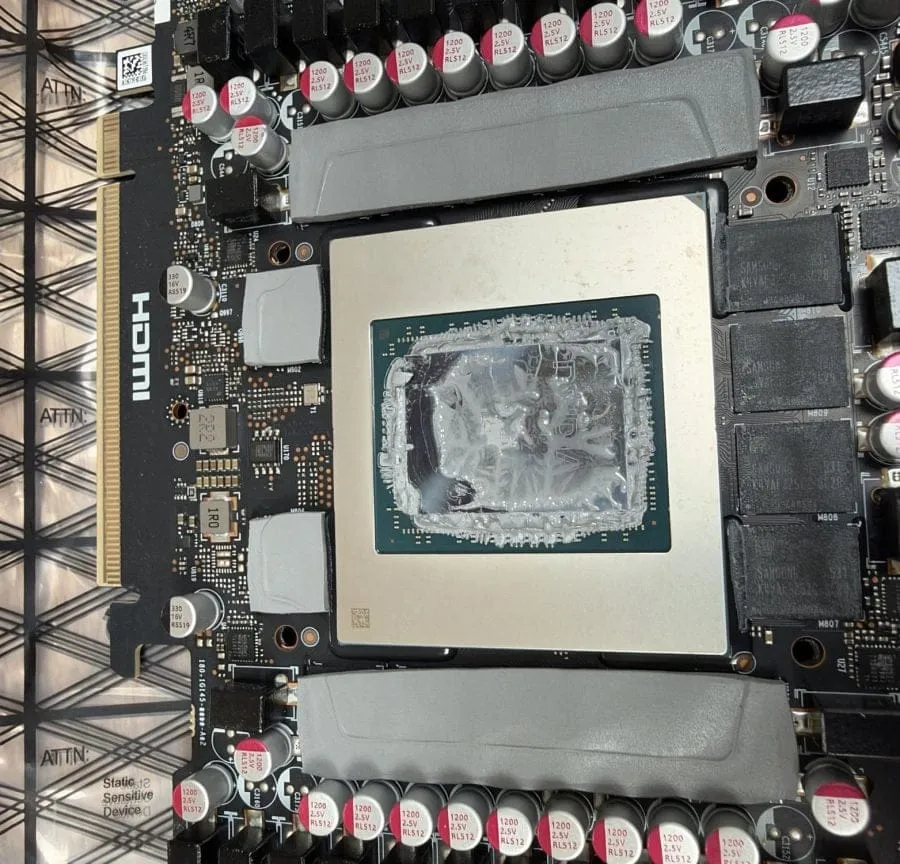
The quest for stable, high-performance computing often involves navigating the complex world of hardware adjustments and thermal dynamics. Recently, a user shared a compelling story about their experience with an INNO3D RTX 5090, illustrating how a seemingly simple physical adjustment can lead to significant performance improvements.
The issue centered around the card’s thermal efficiency. After the system experienced instability, the user undertook a modification to the GPU’s thermal interface. This rework, while seemingly minor, yielded a remarkable outcome: the card ran stably and smoothly, operating exactly as expected at factory settings.
This successful outcome sparked an interesting technical discussion regarding heat transfer. The change demonstrated a clear connection between the chip and the cooler, suggesting that optimizing the physical interface between these components was key to resolving the instability. However, experts caution that while the observed result is compelling, it does not constitute conclusive proof, as comparable testing conditions are often lacking in such anecdotal cases.
Beyond the technical fix, the experience also highlighted a broader concern for consumers when dealing with hardware issues and replacement policies. The user’s situation also brought to light a crucial point about consumer rights and supply chain realities.
When seeking a resolution for a defective or problematic component, obtaining a refund does not automatically guarantee the ability to secure an equivalent replacement, especially when the market availability of the specific item is limited. This detail underscores the often-frustrating gap between consumer expectation and the practical realities of limited inventory.
Ultimately, this story serves as a reminder that sometimes the most elegant solutions to complex engineering problems are found through careful physical observation, and that the consumer experience extends beyond the hardware itself, encompassing the entire lifecycle of ownership and support.
Buy on Amazon
Credit
