RTX 5090 PC connectors melt after storage
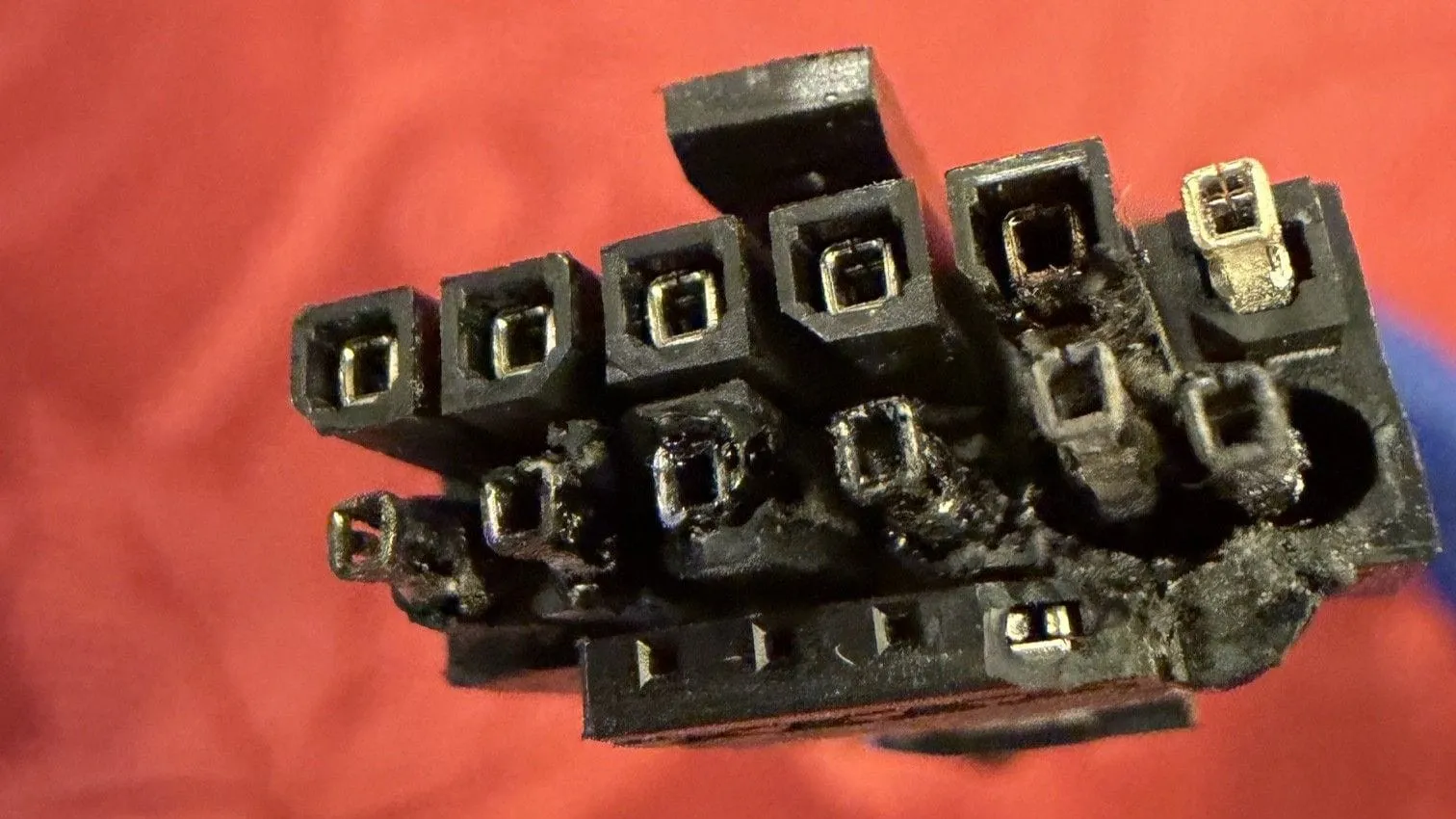
The dream of owning a cutting-edge gaming rig often comes with a hefty price tag, but sometimes that luxury can turn into a high-stakes legal battle over melted plastic and broken warranties. When a high-end graphics card fails spectacularly, the blame game usually starts, pitting the GPU manufacturer against the system builder, and leaving the customer holding the toxic mess.
This is the frustrating reality that many PC enthusiasts face when dealing with expensive, custom-built systems. Consider Anthony DeMarco, who purchased a top-of-the-line setup, including an Nvidia GeForce RTX 5090, from a system builder. Everything seemed perfect until shortly after receiving it, when strange burning smells and flickering screens signaled a catastrophic hardware failure.
The culprit, as DeMarco discovered, was the power delivery system. The failure wasn’t just limited to the graphics card; the damage extended to the power supply and the custom power cables themselves. The specific issue centered around the 12VHPWR or 12V-2×6 power connectors, which, when stressed by faulty or non-standard cables, can melt and fuse into the connector head.
DeMarco was left with a nightmare of warranty claims. He turned to both the GPU manufacturer, PNY, and the system builder, Digital Storm, hoping one would take the fall. The conflict centered on who was responsible for the melting damage: the cable vendor, the PSU, or the GPU maker.
PNY, the GPU producer, argued that the damage occurred because a third-party power cable was used, refusing to cover the claim because the cable was not PNY-approved. Digital Storm, the builder, pointed toward the fact that the specialized cabling was the responsibility of the component vendors.
This disagreement exposed a crucial loophole in warranties: the system builder’s guarantee often relies on the components being correctly supplied, while the component manufacturers’ warranties focus on the card itself. In this scenario, the lack of clarity over who owns the responsibility for faulty cabling left DeMarco stranded in the middle of a technical quagmire.
Ultimately, the journey highlighted a sobering truth for anyone investing in custom PCs: when dealing with high-end components and intricate power solutions, understanding the warranty landscape is paramount. Pre-built systems, while convenient, can hide complex responsibilities. Understanding that the integrity of your build hinges on the cables and components is essential.
For future builders, the lesson is clear: while customizability is rewarding, it demands diligence. Reviewing the warranties of every component, and perhaps considering systems from manufacturers who control both the GPU and the power delivery—like Asus or MSI—might offer a clearer path to peace of mind. Because in the end, customization means you are responsible for the pieces you choose, and that responsibility comes with the necessary knowledge.
Buy on Amazon
Credit
