RTX Spark: GPU power vs CPU weakness
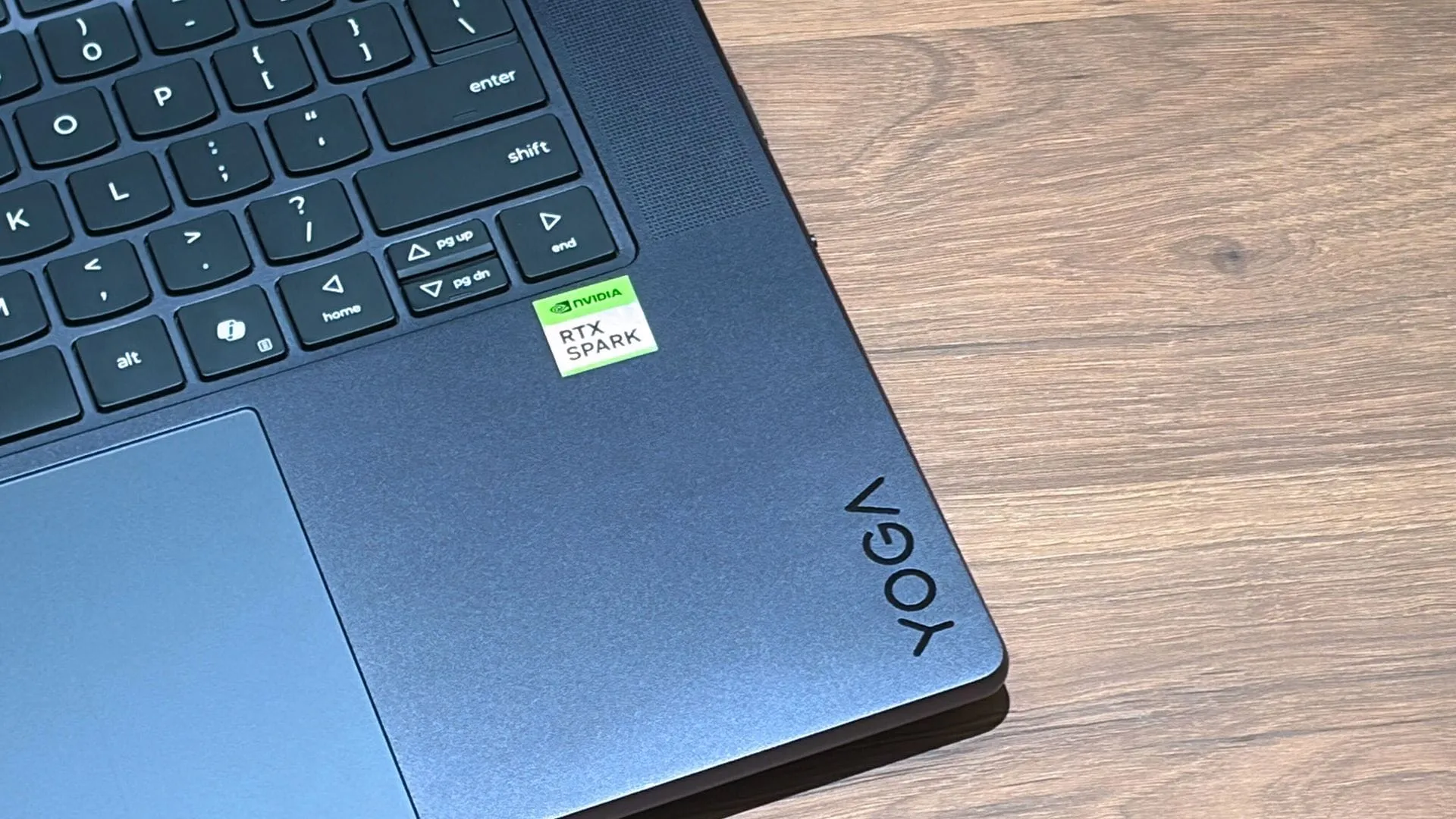
This text provides an in-depth analysis of the RTX Spark chipset, positioning it within the evolving landscape of local Artificial Intelligence (AI) workflows, specifically focusing on Microsoft’s strategy for the Windows platform.
Here is a summary of the key points, themes, and conclusions presented in the article:
—
1. Integration with the Windows AI Ecosystem
The article highlights Microsoft’s strategic shift to position Windows as the primary platform for local AI and agentic workflows, contrasting it with Apple’s approach.
Agentic OS: Microsoft is building safeguards and security into Windows to ensure local AI agents operate safely without causing damage to user files and applications, aiming to make agents a native extension of the operating system.
Hardware Support: The RTX Spark is natively supported by Windows ML and DirectX 12 with neural rendering capabilities.
Future Features: Microsoft is collaborating with NVIDIA to bring features like Windows Recall, Click To Do, and on-device Semantic Search to the RTX Spark platform, leveraging its 50 TOPS NPU in the coming months.
2. Technical Performance and AI Optimization
The core strength of the RTX Spark lies in its specialized architecture optimized for AI workloads, rather than raw CPU performance alone.
AI Focus: The chipset is explicitly optimized for AI workloads. It is noted that it delivers performance comparable to the RTX 4070-5070 range in a compact, efficient SoC.
Memory Capacity: With up to 128GB of unified memory, the system is capable of running most mainstream AI models entirely on the GPU without performance hindrance.
Efficiency: As an SoC built on the Arm64 architecture, it offers superior efficiency and portability compared to traditional laptops with discrete NVIDIA GPUs.
GPU Strength: While the N1X CPU is deemed “just okay,” the Blackwell RTX GPU is emphasized as the real powerhouse, especially for AI tasks.
3. Market Positioning and Value Assessment
The text balances the impressive technical specs against real-world purchasing decisions.
Niche Appeal: The RTX Spark is an excellent choice for users whose workflows involve running AI models locally all day, software development, or complex data crunching.
Trade-Off: The author notes a potential trade-off: at current launch prices, many users might be better served by an Intel or AMD laptop with a dedicated NVIDIA GPU, as these options are often more cost-effective.
Efficiency Caveat: The overall efficiency of the RTX Spark will depend heavily on the specific hardware and thermal management implemented by the Original Equipment Manufacturers (OEMs).
4. Benchmark Summary
The provided benchmark data indicates strong performance across various tasks:
CPU Performance (Geekbench 7): The CPU scores are solid, showing respectable performance in multi-core and single-core operations.
AI/GPU Performance (CUDA/Vision): The GPU shows strong results in benchmarks related to AI computer vision tasks, text generation (using models like Llama and Mistral), and image processing (Stable Diffusion).
Content Creation: The video rendering tests show capability, though the focus remains heavily weighted toward AI and data processing tasks.
—
Conclusion
The RTX Spark is presented as a forward-leaning, highly specialized chipset that is ideally suited for the next generation of local, on-device AI workflows within the Windows ecosystem. While it may not win on pure general-purpose CPU benchmarks against high-end Intel/AMD options, its specific optimization for AI, coupled with superior efficiency and portability, makes it a compelling choice for developers, data scientists, and content creators focused on running sophisticated models locally.
Buy on Amazon
Credit
