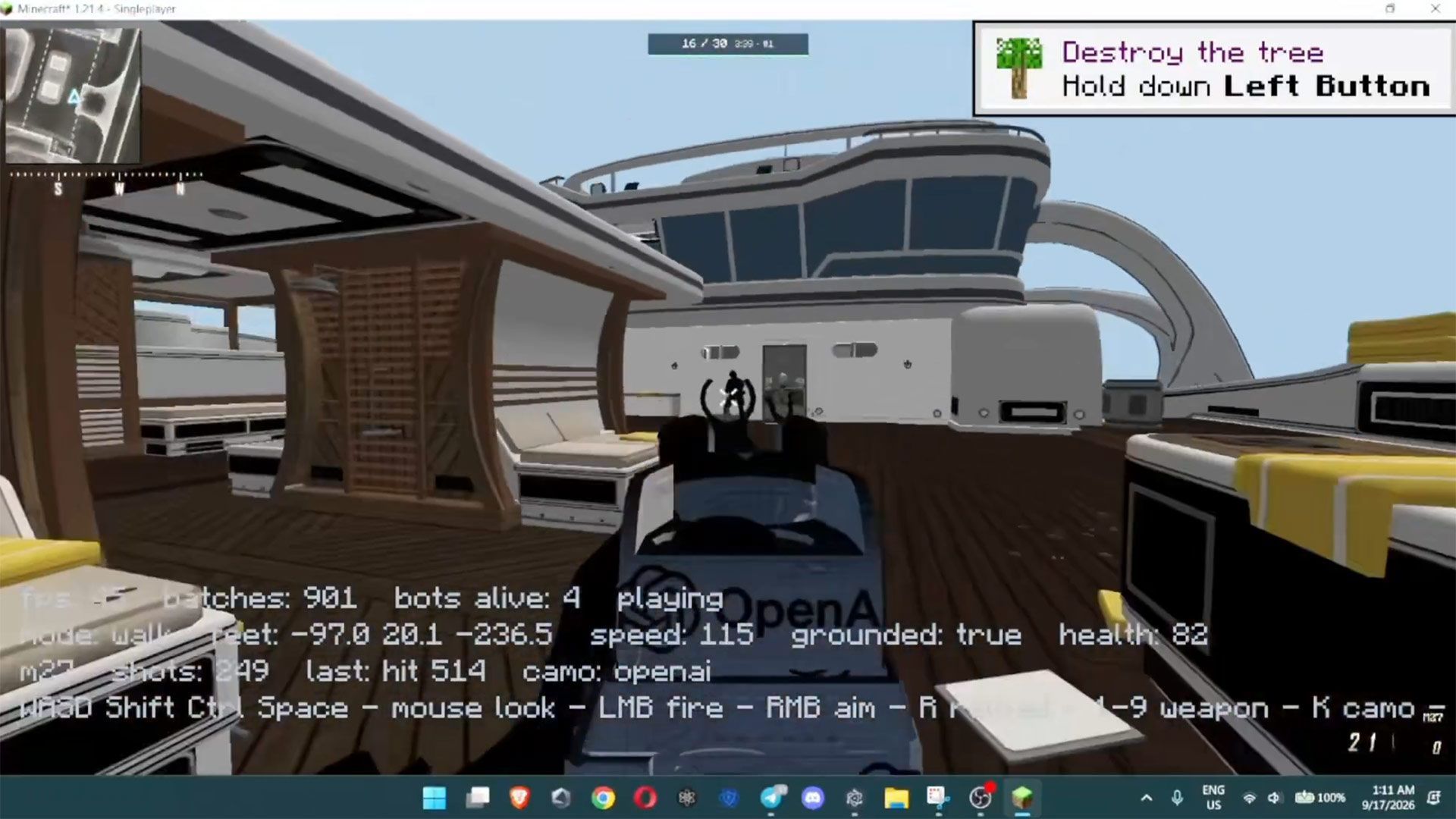
Running CoD BO2 in Minecraft natively with GPT-6 Astra 45fps
AI Bends the Rules of Reality: How a Gamer Hijacked a Call of Duty Map Inside Minecraft
In the realm where gaming meets cutting-edge artificial intelligence, a remarkable feat has been achieved: an enthusiast has successfully made a complex, high-fidelity map from a major title run natively inside a sandbox game. This isn’t just another mod; it’s a masterclass in AI-driven engineering, demonstrating how advanced models can fundamentally interact with and reshape the foundational code of a game engine.
The achievement stems from the work of Luckey Faraday, an AI and games development enthusiast. Faraday tackled the challenge of porting the iconic Call of Duty: Black Ops 2 map, Hijacked, into the world of Minecraft. This endeavor pushed the boundaries of what was thought possible, moving beyond simple graphical overlays into deep, structural integration.
The process involved a clever layering of technology. Initially, Faraday managed to port the map in a way that allowed it to run in a browser. The true innovation came when he utilized the power of artificial intelligence—specifically the GPT Astra model—to rebuild and integrate the project. Instead of just displaying the map, the AI was tasked with executing the port directly onto Minecraft’s own OpenGL context. This technical step is what allowed the entire experience to be woven into the game environment.
The integration was achieved through the use of Fabric, a lightweight, open-source mod loader and development API for Minecraft. This framework acted as the bridge, allowing the Black Ops 2 content—including its collision, bots, navigation mesh, weapons, and rendering—to execute directly within Minecraft. Essentially, all the complex elements of the FPS map were running inside the Minecraft world, making the experience truly native.
This creation is a perfect example of Faraday’s collaborative approach, where AI acts not just as a tool, but as a co-developer. He invited fellow enthusiasts to contribute to the project, showcasing a methodology where AI accelerates the creation of complex, functional demos and code.
The appeal of this kind of deep integration is reflected in Minecraft’s massive audience. While known for creative building and adventure, the sandbox nature of the game attracts highly technical minds. This has led to incredible feats, such as the creation of the working CraftGPT model—an AI trained to hold conversations and run inference directly within the game environment.
This story highlights a powerful trend: the convergence of gaming and AI is moving beyond entertainment. It signals a new era where the boundaries between digital creation, artificial intelligence, and game development are blurring, suggesting that the sandbox of games is rapidly becoming the new frontier for computational innovation.
Buy on Amazon
Credit