Russian modder slaps DLSS 5 onto Pac-Man with 4x Multipass
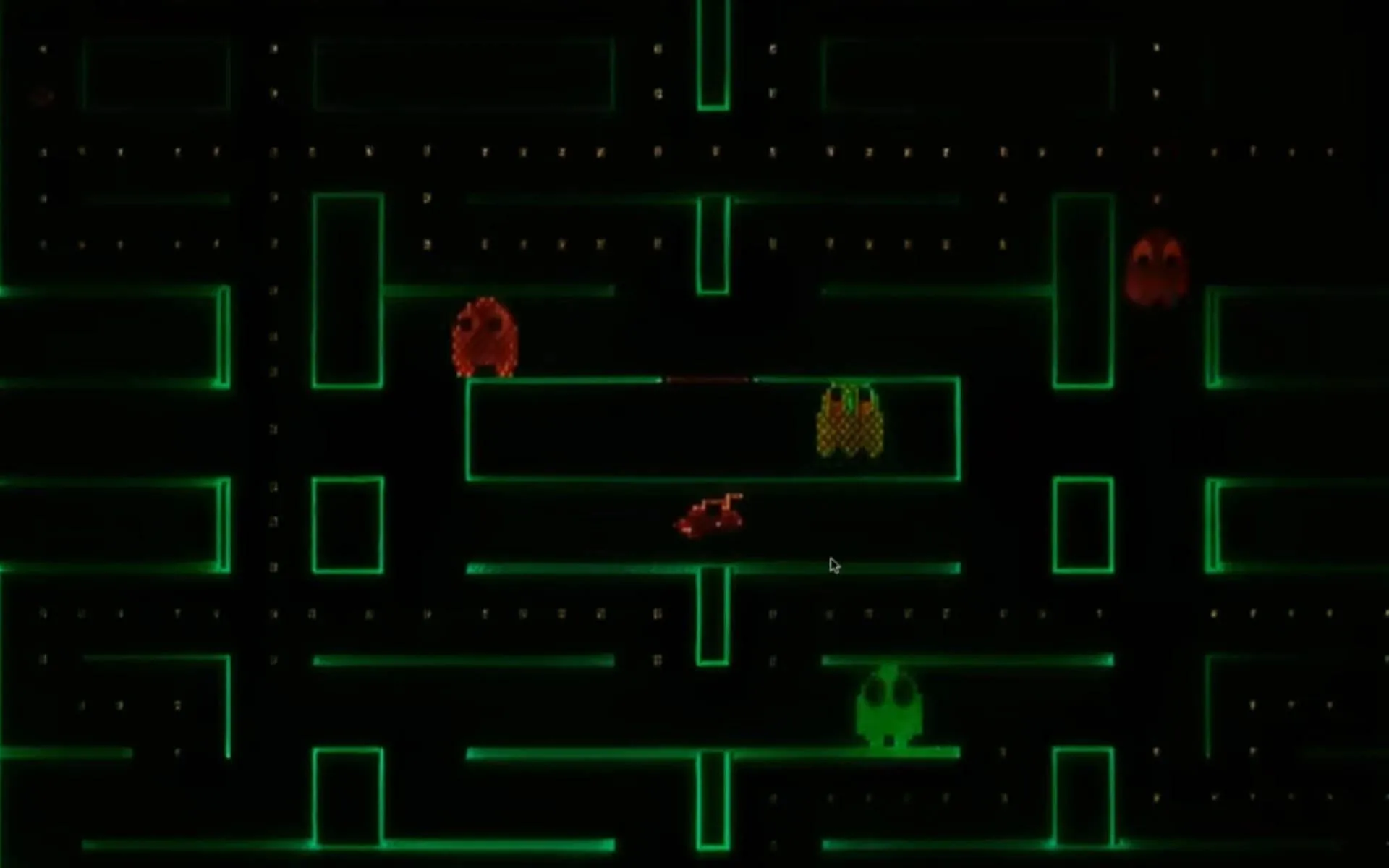
The Cursed Quest: Russian Experimentes Mind-Melts Classic Pac-Man with DLSS 5
In the wild, untamed world of AI-driven graphics, some experiments push the boundaries of what technology is designed for. Recently, a curious journey led a creator to attempt something truly unconventional: applying the bleeding edge of NVIDIA’s DLSS 5 upscaling technology to a classic game that was never meant to be rendered in three dimensions—the legendary MS-DOS version of Pac-Man.
This wasn’t just a simple mod; it was a deep dive into pushing the boundaries of graphics processing. The goal was to see what happens when an upscaler, designed for modern 3D gaming, encounters the flat, simple world of retro pixel art. The result? A delightful, glitchy, and deeply strange visual experience that redefined what “upscaling” means in the context of retro gaming.
The process required some serious technical wizardry. The creator achieved this by running the game through the MAME arcade emulator and injecting DLSS 5 into the graphics pipeline using tools like ReShade and RenoDX. This wasn’t native functionality; it was an external, hack-and-slash operation, proving that sometimes the most interesting discoveries happen when you force technology into the spaces it was never intended to occupy.
To make the effect stick and allow for any meaningful enhancement, the experiment required a technique called 4x Multipass. This involved running the rendering multiple times to stack the changes, which often resulted in visuals that were either messy or surprisingly photorealistic. For the simple geometry of Pac-Man, the process revealed how little 3D information the upscaler could actually gather. The ghosts, for instance, were enhanced not with realistic facial features, but with subtle, unsettling cheekbones and sunken eye bags, turning the iconic ghosts into something eerily uncanny.
The experiment branched out into four distinct rendering modes: Natural, Default, Cinematic, and Denoise. Each mode offered a different perspective on the absurdity of the endeavor. The “Cinematic” mode, for example, offered a filmic quality to Blinky, turning a simple ghost into a figure fit for a cinematic masterpiece. Meanwhile, the “Denoise” setting provided a stark, clean view, stripping away the dots and smoothing the maze into pure geometry.
But the true highlight of the trial came from one of the modes that completely dissolved the visual cues of the game. One setting managed to remove the eyes from the ghosts entirely, leaving behind only four distinct yellow circles scattered across the void. This specific rendering choice evoked a genuine sense of dread, leaning into the realm of internet folklore and classic horror—a truly unsettling take on a simple maze game.
Ultimately, the experiment served as a fascinating, if glitchy, peek at the current state of AI upscaling. While the results were certainly bizarre, the underlying technical takeaway is that even the most advanced technologies still have limitations. DLSS 5, despite its potential, is still undergoing training and lacks the temporal context required for truly seamless realism. This curious foray reminds us that the future of graphics is not just about better pixels, but about exploring the bizarre, unexpected possibilities that emerge when we force new tools into old worlds.
Credit
