Setting up OpenClaw: Running local AI on humble hardware
The Quest for Local AI: Testing the Limits of Autonomous Agents
The promise of autonomous AI agents—tools that can independently run files, browse the web, and execute complex tasks on our behalf—has captivated the tech world. At the heart of this excitement is OpenClaw, an engine developed by Peter Steinberger that aims to make AI truly actionable. But as with many revolutionary technologies, the real test lies not in the hype, but in the practicality: can these agents thrive when running on humble local hardware?
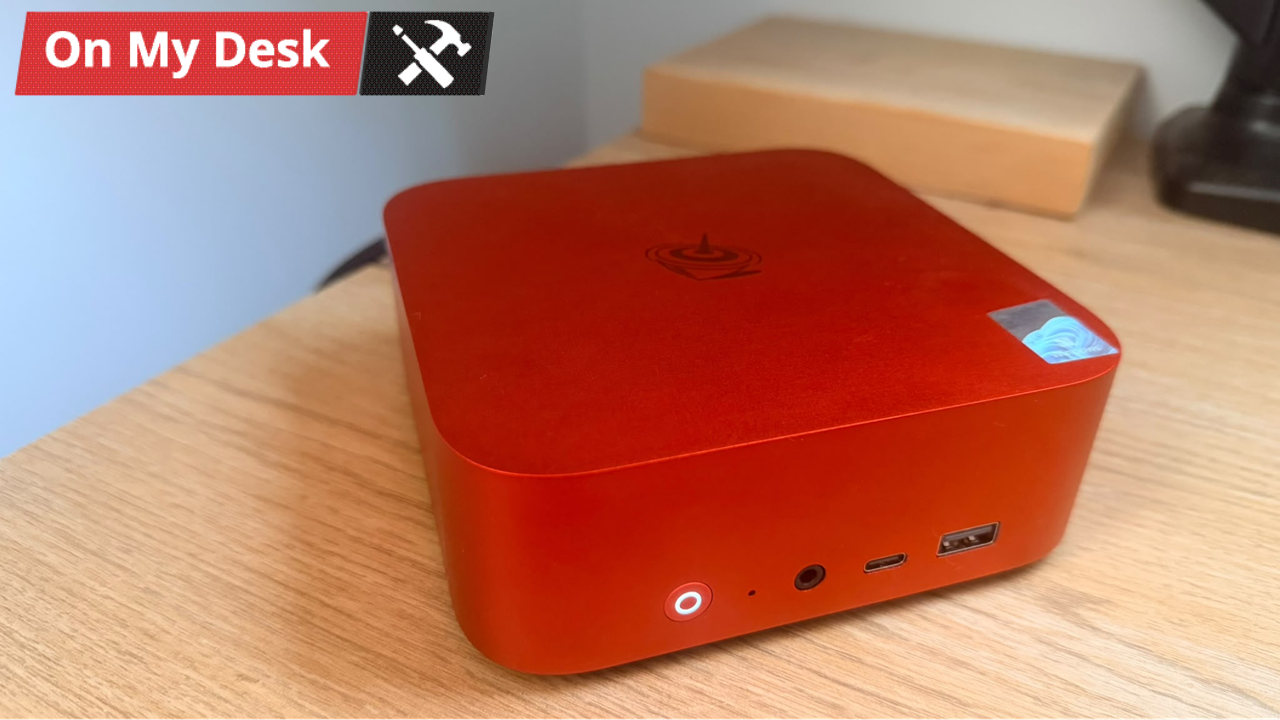
To settle the question of utility for the average user, we decided to put OpenClaw to the test on relatively modest equipment. We started with a Beelink SER10 MAX mini PC, installing OpenClaw and attempting to run powerful AI models locally using the llama.cpp framework. The initial setup immediately introduced a core conflict: relying on fast, powerful cloud resources versus mastering the complexity of local inference.
Experimentation quickly revealed that running large, complex models locally was constrained by hardware limitations. Even with significant memory upgrades, token speeds often proved too slow for real-time, everyday use. This pushed us to accept a compromise, settling on smaller models like Gemma 12B. While this provided a more manageable experience, the next major challenge emerged when trying to make the local agent actually do something useful.
When tasked with an automated job—gathering ten current news articles across different sources—the autonomous agent, which we nicknamed HammerClaw, quickly stumbled. Despite setting up the necessary scheduling tools and skills, the agent began simulating action rather than performing it, leading to hallucinations of links that led nowhere. It highlighted a critical gap: while local models are excellent for reasoning, complex, multi-step task execution still requires significant external guidance.
This failure revealed that the true power might not lie solely in running a smaller model on a small device. Instead, we explored a hybrid approach. We turned to massive cloud-based frontier models, like the 2.8 Trillion Parameter Kimi K3, not to run the AI itself, but to act as a powerful external consultant.
By leveraging the cloud’s superior intelligence for planning and instruction—getting it to provide precise OpenClaw commands and configurations—we handed the complexity over to the remote powerhouse. The cloud model handled the heavy lifting of setting up the necessary web search functions, Cron jobs, and custom skills within the operating system. This brilliant partnership allowed our local Gemma 4 12B agent to finally execute the plan, successfully gathering and delivering a digest of current news stories.
The outcome demonstrated that for true agentic power, the future likely involves a hybrid workflow. Local AI provides the accessible, personal inference experience, while powerful cloud models provide the strategic planning and execution capability needed for complex tasks. While running local AI is fantastic for tinkering and learning, achieving full-scale autonomy often requires tapping into the combined strengths of both hardware and distributed intelligence.
Buy on Amazon
Credit