Sipeed reveals new DGX Spark and Ryzen AI Halo rivals for $3999
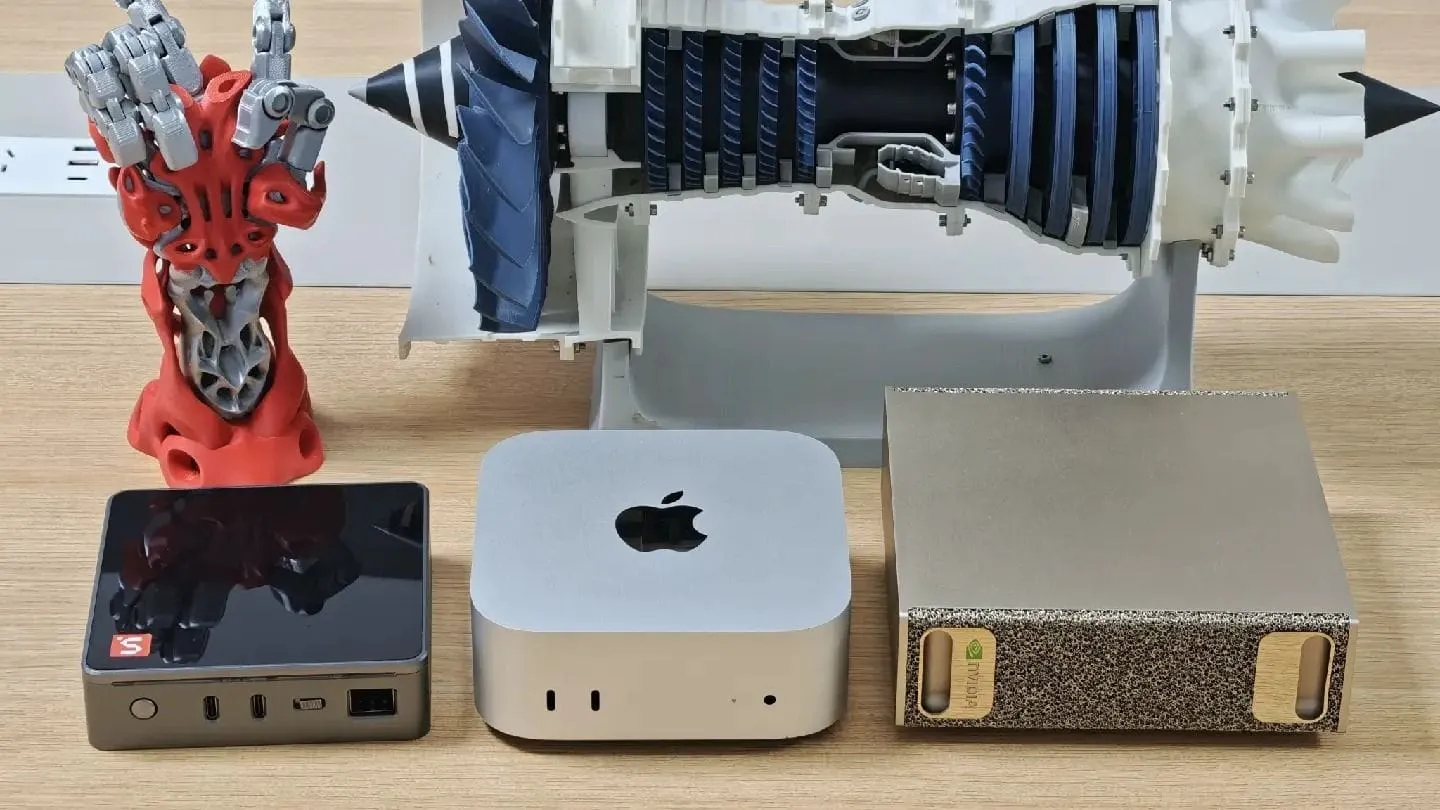
The AI Hardware Arms Race: Sipeed Challenges Giants with the MaixStation
The battle for the next generation of AI computing hardware is heating up, and a determined challenger has entered the fray. Sipeed has announced the MaixStation, a system built on Axera’s new AX8860P chip that immediately positions itself as a serious rival to established heavyweights like Nvidia’s DGX Spark and AMD’s Ryzen AI Halo. This new offering isn’t just about matching specs; it’s about challenging the pricing and the open-source ecosystem that dominates the high-performance AI landscape.
At the core of the MaixStation is the Axera AX8860P, a processor built on the 6nm process featuring 16-core Arm Cortex-A55 CPUs and an in-house Neural Processing Unit (NPU) rated at 256 TOPS in FP4. This hardware provides a powerful foundation, boasting memory bandwidths up to 273 GB/s using LPDDR5X. The claim is that this system can deliver significant performance gains, promising up to 25% faster prefill and 30% faster decode speeds compared to competitors when running complex models like Qwen 27B.
In a move that directly targets the market, Sipeed has projected that the 128GB version of the MaixStation could be priced around $3,999, positioning it comfortably below the Nvidia DGX Spark‘s MSRP of $6,950. This aggressive pricing strategy, coupled with potential Kickstarter launch discounts, suggests a serious intent to disrupt the high-end AI server market.
The comparison with existing systems highlights the scale of the competition. While the MaixStation focuses on system-level integration and flexible scaling, competitors offer differing architectures. The AMD Ryzen AI Halo models, such as the 192GB Max+ PRO 495, compete strongly on unified memory capacity, while the Nvidia DGX Spark leverages its powerful Blackwell GPU architecture. The MaixStation, however, emphasizes a horizontally scalable design, supporting single, dual, or quad nodes and offering a unique networking capability with a 256 Gbps C2C link.
Beyond raw compute, Sipeed is focusing heavily on the software ecosystem. The platform runs on Debian 13 and Linux 6.18, establishing an open environment that appeals to developers. Crucially, the company is working to integrate powerful tools like vLLM, SGLang, and PyTorch, alongside support for popular formats like Hugging Face. This commitment to open-source frameworks, supported by Axera’s AI software stack, aims to reduce reliance on proprietary stacks and foster innovation.
The underlying silicon provides flexibility that rivals the proprietary setups of competitors. The AX8860P architecture, coupled with PCIe 5.0 support and support for various form factors, allows for intricate system configurations, including multi-chip cascades that can theoretically reach 512 and 1,024 TOPS. This versatility means the MaixStation is not just an alternative, but a fundamentally different way to approach AI deployment.
Ultimately, the emergence of the MaixStation signals a shift in the AI hardware narrative. By combining competitive performance with an accessible, open, and highly scalable platform, Sipeed is making a compelling case that the future of AI hardware may be defined less by proprietary lock-in and more by open, adaptable, and aggressively priced solutions.
Buy on Amazon
Credit
