Sound Blaster AE-X Limits under GPU Load and Shielding Tests
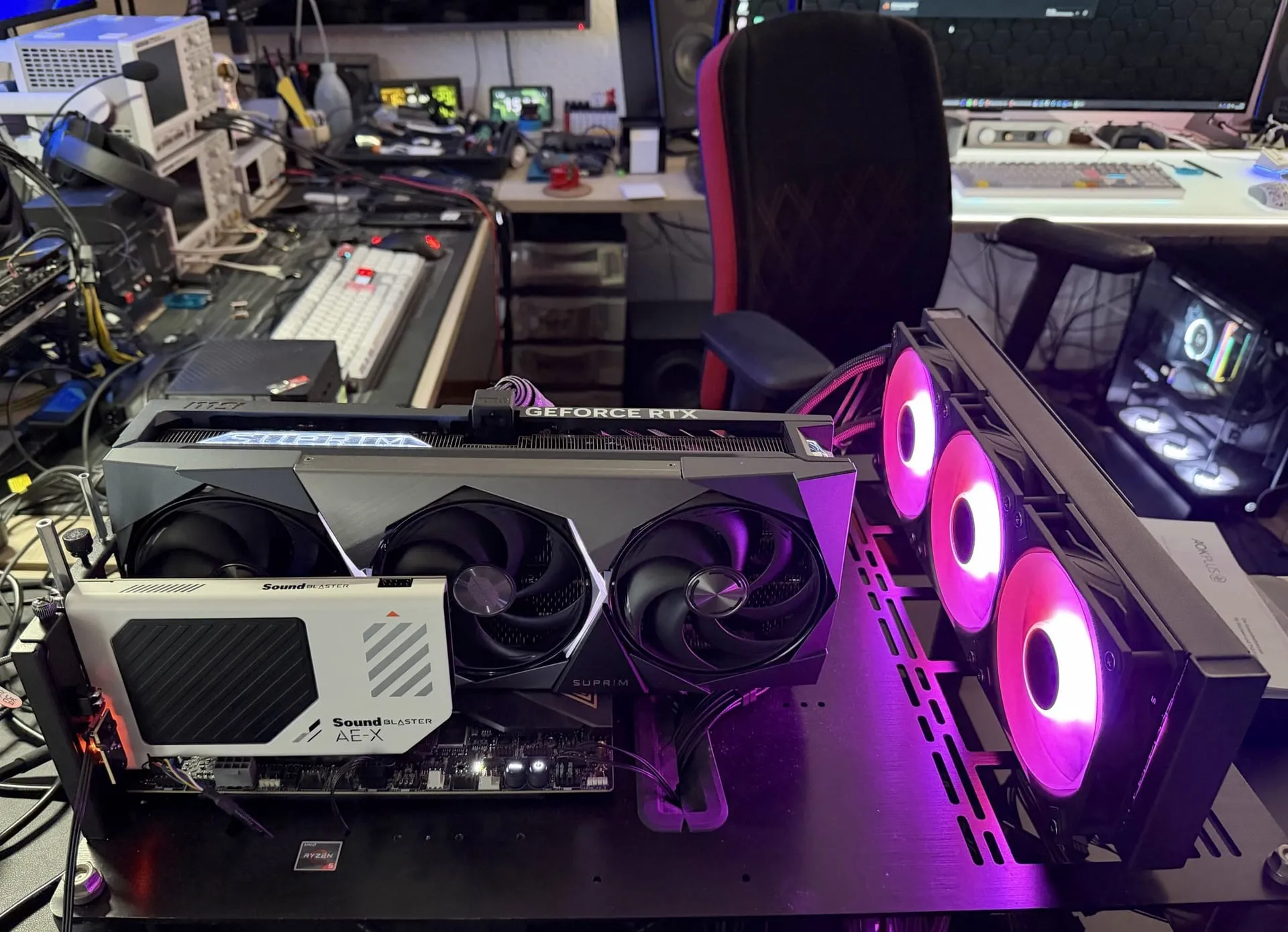
The Mystery of the Missing Silence: Shielding the Sound Blaster AE-X Under Heavy Gaming Load
When testing the performance of the legendary Sound Blaster AE-X sound card alongside a cutting-edge graphics powerhouse like the GeForce RTX 5090, the initial results were promising. The card maintained broadly stable frequency response, output level, and harmonic distortion, suggesting a clean signal pathway for audio delivery.
However, the digital symphony soon encountered a frustrating reality. As the system was pushed to its limits with heavy gaming loads, a distinct issue emerged: noise began creeping into the connected analogue measurement chain. This unexpected interference complicated the picture of a perfectly clean audio setup.
The puzzle quickly shifted from sound quality to physical interference. Tech enthusiasts immediately sought solutions, hypothesizing that the noise was caused by electromagnetic interference generated by the powerful GPU. Attempts were made to address this by introducing shielding—specifically, adding isolated or grounded aluminium and grounded steel plates to the setup.
Despite these common physical fixes, the intervention did not yield a definitive victory. The various metal plates failed to establish a reliable shielding winner, leaving the source of the persistent interference stubbornly hidden.
This experiment led to a fascinating follow-up inquiry, focusing on a single, critical variable: the physical arrangement of the components. The core question became whether introducing an additional metal cover placed directly behind the Sound Blaster AE-X would alter the level of interference experienced when the card is installed immediately below a GeForce RTX 5090.
It turns out that in the world of high-end component synergy, sometimes the most significant obstacles are not electrical, but positional. The next investigation delves into this fascinating interaction, exploring how the physical proximity and arrangement of hardware dictate the unseen noise of the digital age.
Buy on Amazon
Credit
