
T-CREATE P31 SSD: 10Gbps Speed IP67 Durability Test
In the high-stakes world of mobile and cinema video production, storage isn’t just about capacity—it’s about raw, uninterrupted speed. For professionals who rely on external drives to handle massive, uncompressed footage on the go, finding a drive that balances blazing speeds with real-world endurance is the ultimate challenge.
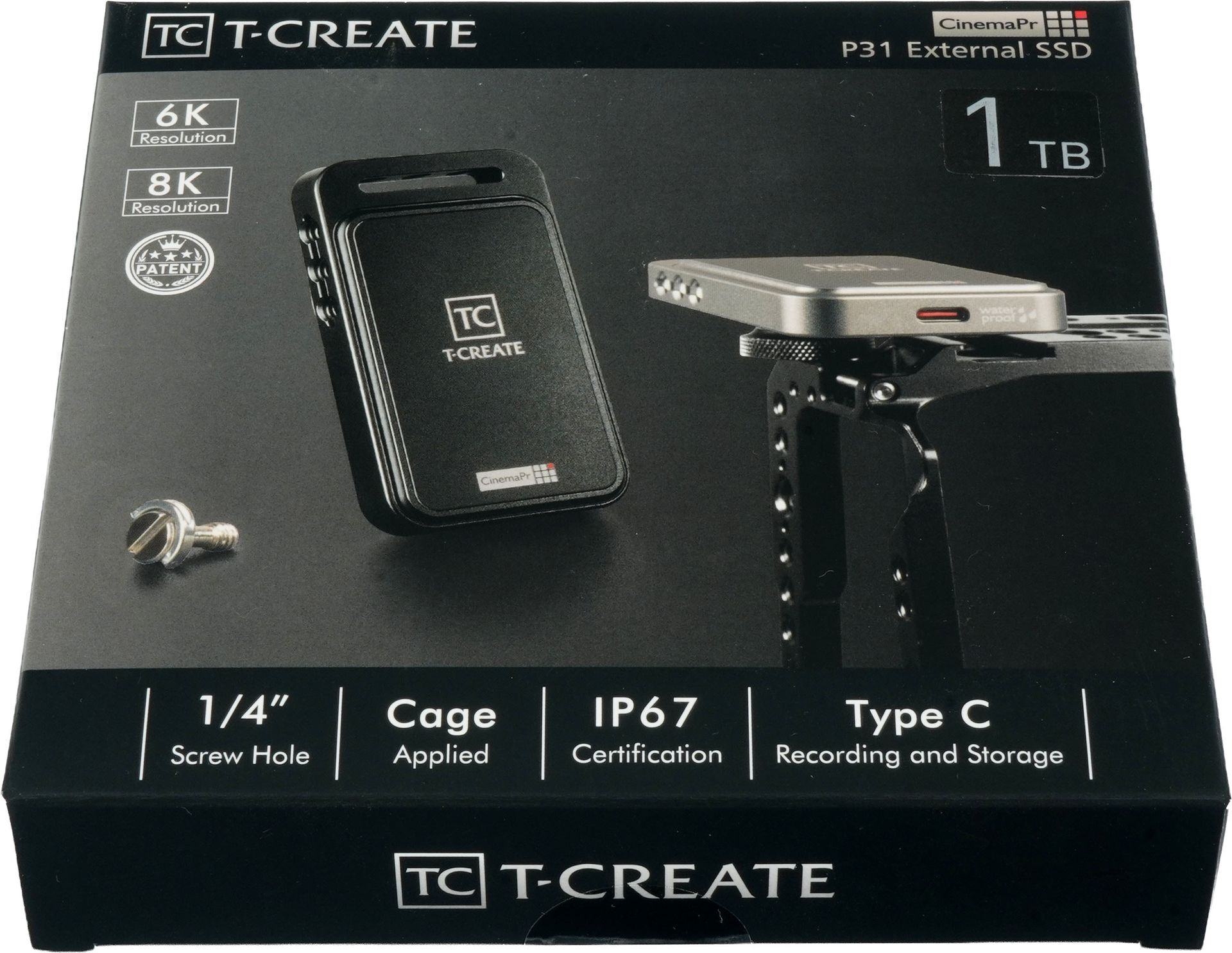
Enter the T-CREATE CinemaPr P31, a 1 TB external Solid State Drive specifically engineered for demanding camera and mobile video rigs. This drive aims to be the backbone of portable workflows, promising swift access to critical data wherever the shoot takes place.
When putting the CinemaPr P31 through the paces, testing was conducted using igor’sLAB SSD Next 1.0.61, a rigorous benchmark environment designed to push the limits of modern storage technology. The results certainly highlight where the drive shines:
The drive successfully leverages its negotiated 10-Gbit/s USB link, demonstrating excellent communication with the host system. For reading large video files—where quick access is paramount—the CinemaPr P31 delivered remarkable throughput, achieving read speeds up to 1,098.37 MB/s.
This level of sustained read performance ensures that editing and immediate data transfer are handled with impressive efficiency, minimizing the frustrating wait times often associated with moving multi-gigabyte video assets.
However, the story of the CinemaPr P31 is not just one of speed; it’s also a nuanced look at storage architecture. While the read performance is stellar, the test also uncovered inherent limitations in its design when dealing with continuous heavy writing:
The drive features a comparatively modest 33.792 GB pSLC area, which sets a constraint on large, persistent data storage. More significantly, sustained write performance proved more temperamental under heavy load. After the initial cache was exhausted, the sustained write speed dropped to approximately 354 MB/s.
For video professionals who constantly stream high-bitrate footage directly onto the drive in real time, this drop reveals a critical trade-off: while read performance is outstanding, users must be aware of how the drive manages intense, continuous writing sessions. It’s a reminder that achieving peak speed often involves balancing raw bandwidth against endurance and sustained output.
Buy on Amazon
Credit