Taiwan drone swarms fly maritime trials to counter China
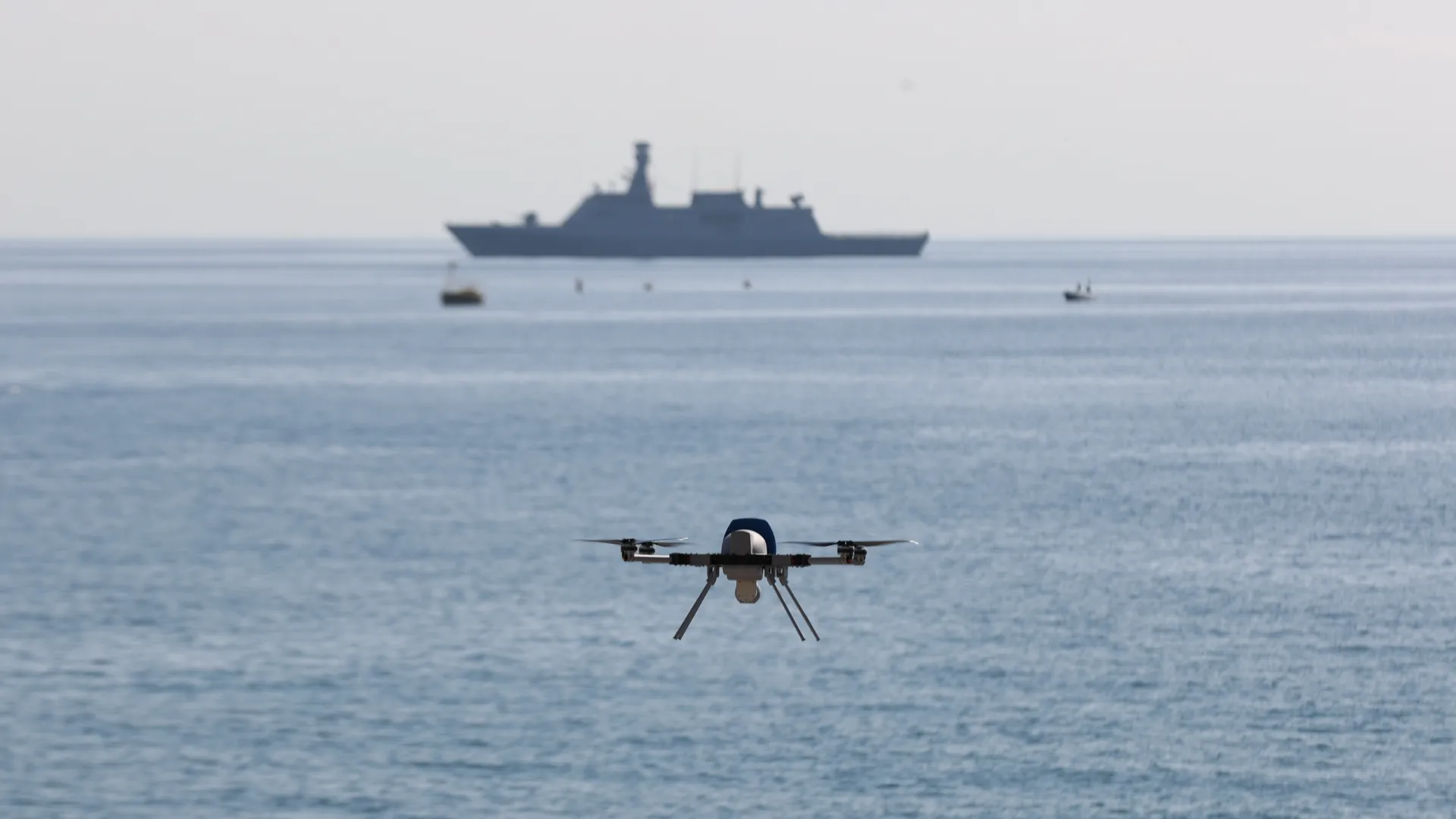
Taiwan Trains Autonomous Drone Swarms to Counter Maritime Threats
In a strategic standoff defined by subtle, persistent pressure, Taiwan is pioneering a future where defense isn’t just about reacting—it’s about operating autonomously. The nation’s Ocean Affairs Council is leading a cutting-edge project to develop an autonomous system that will enable drone fleets to coordinate and execute complex missions without human intervention, offering a new level of vigilance in the waters surrounding the island.
This innovative initiative is specifically designed to counter what experts term “grey-zone” activities carried out by external powers. The focus is on protecting critical undersea infrastructure, an area where the Coast Guard Administration (CGA) has faced mounting challenges, including instances of civilian vessels damaging vital communication cables. To address this, the CGA has significantly ramped up defensive patrols and monitoring of nearly a hundred China-linked boats and other suspicious vessels.
To match this heightened vigilance, the solution is leveraging advanced technology. Working in collaboration with the National Cheng Kung University, researchers have already completed sophisticated flight simulations, testing two separate drone fleets, each comprising ten units. This initial phase successfully transitioned the focus from controlling individual aircraft to mastering the complex coordination of multiple drone detachments.
The goal is to deploy this autonomous capability across vast maritime areas, allowing surveillance and defense operations to be executed with unprecedented efficiency. Imagine a scenario where a fleet of drones doesn’t just fly, but dynamically plans routes, divides tasks, and coordinates movements in real-time—much like a highly specialized air force utilizes different aircraft types to achieve a mission.
The system’s core intelligence is built around sophisticated safety protocols. The drones are programmed to maintain a minimum separation of 100 feet in three-dimensional space, while incorporating advanced leader-follower formation flying and dynamic obstacle avoidance. This framework ensures the drone swarm can respond instantly to rapidly changing conditions and navigate unexpected maritime hazards with precision.
The project is currently exploring the integration of various Western-made drone technologies, focusing on hardware that can operate effectively in demanding maritime conditions. Among the prototypes being tested are the Jump 20, V-BAT, and Flexrotor. A particularly promising component is the V-BAT, a VTOL drone built by the U.S. defense firm Shield AI. This drone is especially beneficial for the CGA because it can take off vertically from the relatively constrained deck space of non-aircraft carrier ships and boasts an endurance of over twelve hours, making it ideal for extended surveillance missions without requiring major ship renovations.
The next phase of development involves moving from simulation to reality. Researchers are now focusing on hardware-in-the-loop testing, prototype integration, and actual flight trials over real maritime environments to rigorously assess the system’s reliability under diverse sea and weather conditions. This autonomous framework promises to redefine maritime defense, positioning Taiwan at the forefront of intelligent, distributed security operations.
Credit
