Testing Superstrike clicks for faster reaction time
The Click Conundrum: Do Analogue Switches Actually Speed Up Your Reaction Time?
In the world of competitive gaming, milliseconds matter. The pursuit of the perfect click—the instantaneous moment between thought and action—is a constant quest for optimization. Recently, the focus has shifted to the physical mechanics of input, specifically debating the merits of traditional optical clicks versus the emerging concept of analogue switches. Are these physical differences translating into measurable advantages in human reaction time?
To settle this debate, a rigorous test was conducted using the Human Benchmark platform. The goal was to determine if adjusting the distance required to register a click, facilitated by analogue technology, offers a tangible speed boost for professional players.
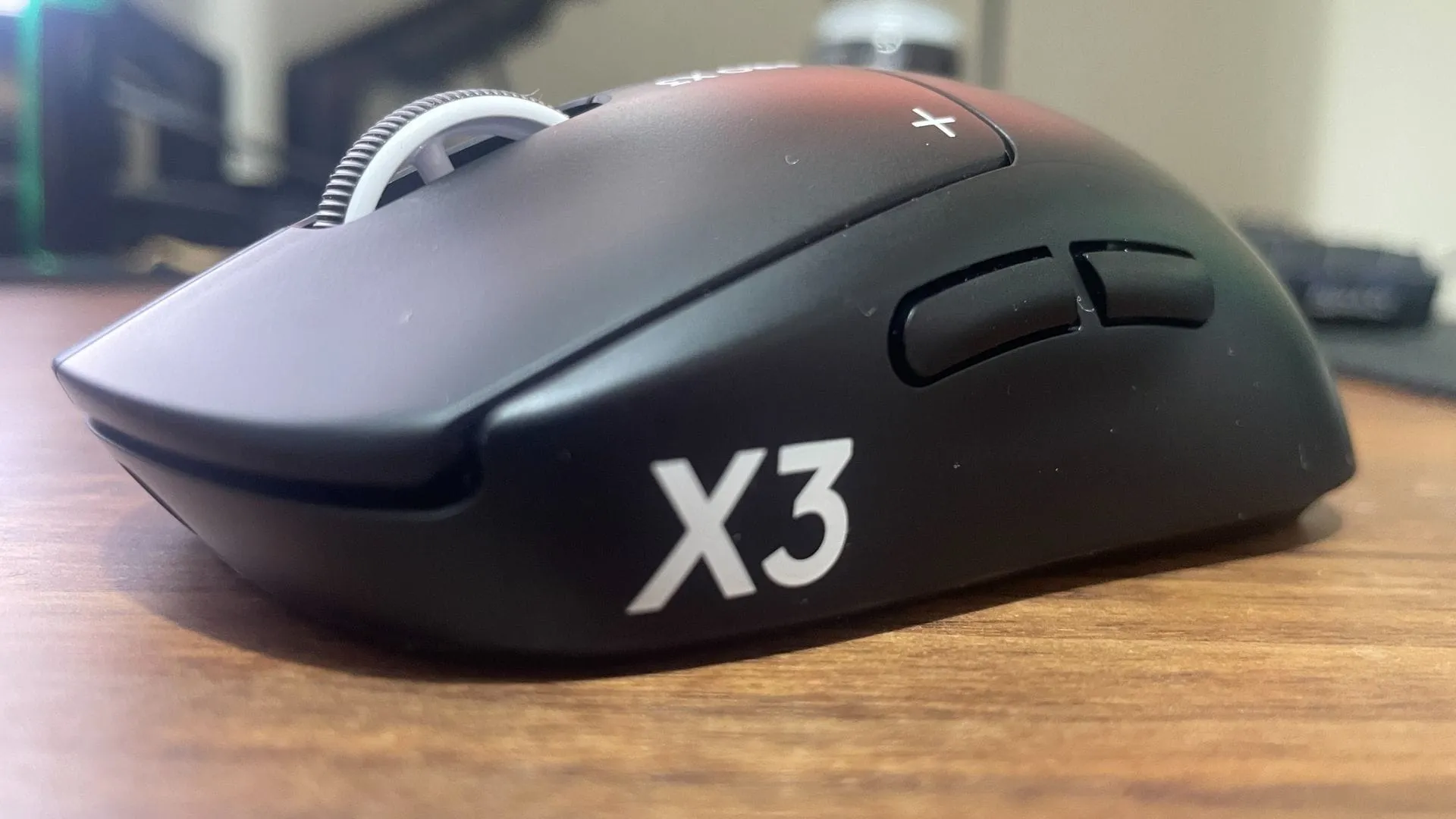
The comparison pitted two popular gaming mice: the SteelSeries Sensei Pro, representing standard optical technology, against the Logitech G Pro X3 Superstrike, which utilizes analogue switches to reduce actuation distance.
The experiment involved 150 reactive clicks, alternating between the two devices and various actuation levels (level 1 and level 3). While the theoretical promise of analogue switches is a reduction in latency, the practical results offered a more nuanced picture. When comparing the reaction times recorded by testers, the observed differences between the mice were minimal. For instance, one user recorded reaction times that were virtually identical across both devices and actuation settings.
This lack of significant separation suggests that while the hardware has potential, the measurable impact in an isolated test setting is heavily influenced by external variables. The results highlight that reaction time is not solely determined by the physical switch mechanism; it is also significantly impacted by factors such as hydration, sleep quality, and general physical readiness.
Although the data did not reveal a dramatic, guaranteed speed advantage, the experiment reinforces a crucial point for the gaming community: consistency triumphs over speculation. While the potential for analogue switches to shave off milliseconds is intriguing, true performance gains remain dependent on the player’s physical condition. For the competitive player, the true advantage lies not just in the technology, but in the rigorous self-testing required to find optimal performance under real-world conditions.
Give it a test yourself at Human Benchmarkand let us know where you score on the curve!
Buy on Amazon
Credit
