This $65 keyboard ruined my entire mechanical collection
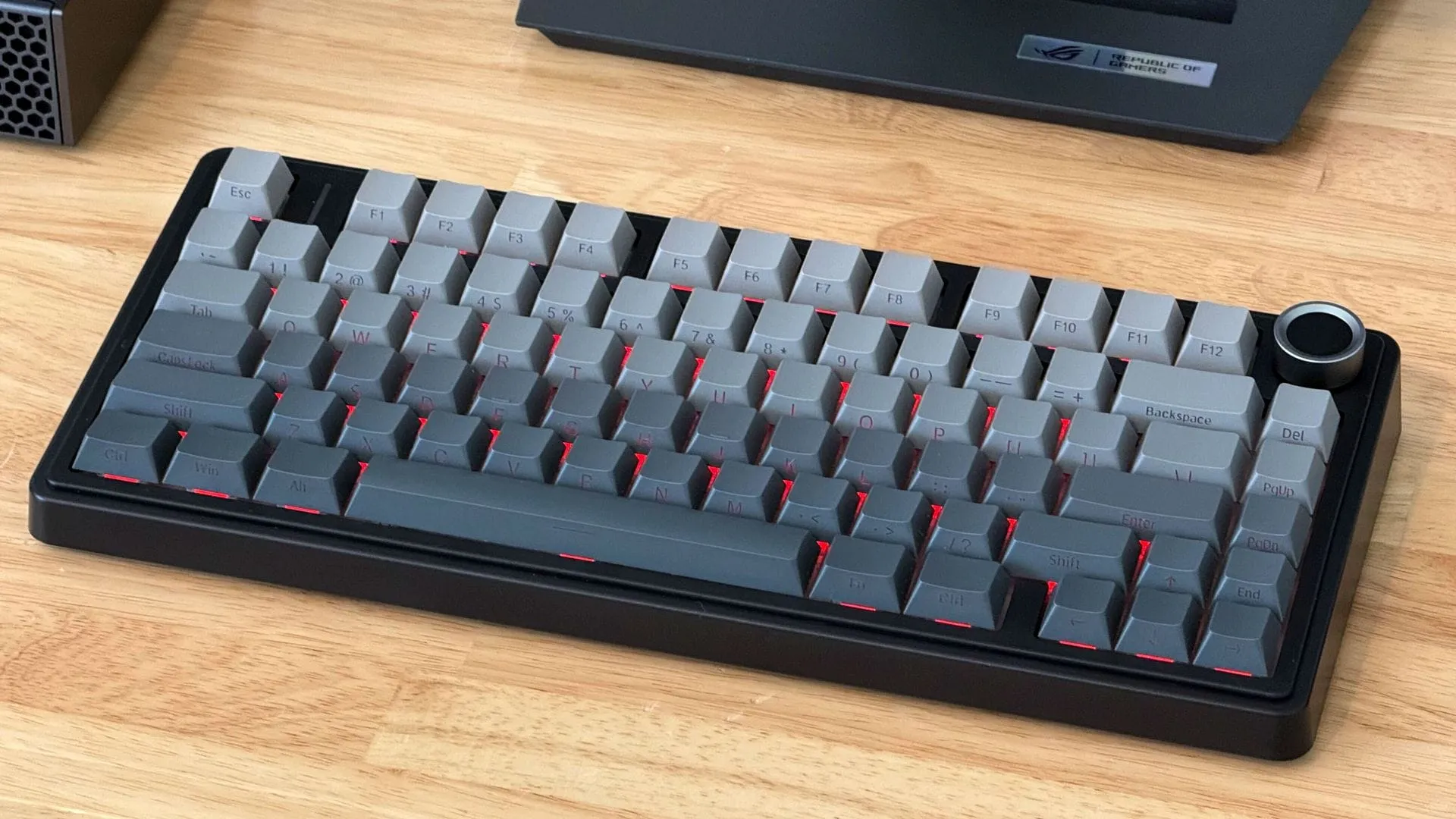
Sometimes you need a keyboard, and you need it immediately. That was exactly the scenario a couple of months ago when I was running local AI testing with Nvidia GB10 boxes. Trying to move a known-good board between systems under test was proving to be an absolute headache, forcing me to search for a solution that was compact, ready, and available right now.
After enough inconvenient keyboard swaps, I decided to stop the hassle and dive into the search. I needed a compact Bluetooth board ready for my workbench, and I didn’t want to get stuck in analysis paralysis. I jumped onto Amazon, filtered for same-day delivery, and landed on the Aula F75 Pro for just $65.
Initially, I was suspicious. There was a lack of in-depth, independent reviews online, and the switches—Leobog Reaper—were unfamiliar to me, unlike the standard Cherry MX lineup I’m used to. Yet, the specifications hinted at something special. These switches were linear and featured a relatively light actuation force, which is crucial for protecting my RSI-ravaged wrists. Even better, they claimed to be pre-lubed, an upgrade I’d never bothered with on any of my previous boards.
The features packed into the F75 Pro suggested custom keyboard DNA in its lineage. It offered spiffy dual-tone PBT keycaps with side legends, a stack of noise-shaping and noise-reducing materials, and a dedicated volume knob that also acted as a mute button. Coupled with wired, 2.4 GHz wireless, Bluetooth connectivity, and customizable RGB backlighting, the package was undeniably compelling for the price.
After the delivery arrived, I connected the keyboard and started typing. The moment I hit the keys, I realized I had found something genuinely remarkable. The Leobog Reaper switches were, frankly, the nicest I have ever felt. They completely ruined me for every other board with MX-style switches. They boasted a light 36gf initial force, a 45g actuation, and a 55gf bottom-out force, ensuring comfortable typing without undue stress. The switches delivered a pleasant, high-pitched “thock” that provided reassuring acoustic feedback without the jarring click of blue-type switches.
This tactile and auditory experience was further enhanced by the five-layer acoustic dampening stack built into the chassis. The result was a sound profile I found exceptionally satisfying. Furthermore, the board offered hot-swap support, making future modding incredibly easy. Testing confirmed the quality—at 107 wpm with 99% accuracy on the MonkeyType test, I felt surprisingly accurate and fast.
While the switch experience was stellar, the outer plastic shell felt a bit cut-rate. If you are looking for the satisfaction of milled aluminum or carved stone, this board won’t deliver that premium feel. However, you are touching and listening to the keys, and in that regard, the experience far surpasses expectations for a keyboard at this price point. I also appreciated that most of the functionality was accessible without installing extra software.
Ultimately, the Aula F75 Pro delivers a thoughtful, premium typing experience. It proves that you don’t always need to spend hundreds of dollars to achieve a long-lived, high-quality typing experience, and it definitely keeps the extra cash in my pocket.
Buy on Amazon
Credit
