TOUGHBOOKs become the AI nerve center for frontline ops
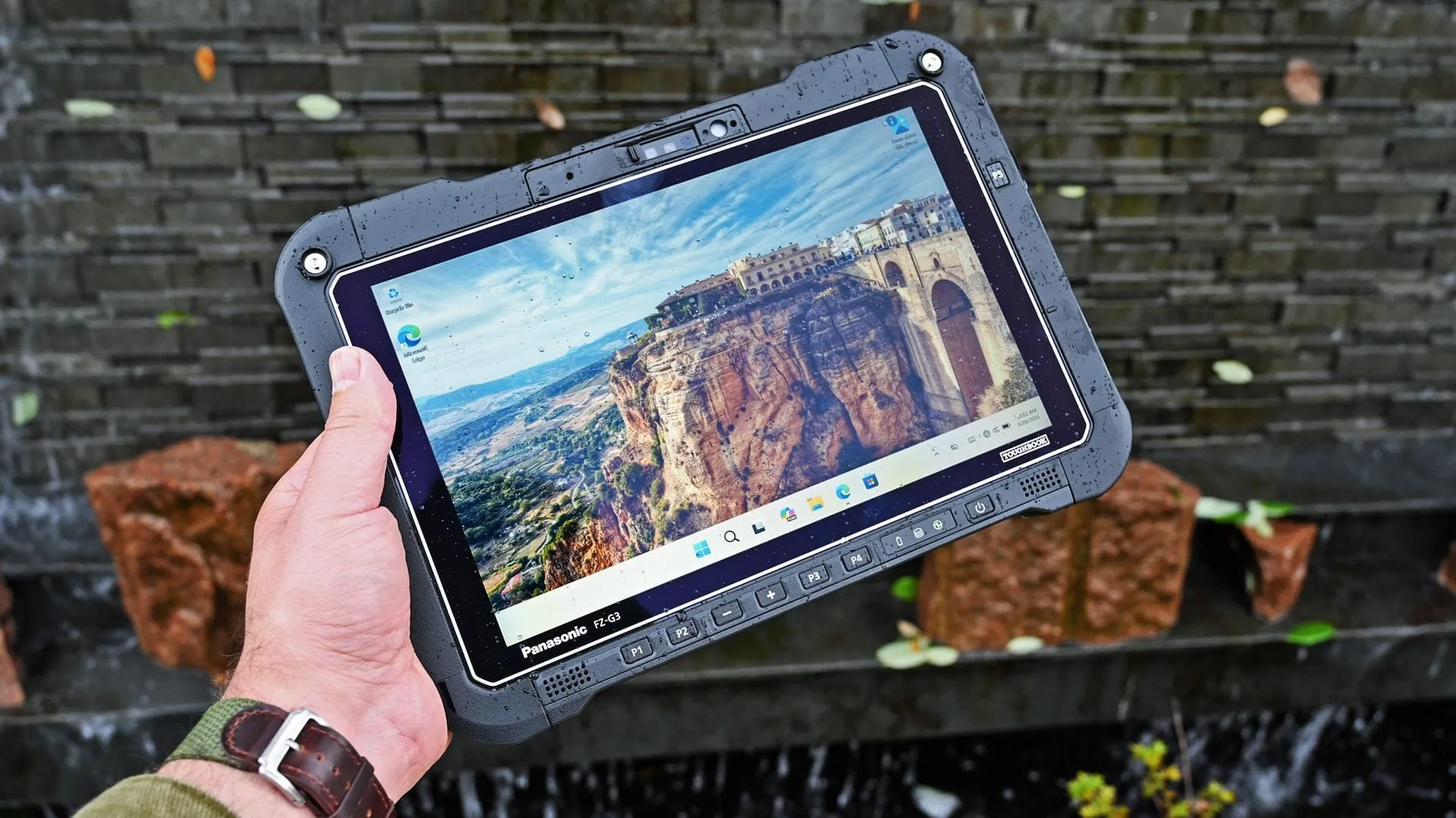
When you think of rugged computing, you probably picture a laptop that can survive a few accidental drops and a bit of rain. But the latest evolution from Panasonic’s TOUGHBOOK line suggests that the future of tough technology isn’t just about surviving; it’s about intelligence. These devices are no longer just durable; they are becoming the mission-critical edge computers at the heart of everything that protects, rescues, and supports us.
At the recent product briefing, Panasonic made a compelling case that these systems are purpose-built. They aren’t designed to answer emails from a coffee shop; they are deployed in environments—from police cruisers and ambulances to military vehicles and disaster zones—where failure is simply not an option. As one executive noted, these devices are built to withstand extreme heat, cold, vibration, and dust, operating in conditions where lives are on the line.
This philosophy has allowed the TOUGHBOOK line to carve out a unique niche. While consumer laptops chase thinner designs and dazzling displays, Panasonic has focused on a different frontier: creating systems that can communicate over private 5G networks during storm response operations and analyze data locally, regardless of connectivity.
The latest lineup, including the TOUGHBOOK 34 and the TOUGHBOOK G3, represents a significant leap forward, evolving over three decades of rugged design. The goal is no longer just durability; it’s powerful, adaptable intelligence.
The TOUGHBOOK 34, featuring a larger 12.4-inch display, is designed for command centers and managing information-dense workflows in vehicles. Meanwhile, the compact TOUGHBOOK G3 offers a more maneuverable 10.1-inch form factor, making it easier to carry into the field. This dual approach allows for flexibility, giving users the right tool for the specific job—be it in-vehicle CAD control or essential patient care.
But the biggest headline upgrade is the integration of artificial intelligence. Both devices now leverage Intel’s latest Core Ultra platform, complete with built-in NPUs (Neural Processing Units) for local AI acceleration. This means these edge computers can process complex information instantly, without needing to rely on a constant cloud connection. This capability is game-changing for deployed military personnel who may operate without network connectivity due to operational security, allowing them to perform tactical and technical searches instantly.
This capability extends to tactical applications, such as analyzing imagery from systems like the Teledyne FLIR ION-series tactical reconnaissance drones. The TOUGHBOOK effectively becomes the intelligence terminal, bringing drone data onto the device for local analysis, rather than relying on remote processing.
Beyond military and emergency response, the TOUGHBOOKs are proving to be powerful fleet intelligence platforms. Through the TOUGHCommand ecosystem, agencies can connect vehicle diagnostics—including VINs, fuel levels, odometer readings, and maintenance schedules—into a centralized dashboard. New Command Intelligence features allow fleet managers to query this massive data using AI and natural-language questions, transforming the rugged laptop into a true command-and-control system.
Perhaps the most intriguing innovation, however, is the modularity offered by Panasonic’s xPAK ecosystem. This system allows users to swap hardware modules on the fly—adding barcode scanners, serial ports, fingerprint readers, or networking hardware—to adapt the single device to countless job requirements. This means a utility worker can add scanning capabilities while an automotive technician can attach legacy ports for vehicle diagnostics, all without replacing the core computer. This ability to locally reconfigure hardware offers unprecedented flexibility and security, ensuring that sensitive operational data remains controlled by the user, not just the manufacturer.
These updated TOUGHBOOKs prove that a laptop can still be a specialized tool built for serious, high-stakes missions. Panasonic is not just building tough machines; they are building the intelligent, connected edge computers that empower the people who protect and serve us.
Buy on Amazon
Credit
