Tracing the source of 3D-printed ghost guns
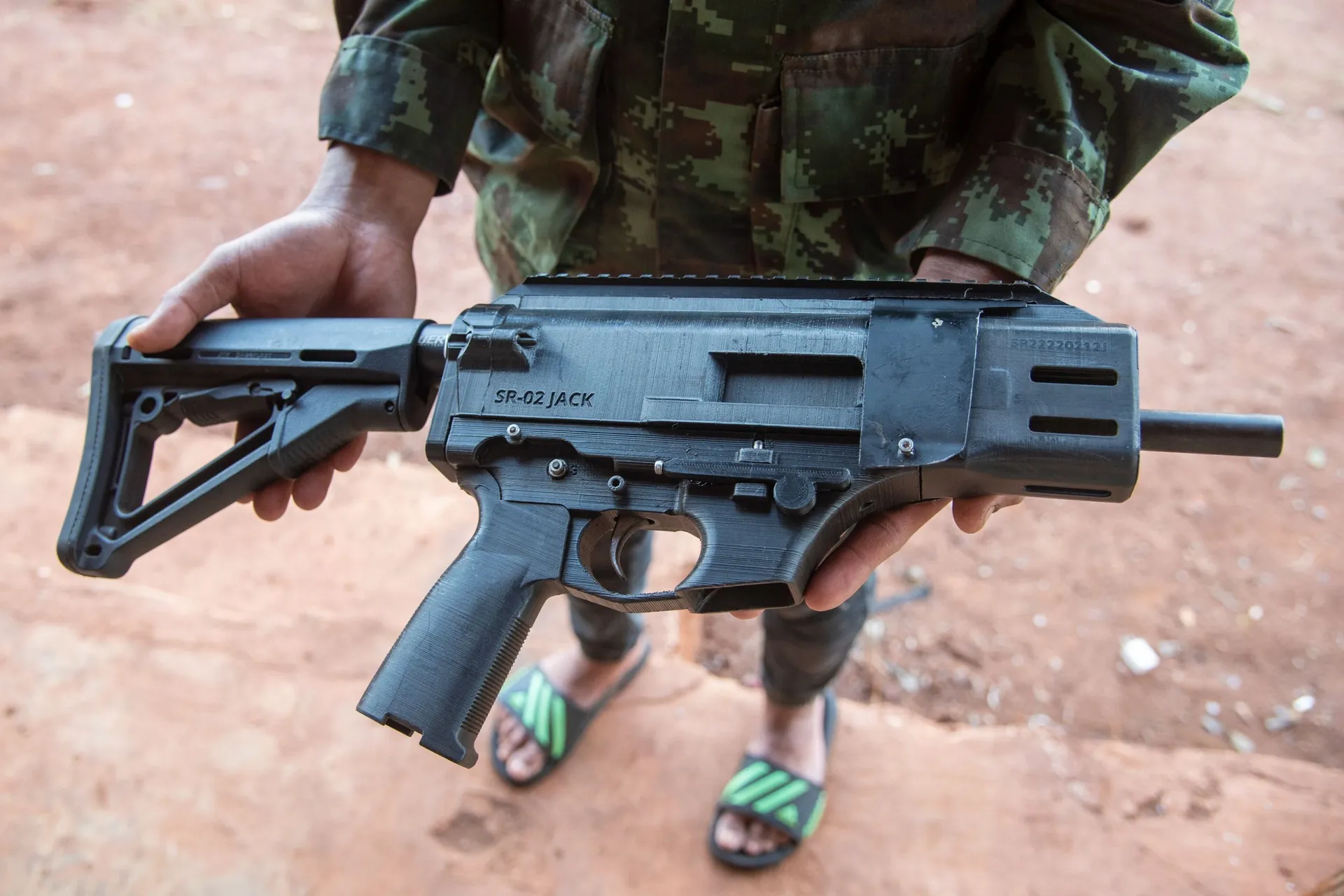
Unmasking the Plastic: Scientists Develop Forensic Method to Trace 3D-Printed Firearms
The world is grappling with a new, insidious challenge: the rise of untraceable 3D-printed firearms. As these easily manufacturable, often disposable plastic weapons become more accessible, law enforcement faces a formidable obstacle. Serial numbers and licensing networks are designed to track traditional firearms, but the flexibility of 3D printing introduces a ghost in the machine—a plastic weapon with no clear origin. Finding a way to link these illicit objects back to their source is crucial to cracking down on illegal manufacturing and distribution.
A significant step forward in this investigation has arrived from the realm of forensic science. Researchers from Curtin University in Perth, Australia, have successfully developed a novel method that allows experts to analyze 3D-printed objects and match them to the exact filament used in their creation. This breakthrough offers a potential roadmap for linking seized 3D-printed weapons to specific manufacturing materials, promising to reveal a clearer network behind the production of these plastic firearms.
The challenge lies in the material itself. When a 3D printer creates an object, the filament undergoes physical changes. This research team, led by Dr. Georgina Sauzier, combined advanced thermoanalytical techniques to measure these subtle changes. They utilized differential scanning calorimetry (DSC), a powerful tool that maps how heat flows through a sample by measuring energy usage during temperature changes. By analyzing the sample’s thermal properties, the scientists could create a digital fingerprint.
The key differentiator came from the material science itself. The research found that substances like PLA, which are used extensively in 3D printing, possess a semi-crystalline molecular structure. This structure provides distinct temperature transition points that can be measured under DSC testing, allowing the physical properties of the printed object to be cross-referenced directly with the original filament used to print it. In their initial tests, the team successfully matched 26 out of 28 PLA samples, demonstrating the method’s initial potential.
While this method shows remarkable promise, the investigation is still in its early stages. The research acknowledges that variables introduced by the printing process complicate the picture. Factors such as cooling rates, print speeds, and infill patterns can significantly alter the final physical properties of the plastic, adding complexity to the forensic process. Furthermore, while the method was highly successful for PLA, other materials like ABS and PETG showed less clarity, suggesting that future research will need to account for these variations more thoroughly.
Despite these initial limitations, the impact of this work is substantial. By establishing a foundational link between the printed object and the raw material, the research provides law enforcement with a new avenue to investigate the supply chain. As the science matures and testing becomes more rigorous, the potential exists to trace these dangerous items not just to a finished product, but potentially back to the specific printer and the filament purchased, creating a robust tool to dismantle illegal networks.
Buy on Amazon
Credit
