US accused of replacing workers gets a medal
In a high-stakes collision between corporate policy and immigration law, a major technology firm found itself at the center of a heated political debate. Just three months after Microsoft addressed a controversial conspiracy theory about its labor practices, the Trump administration took decisive action, suspending the company’s ability to apply for green cards for H-1B visa holders.
This move stemmed from accusations that Microsoft had fraudulently utilized the H-1B program to replace American workers with foreign talent. The core of the dispute centered on the use of skilled immigration pathways and whether these programs were being exploited for economic advantage rather than filling genuine labor gaps.
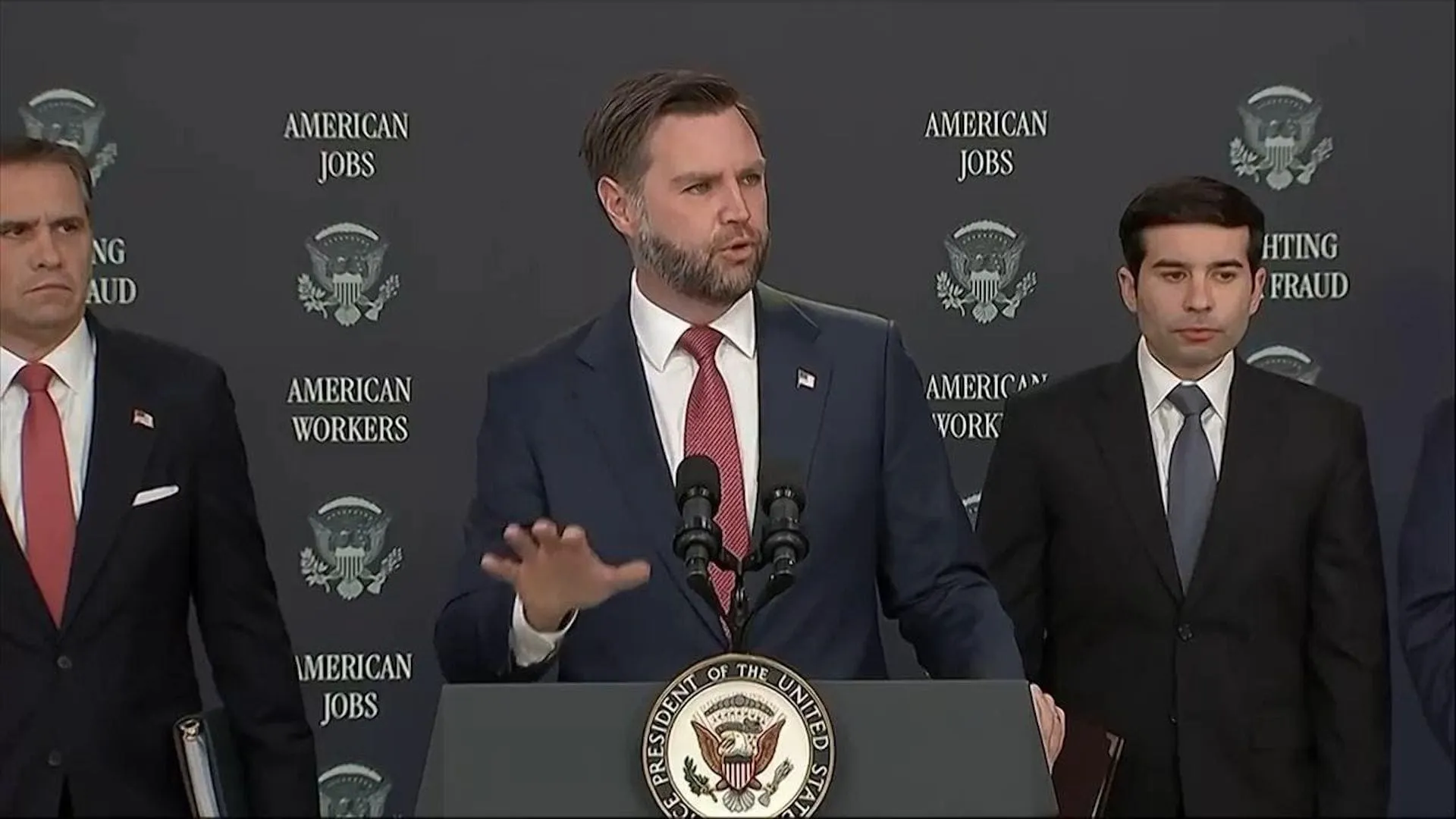
The tension reached a fever pitch when Vice President of the United States, JD Vance, stepped in to characterize the immigration system itself. Vance argued that the H-1B program, intended to bring in specialized talent, had become “rife with fraud” over recent decades.
Vance drew a stark comparison, pointing out that Microsoft’s recent labor history seemed to contradict the spirit of American employment. He noted that the company had laid off 6,000 American workers in the previous year while simultaneously benefiting from 6,300 H-1B visas and nearly 3,000 green cards. In essence, Vance framed this as replacing laid-off American workers with “one-and-a-half foreign indentured servants.”
This provocative language painted immigration as a form of human trafficking, rather than a mechanism for highly skilled workers choosing to contribute to the U.S. economy.
Microsoft swiftly responded to the criticism. The company issued a statement assuring the administration of further information, highlighting that the majority of its recent H-1B filings involved extending or changing the status of existing employees, rather than hiring entirely new arrivals.
Furthermore, Microsoft directly addressed the accusation of exploiting the system, asserting that H-1B visa holders are paid the same as other employees performing comparable work, countering claims that they were receiving unfair compensation.
The legal suspension of permanent residency applications for H-1B workers occurred in a moment that seemed almost ironically timed. On the same day, President Donald Trump presented Microsoft CEO Satya Nadella with the National Medal of Technology and Innovation, alongside other industry leaders like Elon Musk, Nvidia CEO Jensen Huang, and Michael Dell. This juxtaposition highlighted the complex and often contradictory relationships between major American corporations, immigration policy, and executive recognition.
Buy on Amazon
Credit
