US and UK launch 3700lb torpedo from drone submarine
The Deep Dive: How Allied Submarines Are Mastering Autonomous Warfare
The future of naval combat isn’t just about bigger ships or faster planes—it’s about machines that can think, act, and fight with minimal human intervention. That is the exciting reality unfolding in the world of autonomous undersea warfare, where the U.S. Navy and the British Royal Navy have just achieved a monumental breakthrough in allied technology.
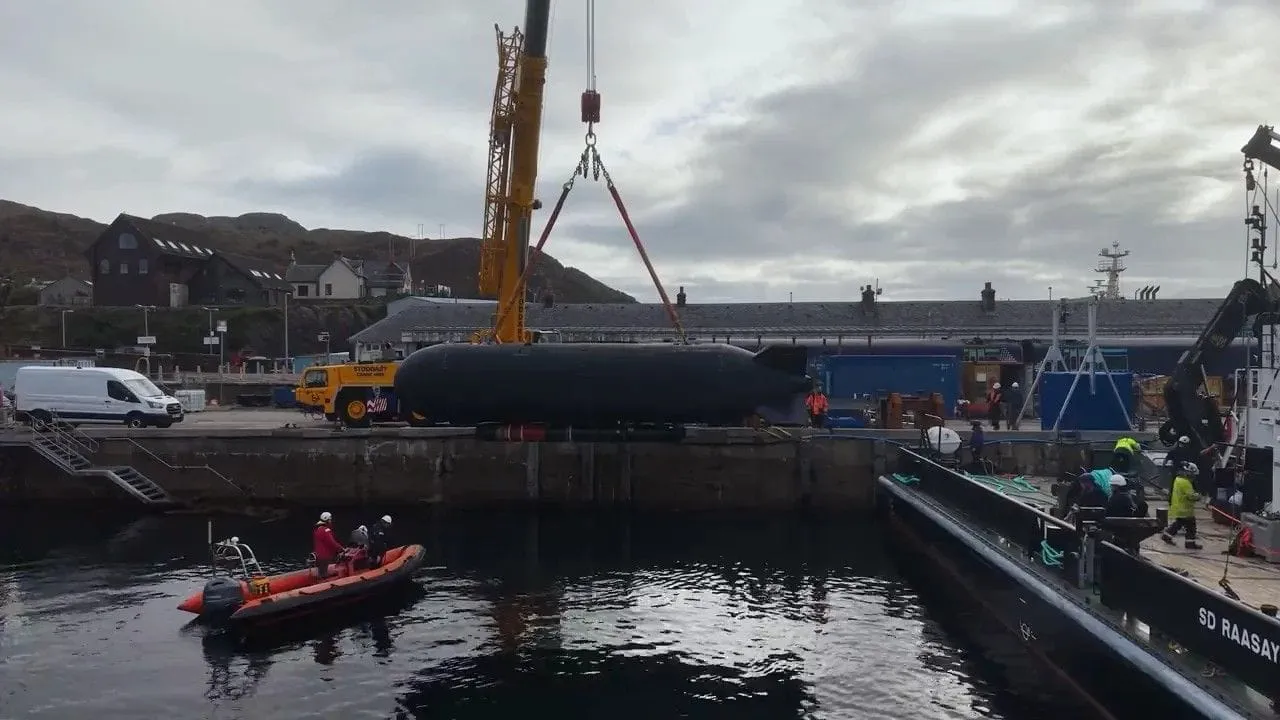
In a historic move, these two maritime giants successfully tested the launch of a U.S. Mk 48 heavyweight torpedo from a Royal Navy uncrewed drone submarine, the XV Excalibur. This proof-of-concept launch, conducted at the British Underwater Test & Evaluation Center (BUTEC) in Scotland on September 13, marks a watershed moment for cooperative defense technology.
This achievement is more than just a technical success; it validates a shared vision for true interoperability. As Chief of Naval Operations Adm. Daryl Caudle stated, this successful test proves that allied forces can seamlessly integrate weapons, payloads, and mission architectures across diverse platforms. It’s about increasing flexibility, scale, and combat power to meet the demands of tomorrow’s strategic environment.
The groundwork for this innovation was laid under the umbrella of AUKUS Pillar 2, a powerful military partnership focused on accelerating the deployment of cutting-edge technologies, including artificial intelligence, quantum computing, and autonomous underwater systems, aimed at securing a strategic technological edge in the Indo-Pacific region.
The project, officially known as Project Broadsword, brought together expertise from the Department of the Navy Rapid Capabilities Office, the Royal Navy, and various industry partners. The process, which took just seven months from approval in February 2026 to execution, showcased the deep collaboration required to move complex defense technology from concept to reality.
The heart of the innovation lies in the platform itself. The XV Excalibur is the British Royal Navy’s Extra-Large Uncrewed Underwater Vessel (XLUUV), a drone submarine designed to operate autonomously or via remote control without a single crew member aboard. This vessel served as a mobile underwater laboratory for testing next-generation technology.
Because the Excalibur lacked traditional internal torpedo tubes, engineers ingeniously attached the 2-ton torpedo externally, proving that autonomous systems can manage complex integration and deployment of massive payloads.
The Mk 48 torpedo itself is a heavyweight weapon, designed to sink deep-diving submarines and high-performance surface ships. Successfully launching this powerful kinetic payload from an uncrewed robotic submarine is a monumental leap, establishing a new benchmark in autonomous weapons deployment.
Looking ahead, the collaborative spirit remains strong. Following the success of Project Broadsword, the U.S. Navy plans to accelerate this progress with Project CUTLASS. The next phase will focus on integrating advanced payload data, refining command and control architectures, and developing tactical employment scenarios using platforms like the Anduril Dive-XL.
This milestone is a clear indicator of the accelerating shift toward autonomous warfare, where AI-driven systems can capture, process, and execute tasks with unprecedented speed and precision. It signals that the era of truly integrated, flexible, and autonomous undersea capabilities is here, promising a new chapter in naval strategy.
Buy on Amazon
Credit
