Voyager 1 hits one light-day distance in 17 days traveling 16 billion miles
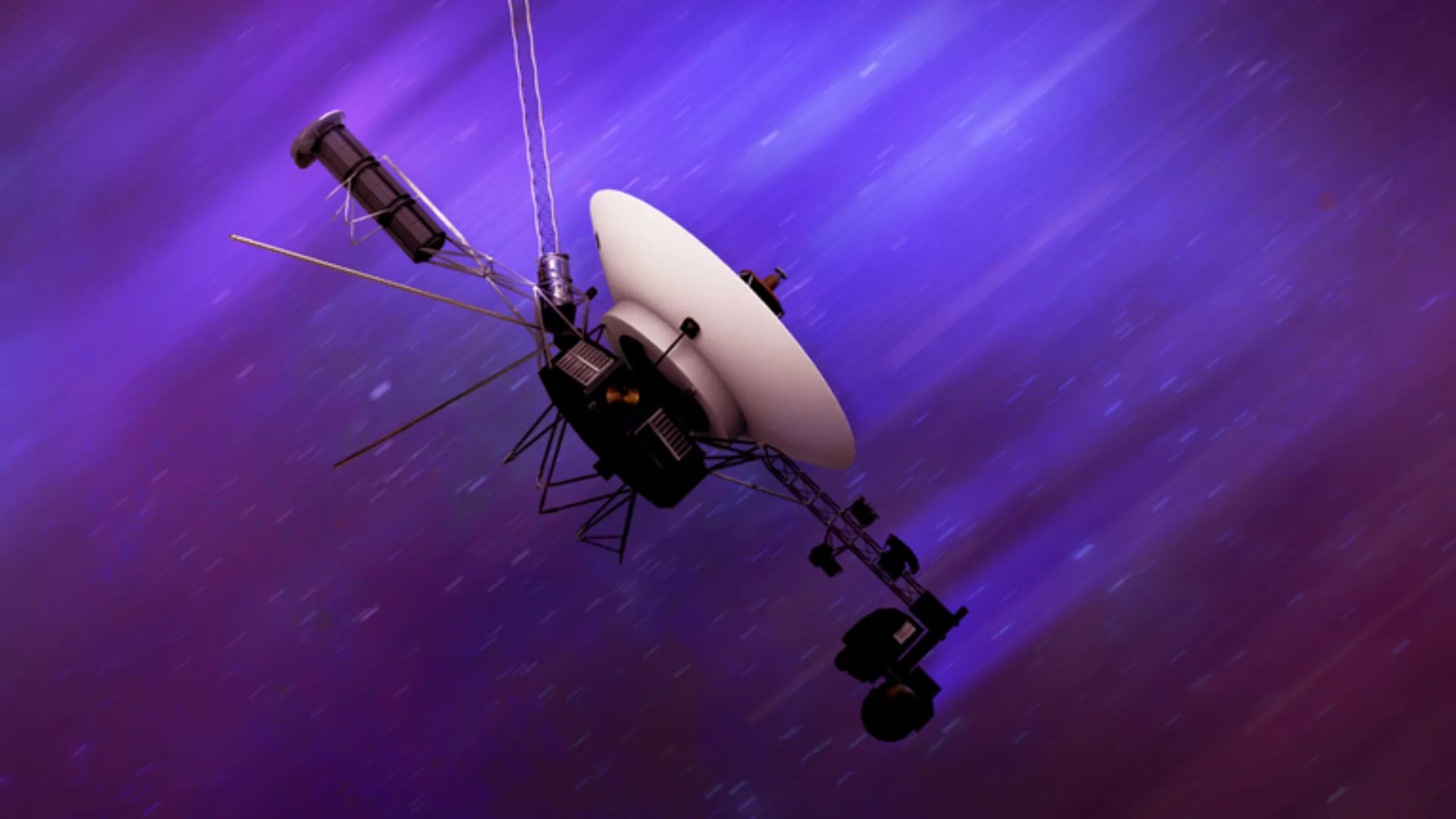
After nearly five decades of relentless travel, the Voyager 1 spacecraft is preparing for an achievement that dwarfs all previous human endeavors. This legendary probe, initially launched to observe the giants of the solar system, is set to reach a distance of one light-day from Earth, making it the most distant artificial object in history.
This milestone isn’t just a change in coordinates; it represents a staggering feat of cosmic perspective. A light-day is not a measure of time, but the distance light must travel in 24 hours. This translates to an unimaginable span: approximately 16 billion miles or 26 billion kilometers. To put that scale into perspective, the Moon is only about 238,855 miles away, while our home planet sits 93 million miles from the Sun. Voyager 1 is venturing into a realm where time and distance blur into deep interstellar space.
The journey itself is a testament to engineering endurance. Traveling at an estimated speed of 37,844.49 mph relative to the Sun, the spacecraft is moving steadily, though not at the fastest recorded speed for any human-made object. Nevertheless, the total time required to reach this landmark is immense—nearly 50 years, two months, and thirteen days.
Reaching this distance highlights the incredible resilience of the Voyager probe. NASA scientists have managed to extend the mission lifespan by nearly ten times the original timeline. This extended journey has presented numerous engineering hurdles. Throughout its voyage, Voyager 1 faced challenges, including a critical memory error in 2024 that required weeks of intensive diagnosis and repair, and an emergency instrument shutdown due to power crises. These events underscored the extreme difficulty of operating in deep space, where communication latency can exceed 22 hours.
Despite these technical setbacks, the spacecraft remains operational. The three radioisotope thermoelectric generators (RTGs) powering the probe are estimated to provide sufficient energy to keep Voyager 1 functioning well into the 2030s, ensuring it continues transmitting data across the vastness of interstellar space.
As Voyager 1 continues its epic trajectory, its destination shifts toward the stars. The probe is currently aimed toward a star system known as AC +79 3888 or Gliese 445, nestled within the Ursa Minor constellation. While the spacecraft is expected to pass within 1.7 light-years of that star in just 17 light-years, the ultimate journey to its next destination is measured in deep cosmic time—estimated to take more than 300,000 years.
Buy on Amazon
Credit
