VT lab 3D prints liquid metal to boost heat conductivity 40x
Printing Liquid Metal: How a Lab is Redefining 3D Printing with Self-Healing Circuits
Imagine a material that can conduct electricity, be infinitely tough, and even heal itself. This isn’t science fiction; it’s the cutting edge of additive manufacturing, and a team of researchers is putting this revolutionary concept into reality by printing with liquid metal.
From the labs of Virginia Tech, a graduate student named Hugh Grennan has pioneered a groundbreaking method for combining liquid metal with silicone to create a printable composite material. This isn’t just a novelty; it’s a leap forward in materials science that promises to change how we design electronics and build flexible devices.
The magic starts with the material itself: eutectic gallium-indium, or EGaIn. This metal is liquid at room temperature, offering incredible malleability. When mixed with uncured polydimethylsiloxane (PDMS) silicone, the resulting composite exhibits remarkable properties, including soft elasticity, extreme toughness, and even autonomously self-healing electrical circuits.
How do they achieve this magic? The process involves introducing the liquid metal into the silicone, causing it to separate into tiny droplets, each wrapped in a thin gallium oxide skin. As the mixture is heated, the silicone solidifies, locking the droplets into place, yet they remain liquid inside.
These droplets are incredibly small, measuring only 10 to 100 microns in diameter. This unique structure allows for unprecedented performance. Research indicates that the thermal conductivity along the direction of the droplets is nearly 40 times that of the unfilled silicone, reaching 9.9 W/mK. This ability to efficiently spread heat is critical for thermal management in complex electronic systems.
The process is guided by an advanced, syringe-fed 3D printer. Instead of relying solely on electrical current, the printer manipulates the flow dynamics of the composite to guide the heat, allowing researchers to print custom shapes, like long, thin heat sinks, directly.
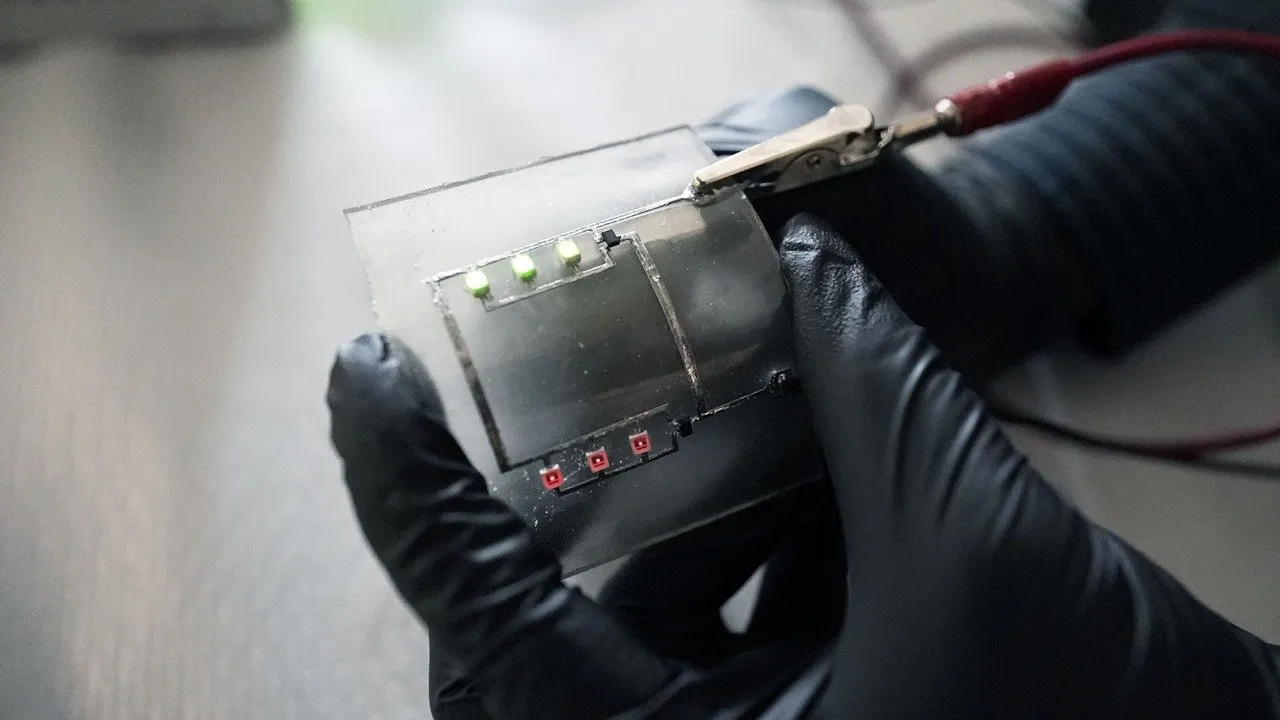
The demonstration of conductivity is equally fascinating. Grennan showed that when the liquid metal is forced to merge, it forms a continuous conductive track. Even when this track is cut or punctured, the metal flows through the new openings, demonstrating a self-healing electrical pathway. This quality means the material can withstand damage while maintaining its functional integrity.
This technology bridges the gap between flexible electronics and robust thermal management. While liquid metal is already finding uses in high-performance hardware—such as in the thermal interface of Nvidia’s GeForce RTX 5090 GPUs—the application of liquid metal in 3D printing is opening up entirely new possibilities.
Looking ahead, this research points toward a future filled with innovative products. The potential applications are vast, ranging from custom heat spreaders and flexible wearable devices to directed cooling systems for electric vehicles and advanced robotics. As the wearables market continues its rapid growth, materials that are both flexible and highly conductive are set to drive the next generation of innovation.
Buy on Amazon
Credit
