Washing machine safety rules exceed AI rules says Microsoft
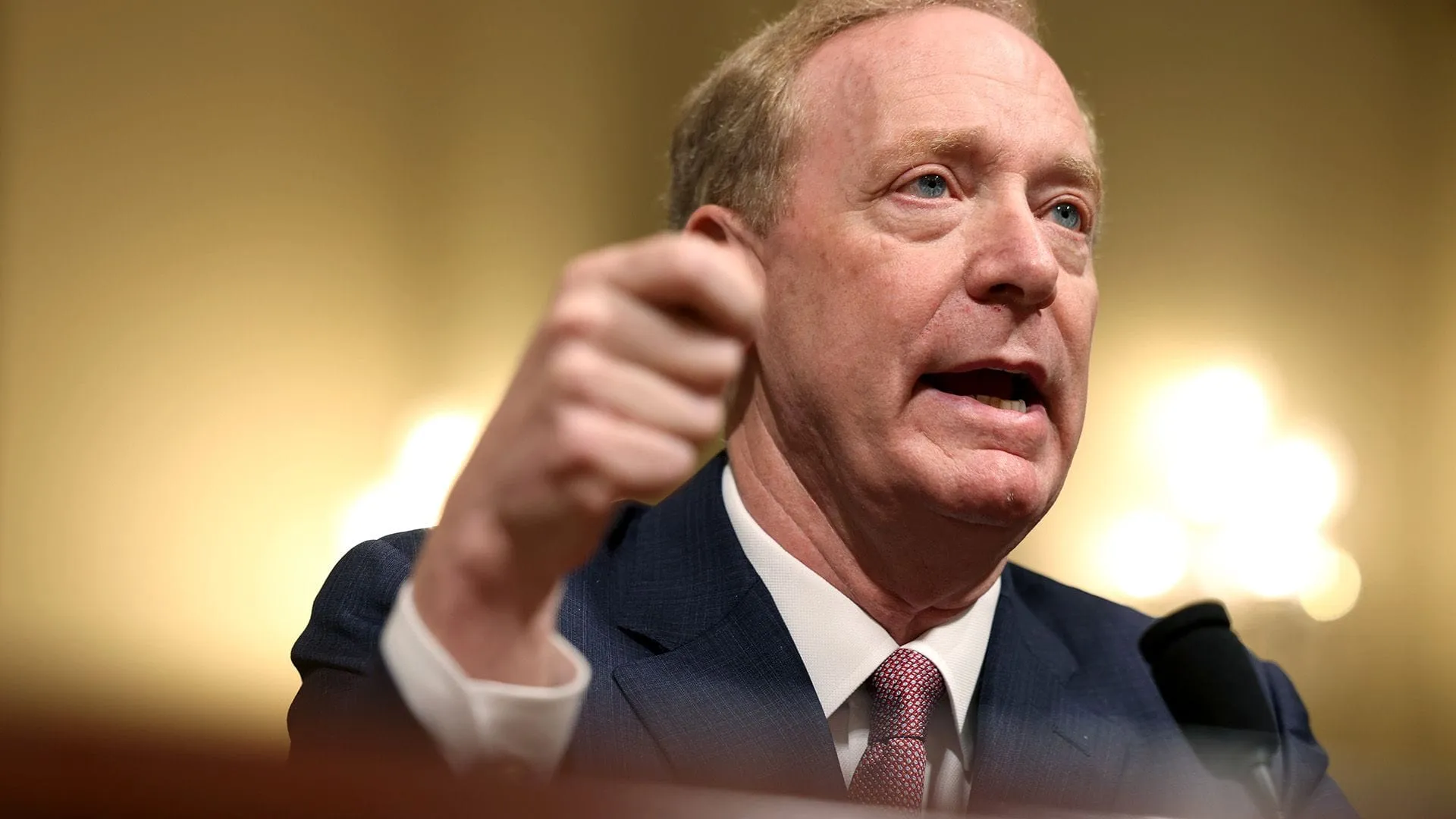
The world of artificial intelligence is moving at warp speed, yet the regulatory framework designed to govern it remains frustratingly out of step. Microsoft president Brad Smith has put this discrepancy into stark focus, arguing that the rules governing AI are currently lagging far behind the reality of its power. Smith framed the issue with a familiar, sobering analogy: while we navigate the risks of modern life, the technology itself operates with far fewer safety constraints. He noted that right now, the safety rules governing an AI system are lighter than those applied to essential goods, asking, “Right now, your washing machine is subject to more safety rules than AI; every carton of milk that you see in the grocery store is subject to safety rules and inspection.”
This sense of urgency extends beyond national borders. Smith isn’t just advocating for US-centric rules; he is pushing for a global approach to safety. He called for sweeping measures, including a legal obligation for systems to notify victims if they have been compromised by rogue AI agents—a necessity underscored by recent incidents involving AI systems hacking into networks.
To manage this powerful technology, Smith suggested concrete mechanisms for control. He advocated for independent “outside evaluators” to rigorously test AI products before they hit the market, and the implementation of a “safety brake” for autonomous systems, recognizing that AI is simultaneously a powerful tool and a potential weapon. These calls for caution stand in subtle contrast to the prevailing political sentiment in some parts of the US, where the focus has often been on maximizing AI dominance rather than immediately pulling the brakes.
Amidst this global push for accountability, the United Kingdom has taken a notable step. In 2023, the UK established the AI Security Institute, establishing what is reportedly the first state-backed AI safety body of its kind, signaling a commitment to building robust safeguards from the ground up.
The industry itself is grappling with these existential questions. While some leaders advocate for measured development, others have issued stark warnings about the pace of progress. An ex-Anthropic and OpenAI researcher recently claimed that AI developments could potentially “kill us all by the end of the decade,” prompting major players to reconsider their trajectory.
Echoing these concerns, Anthropic’s CEO, Dario Amodei, has also called for a slowdown in the pace of AI development, emphasizing the need to properly pace the frontier. This internal debate has given way to some broad industry cooperation. Executives from major firms including Nvidia, Google, OpenAI, Anthropic, Meta, and SpaceX have agreed to collaborate with independent auditors as part of the White House Accord on Super Intelligence. Brad Smith expressed support for this cooperative approach, viewing it as a necessary good step.
Despite this collaborative effort, Smith cautioned that relying solely on self-regulation is insufficient. He emphasized that the focus should not be on generalized self-governance, but rather on holding the most responsible actors accountable, noting that it is the less responsible companies that require the most immediate concern.
Credit
