Wi-Fi 7 GPU box with 4TB SSD for local AI power
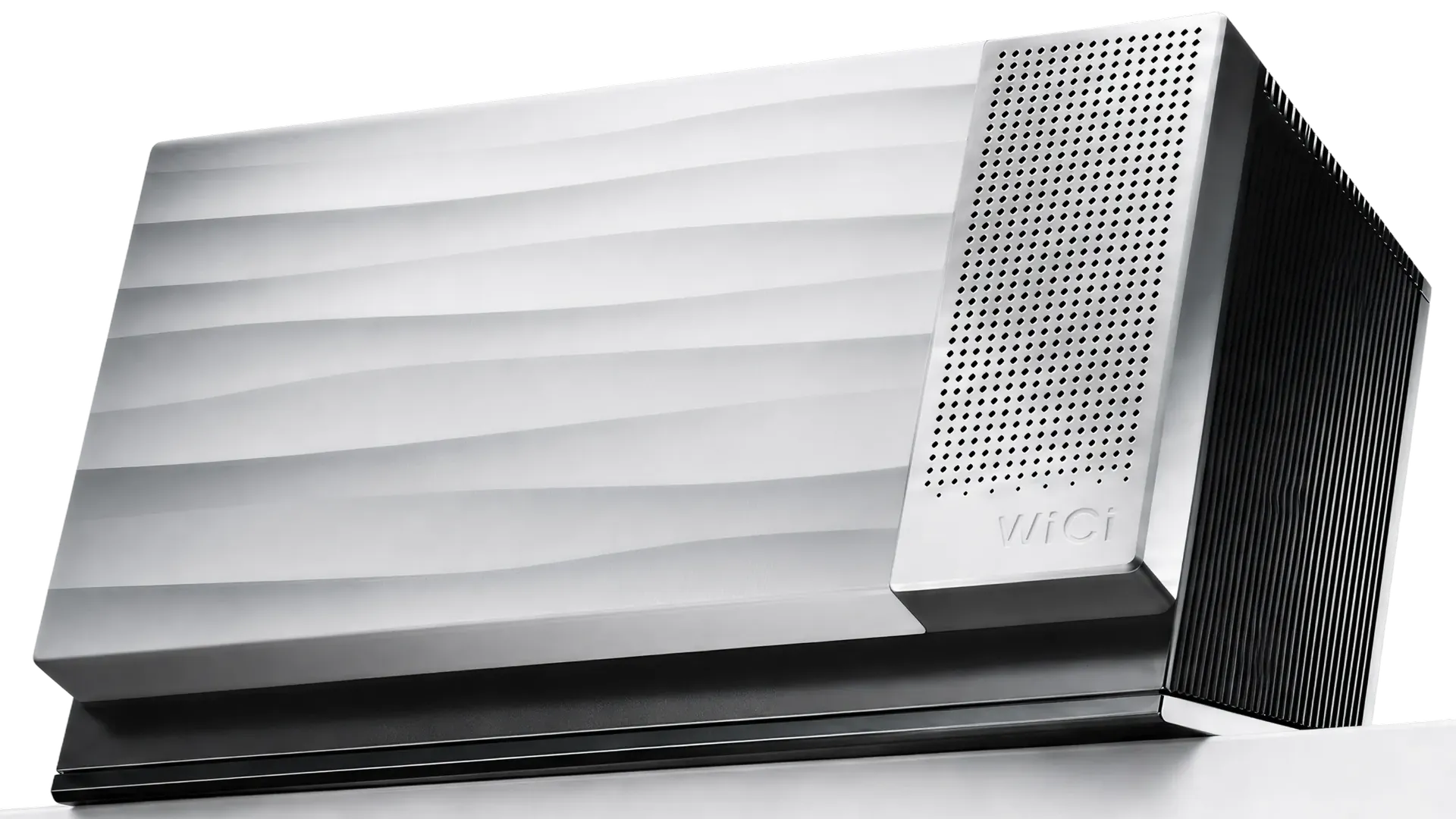
The external GPU (eGPU) market has long existed in a niche, catering primarily to laptop enthusiasts. However, as the artificial intelligence revolution accelerates, a new demand is emerging: the desire to run large language models (LLMs) locally. This shift is fueling interest in graphics cards, but running sophisticated AI requires more than just raw GPU power—it demands clever solutions for data handling and connectivity.
Enter the WiCi One, a device designed not just as an expansion card, but as a holistic solution for local AI computation. It aims to address the complex requirements of large-scale data shuffling inherent in running LLMs by integrating wireless technology, multi-device support, and substantial storage into a single enclosure.
What sets the WiCi One apart is its unconventional approach to communication. Instead of relying solely on the traditional, chatty protocols of PCIe for transmitting massive data between the host machine and the GPU, the WiCi One leverages the powerful WiFi 7 protocol for data transfer. This innovation allows the system to maintain the illusion of a standard graphics card driver for the operating system while efficiently shuttling data over the network.
While this sounds like a compromise, the performance gains come from intelligent software architecture. The system doesn’t simply push raw data across the network; its driver software employs sophisticated data caching, deduplication, and compression techniques. This smart management dictates exactly what data needs to be transmitted wirelessly and what can be handled locally, avoiding the potential latency issues that could plague less optimized eGPU setups.
This separation of concerns offers significant theoretical advantages. Because the data flow is managed intelligently, the single GPU theoretically gains flexibility, potentially allowing it to be shared across multiple machines. Furthermore, the platform is designed to be open, supporting Python libraries and a standard HTTP API, making it incredibly accessible for developers and users experimenting with LLMs.
For running computationally intensive models, storing the necessary model weights is crucial. WiCi tackles this challenge by incorporating a large 4 terabyte PCIe 5.0 SSD directly into the enclosure. This storage allows users to house the model weights locally, dramatically reducing the need for constant cross-network transfers that would otherwise slow down the AI workflow.
Beyond AI, the hardware still offers traditional graphics capabilities. The system is capable of running games without modification, supporting APIs like Vulkan and Direct3D. However, it is important to note that using WiFi for demanding real-time graphical rendering, such as pushing millions of polygons, presents significant latency challenges. For serious gamers prioritizing ultra-low latency, conventional eGPUs may still offer a superior experience.
WiCi is offering powerful options for the future, including a base configuration featuring an RTX 5060 Ti 16 GB graphics card, slated for a preview in late 2026. A more powerful variant is planned with an RTX 5090, offering 32 GB of VRAM, though exact release dates and pricing remain under wraps.
The pricing, starting at $1,999 for early signups, appears competitive when factoring in the cost of comparable high-end components. When components like an RTX 5060 Ti or a 4 TB PCIe 5.0 SSD are considered separately, the WiCi One packaging, along with its specialized software stack, presents a reasonable value proposition for those looking to pioneer the next generation of local AI hardware.
Buy on Amazon
Credit
