Windows 11 ISO squeezed onto a CD-ROM
The Ultimate Compression Challenge: How One Team Squeezed Windows 11 into Near-Impossible Dimensions
In the world of operating system development, efficiency is often a luxury, but for NTDEV, it has become an art form. The team has recently unveiled a groundbreaking demonstration of their next-generation tool, Pico11, which aims to compress the massive Windows 11 installation into the smallest possible footprint without sacrificing the user experience.
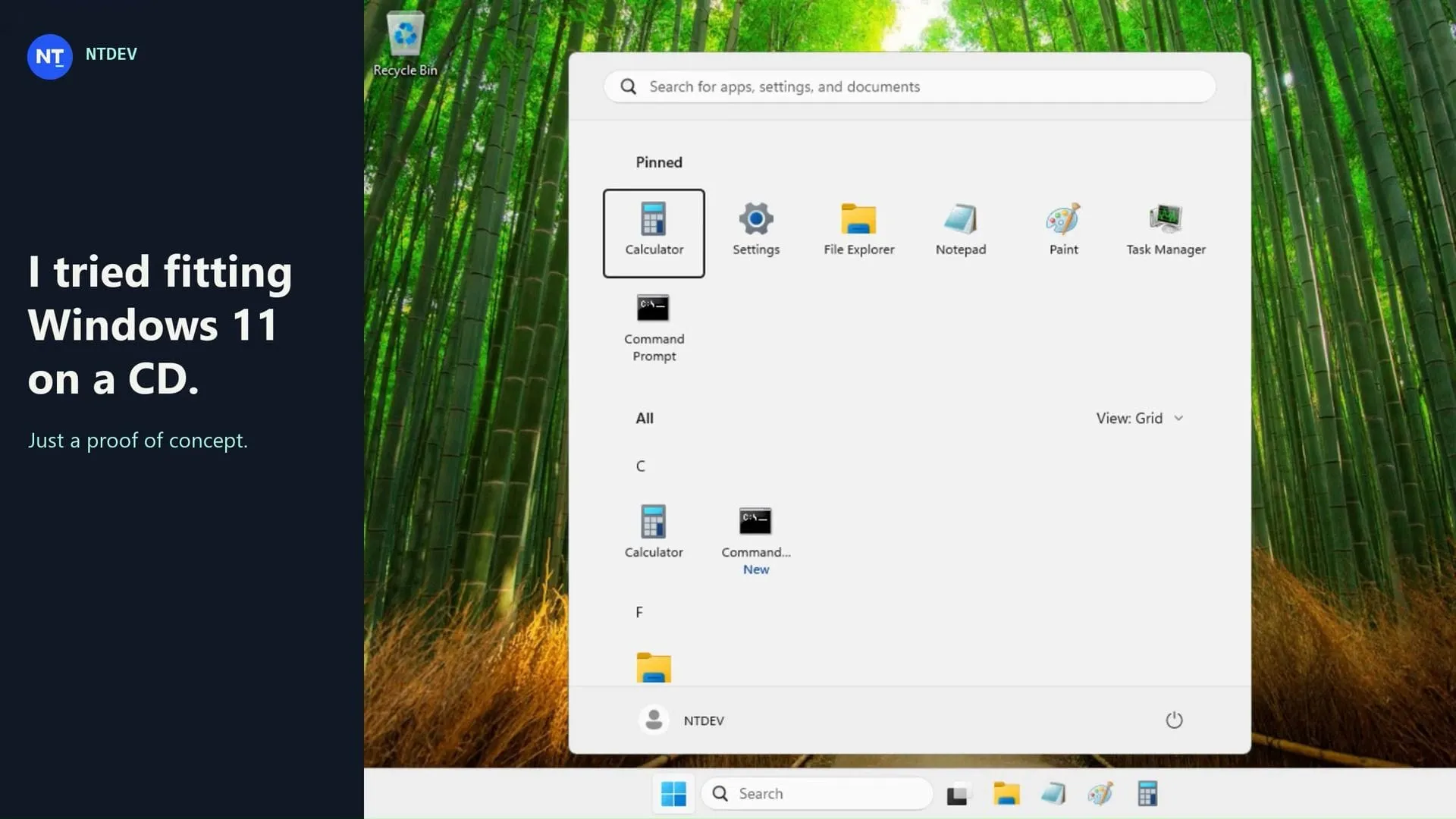
This isn’t just theoretical tinkering; it is a tangible proof of concept. NTDEV managed to create a working desktop environment—complete with familiar applications—from a Windows 11 ISO that is astonishingly small. The goal was to push the boundaries of what an operating system image could be, demonstrating how much core functionality can be distilled into the absolute minimum.
The resulting demonstration showed a system that was practically miraculous. While the OS footprint was aggressively minimized, the user experience remained surprisingly intact. The demo included essential tools like the Calculator, Settings, Notepad, and Paint, allowing users to still draw questionable logos and save files, proving that essential functionality doesn’t need gigabytes to operate.
However, the compression came with some fascinating compromises. The demonstration highlighted that the need for extreme size necessitated some creative shortcuts. For instance, the Task Manager present in the compressed environment appeared to be a lightweight, legacy version, hinting at the extreme constraints placed on the image.
NTDEV was clear about their intentions, emphasizing that this was an experimental exercise, not a replacement for a standard installation. The process involved stripping away non-essential elements, including components related to Windows Update and general servicing, to fit within severe capacity limits, such as those found on a standard CD-ROM.
The successful creation of this tiny install, which weighed in at just under 700 megabytes, showcased the power of tools like Pico11. This effort ties into the broader movement toward making operating systems incredibly lean, echoing previous achievements, such as distillations that achieved 100MB or even ran in as little as 176MB of RAM.
The work is already evolving. NTDEV is actively integrating Pico11’s cutting-edge capabilities into their existing Tiny11 builder tool, signaling a clear path forward for developers looking to create highly customized and hyper-efficient operating systems. It suggests that the future of OS installation might be defined by extreme optimization and a focus on pure, essential functionality.
Buy on Amazon
Credit
