Windows must change to unlock OLED’s true visual potential
The quest for perfect visual clarity is not a new one. It is a battle waged across two decades, pitting modern screen technology against the nostalgic magic of the cathode ray tube.
The enduring fascination with the CRT display is perhaps best illustrated by a moment of television history: the 2007 finale of Lost, which ended with a surprising twist. What seemed like a routine flashback turned into a dramatic flash forward, leaving the audience reeling. This abrupt shift reminded us that even in the most complex narratives, reality can be twisted.
This feeling of temporal dislocation mirrors the technological debates we have over the past twenty years. When we first embraced high-definition displays, the focus was on sharpness and resolution. But as technology advanced, a deeper, more philosophical question emerged: are we chasing the right kind of clarity?
For years, experts have argued about what truly makes a display clear. Mark Rejhon, founder of Blur Busters, notes that older generations often remember the motion clarity of CRTs, while those who never saw them do not. The difference lies in how motion is rendered. Early LCDs, while sharper than older technology, struggled with motion blur, leaving a ghostly trail on fast-moving images.
The core conflict boils down to two methods of reducing display motion blur: either flickering the frames, as CRTs did, or increasing the frame rate. CRTs achieved superior clarity not just through high refresh rates, but through a unique scanning method—a “rolling top-to-bottom” effect—which offered a more natural perception of motion.
Today’s high-refresh monitors are undeniably superior to the smeary LCDs of the mid-2000s. However, the pursuit of that authentic CRT clarity continues. This pursuit has spurred an innovative technical effort, aiming to recreate the visual experience of a CRT tube using modern hardware and software.
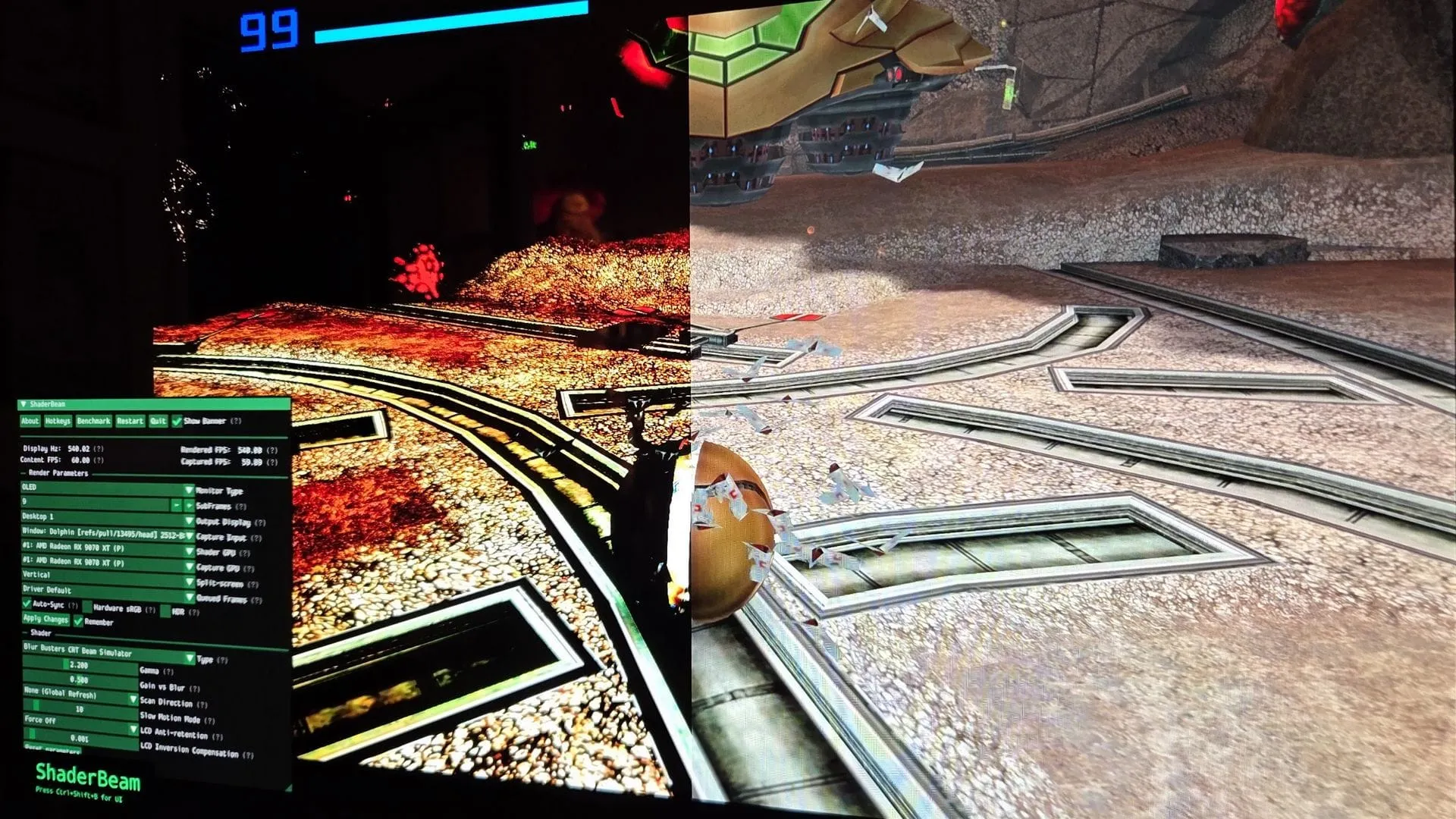
This effort has materialized in groundbreaking algorithms. Researchers have developed methods, such as simulating the visual “phosphor fade” of a CRT, which is gentler on the eyes than older methods like Black Frame Insertion. This technique aims to mimic the soft transition of light, providing a smoother, less flickery visual experience.
The challenge, however, is not just in the algorithm, but in the implementation. Bringing this simulation to life requires deep synchronization between the display hardware, the game content, and the operating system itself. Developers are tackling this by creating sophisticated tools, like ShaderBeam, which attempt to inject the CRT effect into the rendering pipeline.
Mastering this simulation demands extraordinary technical finesse. It involves managing the unpredictable nature of graphics drivers and ensuring the system allocates the necessary resources without introducing distracting stutter or flashing. It is a delicate dance between hardware limitations and software ingenuity.
Ultimately, the fight for true display clarity is pushing us toward a future where visual fidelity is seamlessly integrated, not merely added on. Whether through next-generation hardware or deep operating system integration, the dream of that perfect, sharp image continues to evolve. The goal is to ensure that the visual experience we have is not just fast and bright, but truly clear and immersive.
Buy on Amazon
Credit
