YouTuber turns 32GB laptop RAM into desktop RAM for $175
The relentless pursuit of high-speed technology often comes with an astronomical price tag. In a world where memory—the foundation of computing—is increasingly expensive, some innovators are finding ingenious ways to sidestep the massive markups. One recent experiment perfectly illustrates this pushback: a content creator successfully transformed salvaged laptop memory into high-performance desktop RAM, achieving a remarkable feat of engineering and saving a considerable amount of cash.
The project involved acquiring two SO-DIMM sticks of 16 GB DDR5 memory, sourced from platforms like Facebook Marketplace. Rather than purchasing expensive new Dual-channel memory, the creator opted for a DIY conversion. The entire operation cost just $175, covering the necessary components and specialized parts.
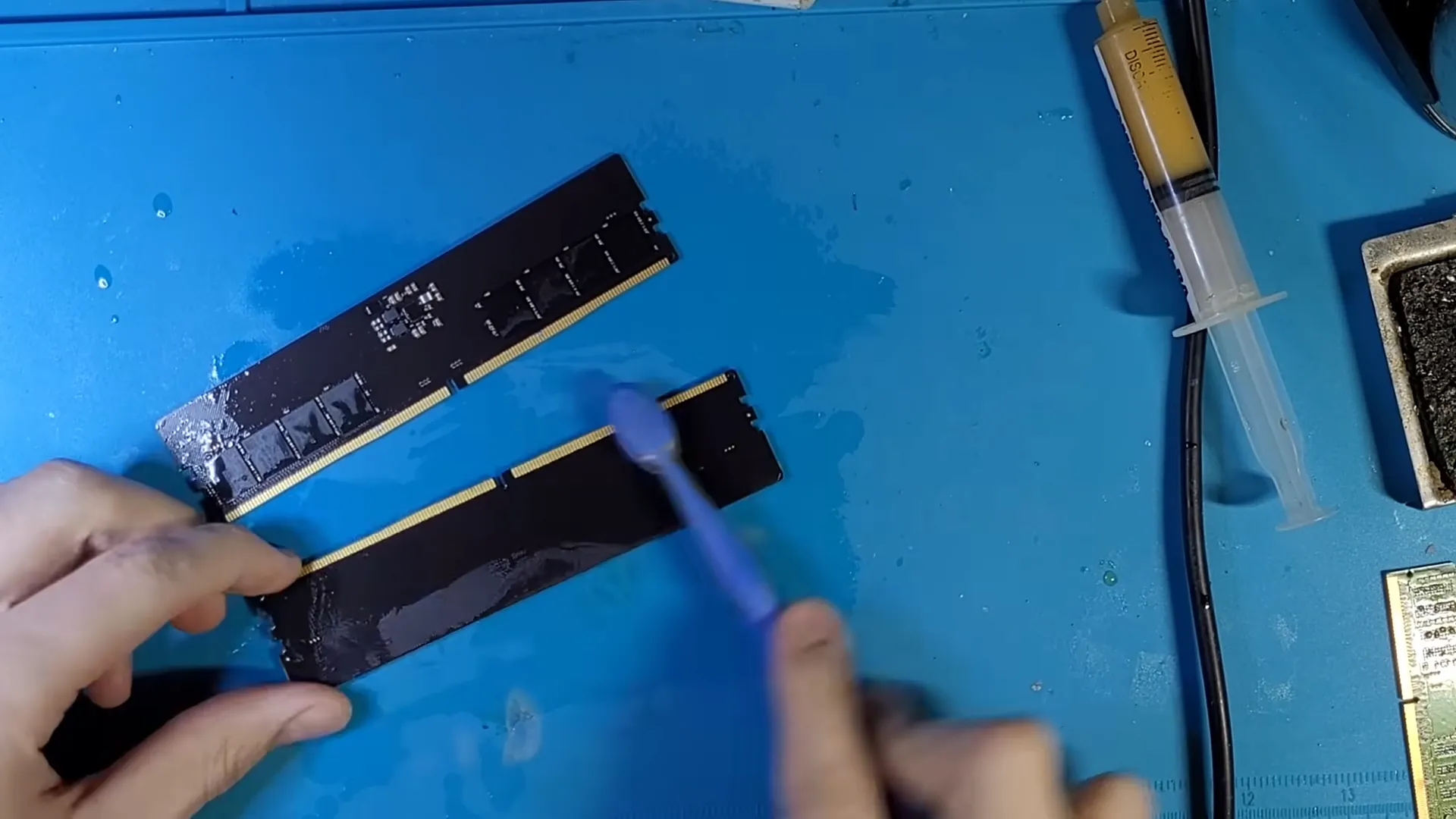
The real challenge wasn’t just swapping components; it was the delicate process of reballing the memory chips. To achieve this, the creator had to dismantle the original memory modules, carefully clean the factory unleaded solder, and then meticulously re-solder the chips onto new PCBs, requiring precise application of flux and stencil work. As one of the involved parties noted, the process demands acute technical knowledge: “You want a thin layer of flux, not too much or not too little. If you do too little, the balls might not reflow properly. If you do too much, they might bridge and cause problems.”
This intricate procedure ensures that the solder balls, which connect the memory circuitry to the board, are perfectly aligned. Mistakes in this critical step could ruin the entire process, highlighting the technical finesse required to treat these high-density chips as they are.
After successfully transplanting the components and testing the resulting setup via the desktop BIOS, the creator achieved impressive results. The converted memory kit reportedly ran at a frequency of 7800 MT/s with a CAS Latency of CL38. Testing showed the system remained stable for an hour and a half without any blue screens, proving the conversion was successful.
While the process sounds like a complex technical exercise, it serves as a compelling example of an alternate path in the ongoing battle against the memory crisis. Today, 32 GB of DDR5 dual-channel memory can fetch upwards of $500 on major retail sites. This DIY method offers a tangible way to circumvent these inflated costs.
This ingenuity raises a larger question about the future of hardware pricing and accessibility. Could salvaging and repurposing components, managed through accessible technical knowledge, become a viable alternative to the current market structure? It suggests a future where users, rather than being solely dictated by manufacturers and vendors, can take charge of the supply chain.
There remains hope that AI companies, who are increasingly driving demand for computing power, will not monopolize the market by purchasing up all the available laptop memory. Instead, this kind of resourcefulness may pave the way for more accessible and affordable computing solutions for everyone.
Buy on Amazon
Credit
