Alan Wake’s missing reticle is the best visual feature
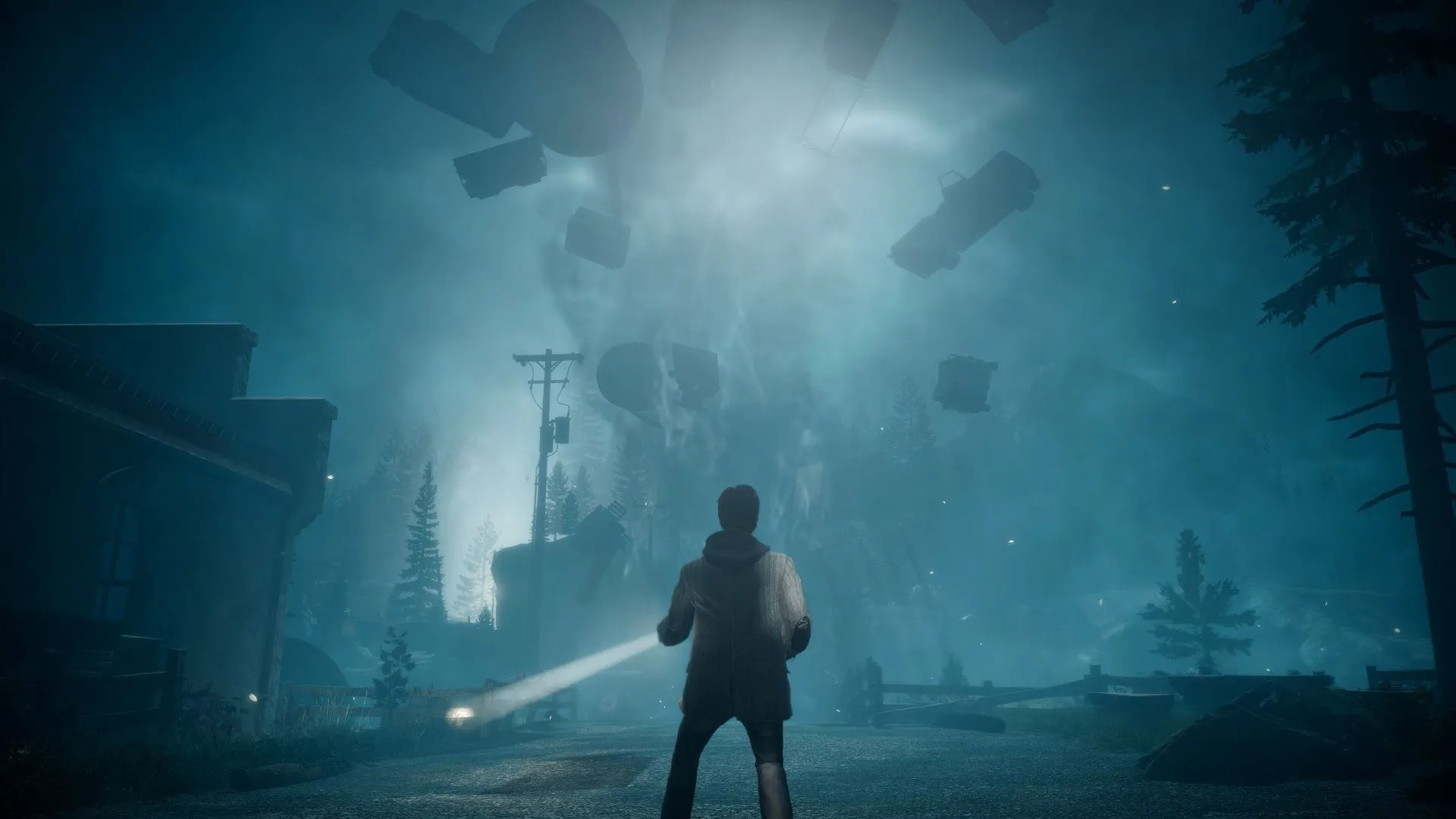
In the world of PC gaming, there are always moments where the oddities of design manage to achieve something profound. Whether it’s celebrating forgotten historical trivia or dissecting the strange mechanics of a game, there’s a certain fascination with the bizarre. This week, we turn our attention to a specific design choice in a recent masterpiece that perfectly illustrates how stripping away familiar visual cues can amplify the atmosphere, particularly in survival horror.
The tension in Alan Wake is palpable, even in the simplest mechanics. Take the famous confrontation between the alcoholic FBI agent, Agent Nightingale, and the fugitive novelist, Alan Wake. When the agent attempts to use his service pistol in the murky environment of Bright Falls, a subtle, almost comical failure occurs: the target is missed. As Nightingale attempts to aim, the expected reticle—the visual guide that anchors third-person shooting—simply doesn’t appear. This moment, where the mechanism of aiming fails, is more than just a technical glitch; it’s a theatrical manifestation of the game’s unsettling mood.
The absence of a reticle forces the player to rely purely on instinct and spatial awareness. In a 3D world, where orientation is key to survival, lacking a fixed point of focus introduces a delightful layer of disorientation. It’s a reminder that in the realm of supernatural horror, logic often gives way to pure, panicked reaction.
This design choice reflects a broader philosophy of immersion. While many third-person shooters rely on crosshairs to stabilize the player’s view, the world of Alan Wake suggests a different kind of navigation. The torch, which serves as the primary light source, acts as a shifting guide, its beam changing length and width based on the environment—cutting in half when passing through logs or expanding dramatically near a wall. This dynamic light beam takes over the role of the traditional reticle, demanding that the player learn to read the environment itself rather than relying on a fixed digital marker.
Furthermore, the game masterfully weaves this uncertainty into its narrative structure. Remedy’s approach to level design mirrors this focus on the ambiguous. Instead of rigidly linear checkpoints, the geography of Bright Falls allows for a sense of wandering and discovery, mirroring the uncertainty of the story itself. This openness in the level design complements the non-linear storytelling, where scattered pages of the manuscript foreshadow future events and induce lingering guilt, keeping the player perpetually off balance.
The mechanics of combat are equally tied to this theme of vulnerability. Fighting in Alan Wake is less about precise aiming and more about a supernatural, desperate struggle. The reliance on the torch and the scarcity of resources—like the limited battery life for aiming—connect the action directly to survival horror. The player is incentivized to conserve energy and focus only on immediate threats, making every action a calculated risk in a world that is fundamentally unstable.
By abandoning the familiar reticle, Remedy achieved an effect that many designers strive for: lowering the player’s confidence in their aim, heightening the sense of panic, and fully plunging the player into the game’s unsettling atmosphere. It is this subtle, intentional disorientation that ultimately elevates the experience, transforming a standard shooter mechanic into a potent tool for psychological dread.
Buy on Amazon
Credit
