AMD benchmarks EPYC CPUs claims 2x Nvidia speed
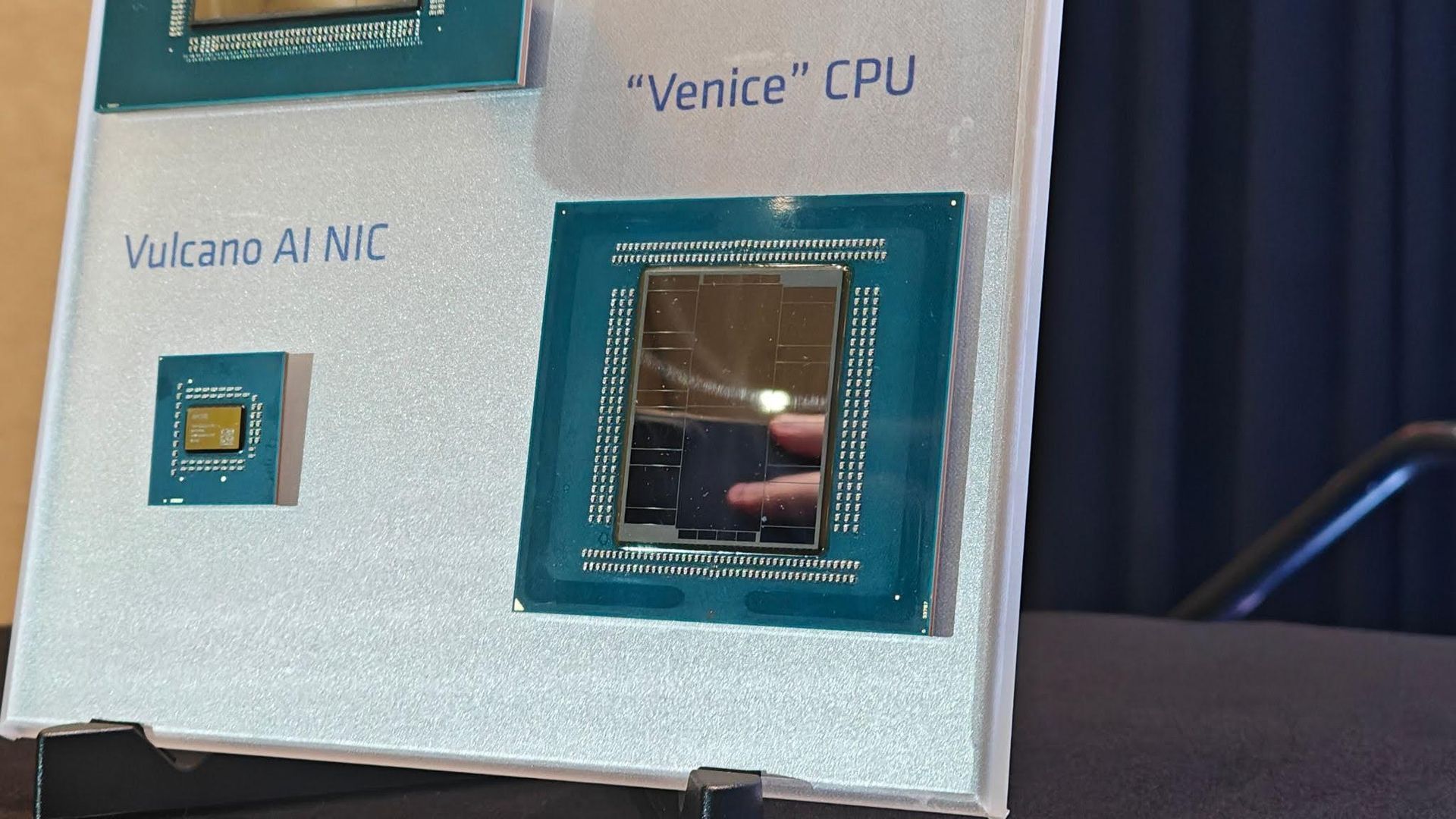
The race for server supremacy is heating up, and AMD is throwing down some serious numbers. Following the launch of its EPYC Venice CPUs in July, the company has extended the performance claims for its next generation of server chips, presenting an impressive performance leap that challenges the established order.
AMD’s high-level claim remains bold: a 96-core, high-frequency Venice chip demonstrates performance that is roughly 20% faster than Nvidia’s 88-core Vera in the demanding SPEC CPU 2026’s Integer Rate test. But beyond this headline number, AMD has gone into much greater detail, revealing a deeper picture of performance across various benchmarks in a comprehensive new white paper.
The numbers themselves paint a compelling picture. When looking at the Integer Rate test, the 256-core 9996 chip proved to be 2.37 times faster than the Intel Xeon 6980P and 2.24 times faster than Vera. This impressive showing is amplified when considering the generational jump: the new chip is approximately 78% faster than the previous generation’s 192-core EPYC 9965.
While these high-level comparisons are thrilling, the deep dive into the white paper reveals the complexities inherent in CPU benchmarking. AMD noted that configuration differences matter significantly. For instance, the results vary based on which compiler was used—AMD utilized GCC 16.1, while Nvidia relied on GCC 15.2. This difference, while critical for deep technical analysis, reminds us that compiling software introduces variables that can subtly shift performance scores.
Despite these configuration wrinkles, AMD demonstrated strength across the board. In memory bandwidth tests, the Stream benchmark showed the 9996 chip held a commanding lead, pulling ahead of the competition by about 18%. Furthermore, performance in crucial cloud workloads—including database operations, Java, and cryptography—also favored the new architecture. AMD measured these results directly, offering transparency that allows users to see real-world performance without relying on external sources.
The competitive edge isn’t limited to raw benchmarks; it extends into the realm of high-performance computing. In HPC workloads, AMD is continuing to push its advantage over Intel’s flagship Granite Rapids-AP offering, setting the stage for future data center dominance. This shift signals that the focus is moving beyond mere clock speeds toward architectural efficiency and workload handling.
Ultimately, the Venice launch is more than just a splash on the server scene. It highlights AMD’s commitment to pushing the boundaries of silicon design. While peak performance is one factor, the true story lies in the generational leap and the impressive capacity of the new architecture, promising a significant step forward for server deployment and the future of multi-core computing.
Buy on Amazon
Credit