AMD RX 9050 is 30% slower than RTX 5050 in games
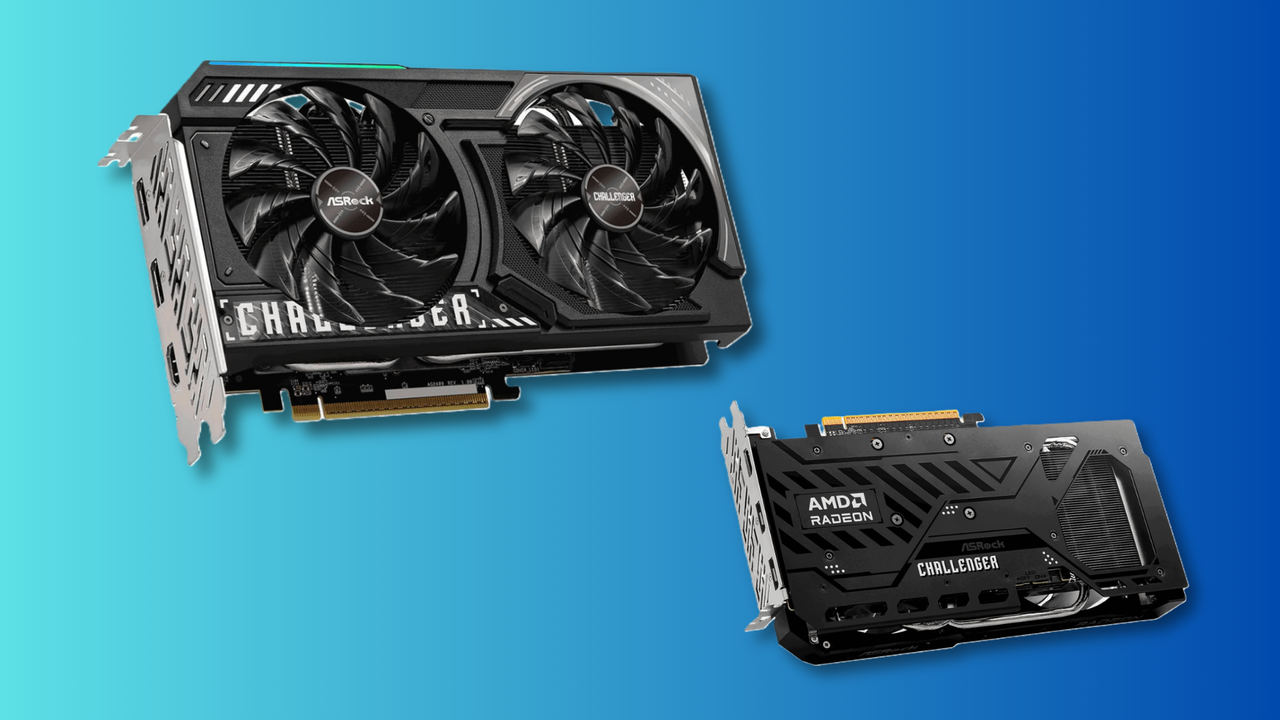
The Budget Battle: Can AMD’s New Entry Challenge Nvidia in the Mid-Range GPU Race?
AMD has officially entered the arena with its most budget-friendly RDNA 4 graphics card, the Radeon RX 9050. With the gaming market constantly evolving and prices under scrutiny, this launch immediately sparks a fierce comparison against its main competitor, Nvidia’s RTX 5050. But when you dive into the data, the results tell a slightly more nuanced story than a simple budget victory.
Preliminary testing has placed the RX 9050 directly against the RTX 5050 in synthetic benchmarks. In several key tests, including the demanding Port Royal benchmark, the Nvidia rival demonstrated a clear lead. While the RX 9050 is certainly capable of handling 1080p gaming on its own, the head-to-head comparison reveals that the performance delta across various demanding titles leaves room for serious concern.
For instance, in comprehensive stress tests like the Time Spy suite, the gap between the two cards was noticeable. In the crucial Ray Tracing benchmark, Port Royal, the RTX 5050 scored significantly higher than the RX 9050, showing a performance deficit that highlighted Nvidia’s current edge in complex rendering tasks.
The real test of any GPU, however, lies in actual gaming. When putting these cards through their paces in popular titles like Apex Legends and Rainbow Six Siege, the scoreboard shifts. While both cards can handle high frame rates at 4K Ultra+ settings (where they even tie), the RTX 5050 generally pulls ahead in scenarios where raw performance is paramount.
In standard resolutions, such as 1440p medium settings, the RTX 5050 managed to push higher frame rates than the RX 9050. For example, in Apex Legends at 1440p, the RTX 5050 delivered 128.2 FPS compared to the RX 9050’s 101.4 FPS—a substantial difference that reflects Nvidia’s performance lead.
The disparity becomes even starker when examining graphically intensive games. In titles like Cyberpunk 2077, the RTX 5050 offered a significant advantage, particularly in 4K settings where it maintained nearly double the frame rate compared to the RX 9050.
However, there are exceptions to this performance narrative. In some specific scenarios, the RX 9050 manages to outperform its rival. For instance, in certain high-resolution settings or within extremely demanding gameplay environments, the AMD card demonstrated competitive results, with some games showing a relative win for the RX 9050.
Beyond raw performance metrics, the RX 9050 offers compelling secondary advantages that appeal to a different kind of builder. The card excels in efficiency; it consumes fewer watts when idling and under heavy load compared to the RTX 5050. Furthermore, its physical design is surprisingly conducive to smaller form factor builds, making it an attractive option for those crafting Small Form Factor (SFF) systems.
Ultimately, the Radeon RX 9050 is a solid, functional card that performs amicably in a vacuum. It’s a fine entry point into the budget segment of the GPU market. But when competing directly with Nvidia’s offerings, its performance profile suggests it remains more of an alternative than a straight-up challenger for the high-end enthusiast.
Buy on Amazon
Credit