Building a cyberpunk city entirely in ASCII art
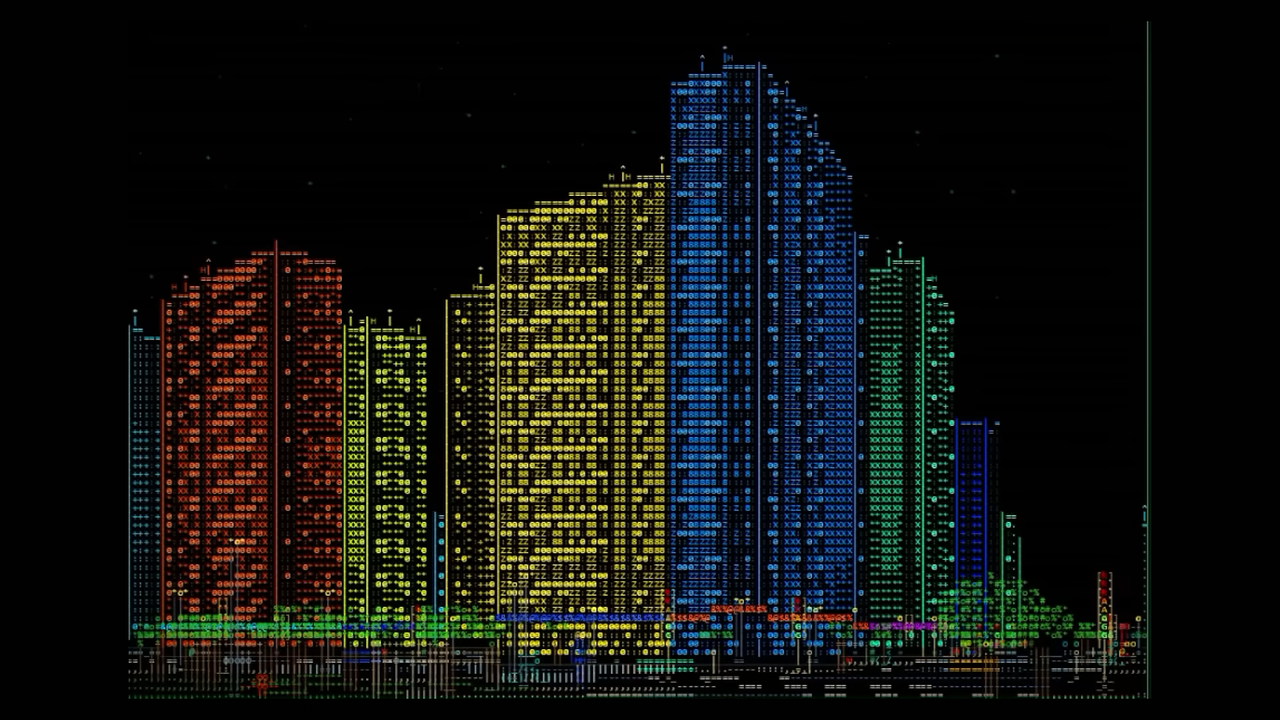
Imagine a cyberpunk metropolis built not of polygons and textures, but of pure text. This is the world being brought to life by a solo developer who has mastered the art of visual storytelling using nothing more than semicolons, underscores, and the mystical power of the caret symbol. This unique approach has turned simple keyboard characters into a stunning, navigable 3D city.
The project, spearheaded by Grow Now! Games, eschews traditional 3D modeling entirely. Instead, the city is rendered using a custom ray-casting engine that treats the world as a grid-based system. In this ingenious setup, the engine casts rays from the camera across the grid, determining what surfaces are visible and using the resulting distance to calculate perspective, depth, and the illusion of three-dimensional space.
What makes this prototype truly groundbreaking is its simplicity and ingenuity. There are no heavy 3D models, no complex shaders, and no monolithic game engines like Unity or Unreal taking up the space. The entire playable world is contained within a single HTML file, proving that some of the most ambitious visual experiences can be achieved through elegant mathematical logic and artistic restraint.
While rendering at a relatively low resolution of 120 x 56 ASCII characters, the flickering effect adds to the raw, retro aesthetic. Despite its humble beginnings, the concept has already garnered significant attention, with the original prototype video having surpassed one million views, demonstrating a powerful appetite for visual styles that move beyond grim-dark realism.
The developer has been busy refining the experience since releasing the initial demo. Recent updates have pushed the visual fidelity, increasing the resolution to a smoother 180 x 80 ASCII character display. Furthermore, the scope of the world has expanded dramatically; buildings now feature interiors and multiple floors, offering players fresh and layered perspectives of the city.
Grow Now! Games is far from finished, and the vision continues to evolve. The team is now exploring how to deepen the interactivity by planning the implementation of a dialogue system, aiming to transform the prototype into a more fully featured game experience.
This experimental approach to game design reminds us that the most compelling worlds often emerge not from sheer graphical power, but from clever conceptual innovation. By leveraging the unique medium of ASCII art, this project is proving that text-based artistry can deliver richly detailed, immersive, and utterly charming digital environments.
Buy on Amazon
Credit