China starts mass production of homegrown immersion chipmaking machines
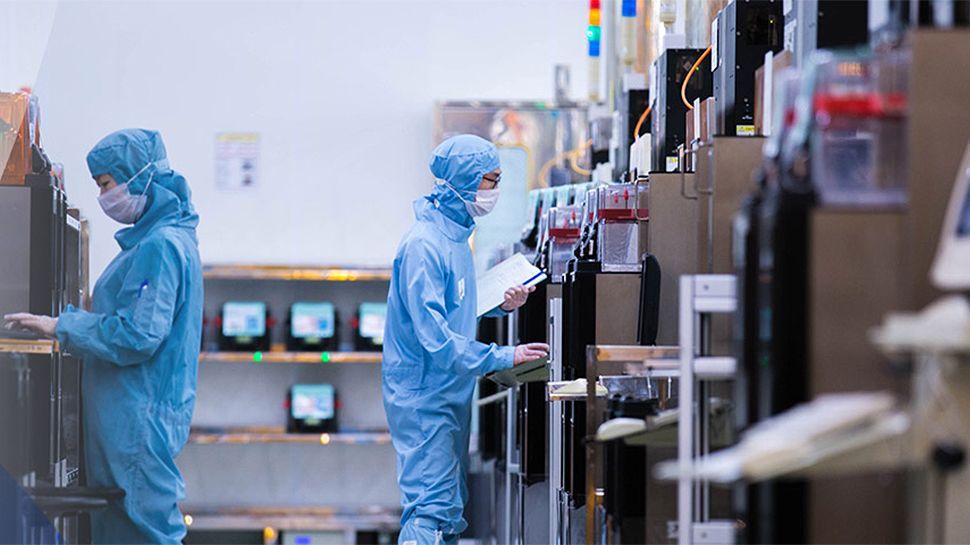
The global semiconductor landscape is undergoing a dramatic realignment, driven by geopolitical tensions and an intense race for technological self-sufficiency. At the heart of this shift is China’s determined effort to establish control over advanced chipmaking tools, focusing on immersion deep ultraviolet (DUV) lithography machines.
A state-backed company in Shanghai has begun the ambitious process of mass-producing these specialized DUV equipment. This strategic initiative aims not only to bolster domestic manufacturing capabilities but also positions Chinese firms to operate independently from key international suppliers.
The rollout is set to deliver the first units this year to major entities, including SMIC, Hua Hong Semiconductor, and memory maker ChangXin Memory Technologies. These recipients represent some of China’s most significant players in the semiconductor ecosystem.
This effort is strategically aligned with broader political developments. The three named recipients are among those designated as restricted entities under legislation currently moving through Congress, which seeks to cut off these firms from sales and servicing by ASML.
The development of immersion DUV technology is critical. This process allows for the printing of 28nm-class features in a single exposure and enables reaching 7nm through multipatterning, fundamentally impacting how chips are manufactured and yield is achieved.
While China is pursuing domestic chipmaking tools, they are also betting on DUV as a crucial alternative to the current constraints surrounding Extreme Ultraviolet (EUV) technology. This move is part of a broader strategy to reshape the global chip supply chain following recent restrictions on access to EUV equipment.
Industry analysts are tracking the pace of this development closely. The goal is ambitious: output targets include around five immersion machines in 2026 and roughly 20 in 2027, signaling a significant scaling effort within the next few years.
Despite these domestic developments, the international players remain dominant. ASML, the technology leader, expects to ship about 130 immersion systems in 2026, with plans to increase capacity substantially in 2027 and 2028. However, independent analysis suggests that while China is making rapid strides in production, qualifying new machines for high-yield production lines still requires significant time, as the domestic tools currently trail the performance and build quality of ASML’s established equipment.
The race to master advanced lithography technology is far from over, reflecting a dynamic and increasingly competitive future for the global chip industry.
Buy on Amazon
Credit
