Crescent Island AI powers new Intel GPU D-Series
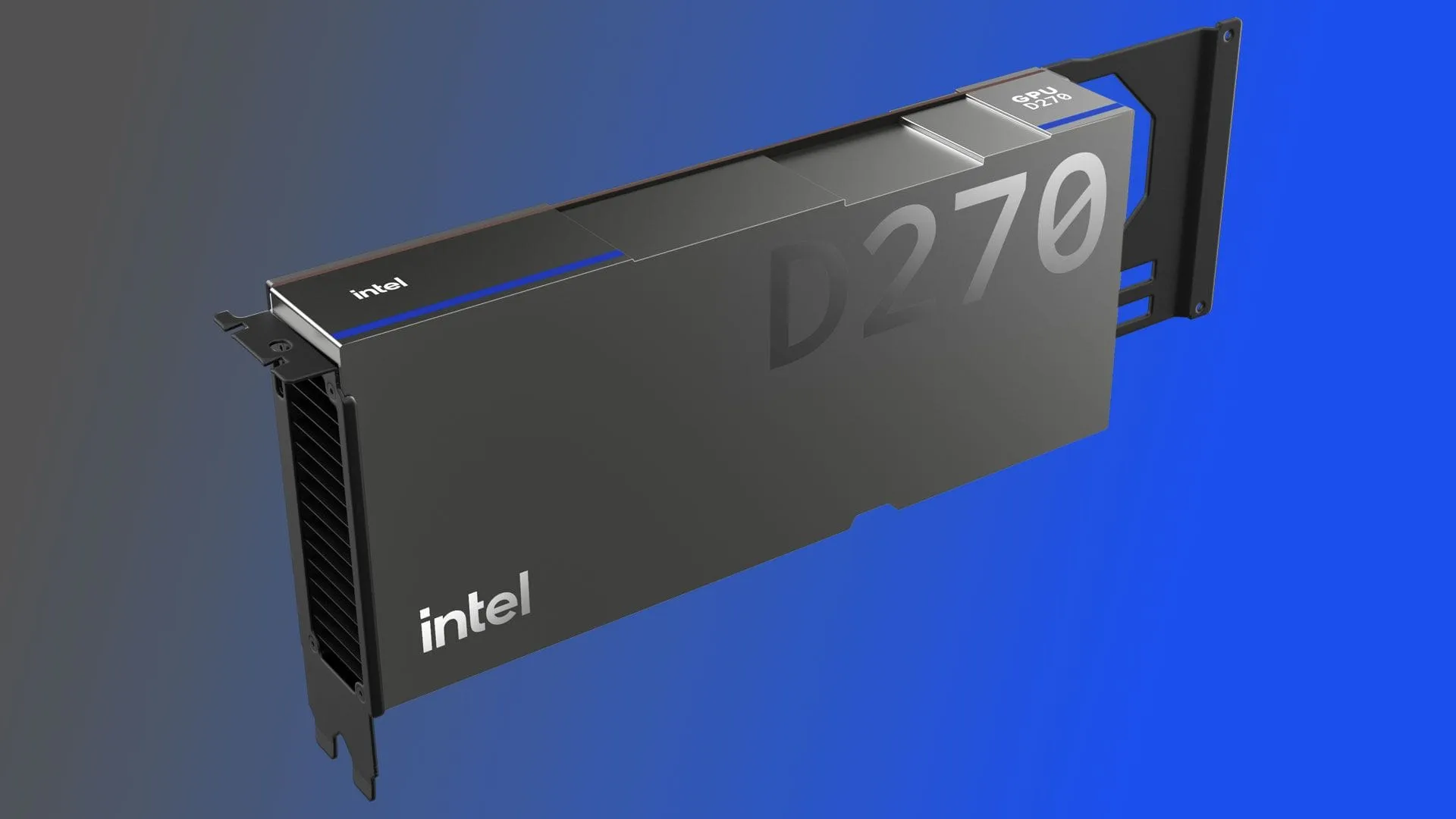
At the OCP 2026 event, Intel officially christened its new AI accelerator, Crescent Island, as the Intel GPU D-Series. This unveiling wasn’t just about a new name; it was the debut of a chip targeting a very specific, powerful niche: large-scale AI inference. Intel also dropped some impressive theoretical targets, setting a performance goal of 1.3 PFLOPS of FP8 throughput and promising a memory bandwidth of 1.5 TB/s for these new AI inference accelerators.
The significance of these figures lies in the chip’s architectural philosophy. The GPU D-Series is built upon Intel’s Xe3P graphics architecture, positioning it not as a traditional graphics processor, but as a massively parallel computing solution. This foundational shift allows the D-Series to focus on the heavy lifting of AI inference, rather than complex graphics rendering.
Intel is designing these accelerators for the data center, specifically to power the complex calculations required by modern artificial intelligence. Unlike high-end systems that require intense liquid cooling and massive power draw, the GPU D-Series is engineered for practical deployment in traditional air-cooled rack servers. These chips are designed to scale up efficiently, capable of powering inference on AI models spanning more than one trillion parameters.
This capability makes the GPU D-Series perfectly suited for critical workloads such as large language models, long-context inference, and concurrent services. By focusing on these areas, Intel is laying the groundwork for a new era of multi-tenant AI services, advanced robotics, and other latency-sensitive applications.
To ensure this distributed inference environment functions smoothly, Intel is backing its accelerator with a robust software ecosystem. They are leveraging the “common Xe software foundation” already developed across their Xe Cores in both integrated and discrete GPU products, promising seamless integration for developers.
Furthermore, Intel is actively fostering an expansive ecosystem for these accelerators. The company is engaging with a broad network of OEMs, ODMs, neoclouds, and independent software vendors, all working to bring the GPU D-Series into the data center environment. Customer sampling is already underway, signaling a commitment to broad adoption.
This move represents a focused strategy in a competitive landscape. While previous efforts in the high-performance data center GPU space have faced challenges, the GPU D-Series offers a proven architectural shape targeted precisely at the demands of AI inference within an accessible thermal and electrical envelope. In a world hungry for compute cycles, this focused approach positions the Intel GPU D-Series as a compelling contender in the evolving vision of future computing.
Buy on Amazon
Credit
