DIY portable MRI machine printed in 3D for under $70k
Printing the Future of Medicine: How AI is Revolutionizing MRI Scans
Medical imaging, particularly Magnetic Resonance Imaging (MRI), stands as a powerhouse in diagnosis, offering doctors and radiologists an unparalleled view into the human body. Yet, this life-saving technology comes with a staggering price tag: brand-new, full-sized MRI units can cost upwards of $1.1 million, pushing toward $3 million per unit.
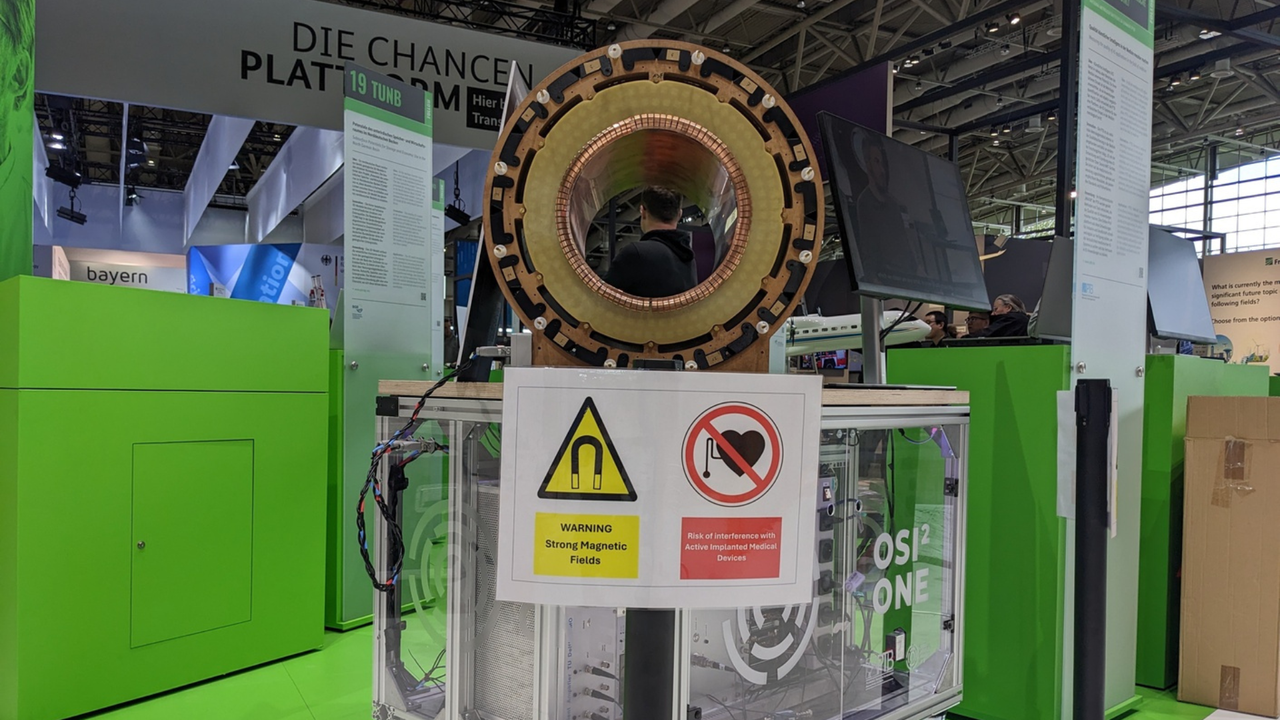
Recognizing this massive financial barrier to access, innovators have sought radical solutions. Enter the Open Source Imaging Initiative (OSI), a group dedicated to democratizing advanced medical technology. They achieved this by taking a bold approach: using 3D printing to create an open-source MRI scanner, known as the OSI2 ONE.
While not yet matching the resolution of massive, multi-million dollar hospital units, the OSI2 ONE offers a revolutionary alternative. This portable device utilizes a 3D-printed core and operates at a lower field strength of just 50mT, which inherently poses challenges for traditional imaging quality.
But limitations don’t stop progress; they simply change the game. This is where artificial intelligence steps in. Tech analysts argue that low-field MRI environments, historically hampered by lower signal-to-noise ratios and field inhomogeneity, are exactly the regime where AI excels. Deep learning networks can now be trained on high-field data or established physics models to dramatically improve image reconstruction.
These specialized AI models don’t just process images; they actively correct for technical imperfections in real time. They use methods like real-time sequence adaptation to adjust machine parameters and denoise signals, pushing the limits of what can be seen from a lower-resolution scan.
This breakthrough means that complex medical diagnoses can be achieved affordably. Because the OSI2 ONE is open-source, researchers can generate synthetic data or leverage publicly available information to train these powerful models without needing access to vast amounts of sensitive patient data. This ability bypasses the need for multi-million dollar hardware and specialized facilities.
The impact extends far beyond the laboratory. By making advanced imaging techniques accessible, this innovation promises to deliver critical diagnostic capabilities to regions and clinics that previously lacked the financial capacity for full-sized equipment. It is a powerful example of how open technology and smart computation can drive down costs and save lives.
Buy on Amazon
Credit