Expanding AI server factory in North Carolina
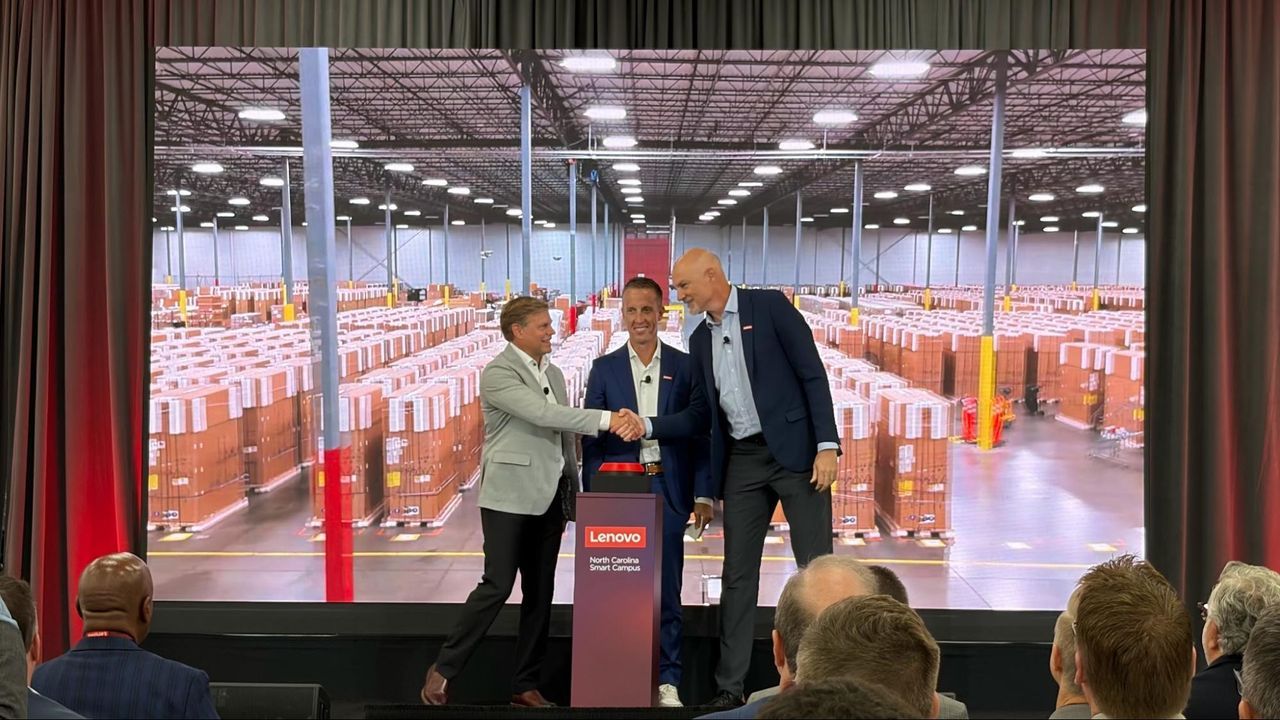
When a global giant like Lenovo decides where to build its future, it’s not just about factories; it’s about power, precision, and the relentless drive toward artificial intelligence. This recent expansion of Lenovo‘s manufacturing footprint in North Carolina is more than an industrial move—it’s a strategic play connecting cutting-edge technology with local communities.
Headquartered near the Research Triangle Park, Lenovo has long enjoyed a strong presence in the United States. Now, they are deepening that commitment by significantly boosting their domestic production capacity. The latest milestone arrived this past Friday with a symbolic ribbon-cutting celebrating the expansion of manufacturing at its Whitsett facility, doubling its physical footprint to 890,000 square feet.
This massive investment is fundamentally driven by one powerful force: artificial intelligence. As industry leaders navigate the shift from hype to reality, there is a critical need for reliable, high-quality infrastructure. Lenovo’s leadership recognizes that establishing robust U.S.-produced hardware infrastructure is the essential catalyst for fueling the AI revolution.
Ashley Gorakhpurwalla, Executive VP and President for the Infrastructure Solutions Group at Lenovo, noted that AI is rapidly moving from a theoretical concept into the practical “hero cycle.” This requires a foundation built on trustworthy infrastructure. “Because behind every AI breakthrough, it’s powerful, powerful infrastructure,” Gorakhpurwalla explained. “As technology advances, building high-quality infrastructure closer to our customers is becoming more important than ever.”
To make this vision a reality, the strategy involved weaving together regional talent and supply chains. The project successfully leveraged the interconnected ecosystem stretching from the Triangle to the Triad, bringing thousands of engineers, supply chain specialists, and manufacturing experts together to accelerate development. This collaborative approach promises faster product development, shorter lead times, and greater end-to-end efficiency.
The transition from an empty warehouse to a fully operational server production line took just nine months. The team successfully integrated complex systems, including securing necessary electricity capacity of up to 20 megawatts from Duke Energy. Nearby universities, including NC State, Duke, UNC-Chapel Hill, and Wake Forest, provided the pipeline of young talent that powers this ambitious operation.
Inside the new facility, the scale of the operation is truly impressive. The kitting area alone spans 26,000 square feet, where components like processors and memory are meticulously assembled across 10 lines, processing hundreds of racks weekly. This process feeds into seven assembly lines capable of producing 1,400 server nodes per day. The testing areas feature sophisticated cooling systems and specialized equipment designed to handle the immense power demands of next-generation computing.
The technological density is staggering. Testing pods utilize massive Computer Room Air Handlers, each equipped with significant cooling capacity, while advanced liquid cooling units are in place to handle components demanding peak performance. The sheer energy required for these operations highlights the intense focus on efficiency and power management within the facility.
Ultimately, this story is a microcosm of the larger tension facing communities today. The pursuit of powerful AI hardware is creating an urgent dialogue between big tech companies and local governments regarding essential resources like power grids, water supplies, and land use. As global demand accelerates, finding the right balance—where innovation thrives alongside community well-being—is the defining challenge for the future.
Buy on Amazon
Credit