Fruit fly brain mapped and played Doom and Mario 64
The Ultimate Brain Hack: Scientists Map Fruit Fly Neural Network and Train It to Play Video Games
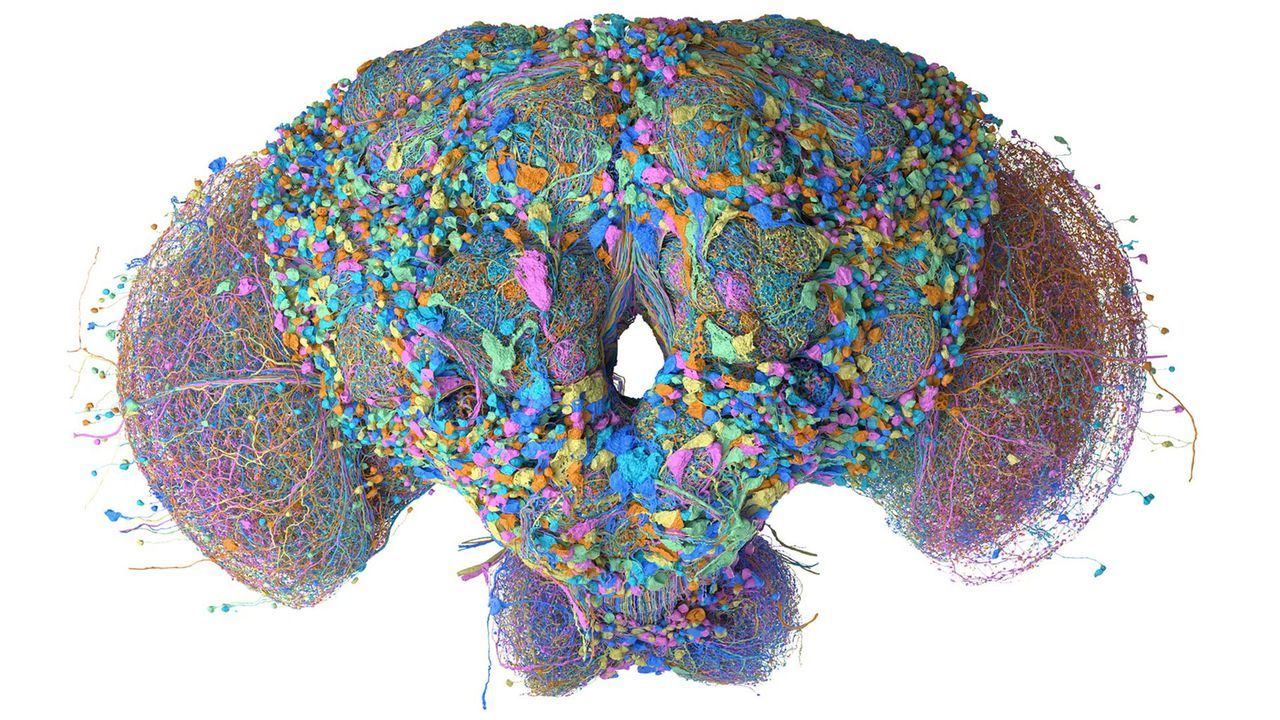
In a stunning leap for neuroscience and artificial intelligence, researchers have successfully mapped the complete brain and central nervous system of an adult male fruit fly. This groundbreaking achievement, accomplished by teams including Google Research and the HHMI Janelia Research Campus, opens up entirely new avenues for understanding complex neural structures, prompting a serious consideration of how we view biological intelligence.
For over a century, the humble fruit fly has served as a critical model organism in genetic and neurological research. Now, thanks to cutting-edge AI techniques, scientists have taken this established model to an unprecedented level, reconstructing a detailed 3D neural map of the insect. The process involved using artificial intelligence to combine millions of 2D images, effectively reconstructing over 166,000 neurons.
This massive achievement is not just an academic milestone; it represents a major step in accelerating our understanding of the brain. By mapping these intricate connections, scientists are gaining deeper insights into how complex intelligence emerges, pushing the boundaries of what we thought was possible in neuroscience.
But the magic didn’t stop there. Once the fly brain was mapped, the team immediately moved to an exciting application: training the connectome to perform complex tasks. Software engineers demonstrated that the fly brain could be trained to play classic video games, proving its potential for sophisticated learning.
One demonstration involved training the fly brain to play Doom”>Doom. Researchers found that each frame of the game stimulated sensory neurons, and neural activity was directly mapped to game controls. Furthermore, damage within the simulated environment triggered a stimulus to specific dopamine cells, effectively simulating the reinforcement learning process of gameplay. The core question posed by the tinkerers was simple: will the fly learn to survive?
Another experiment focused on the iconic platformer, Mario 64. Demonstrations showed the fly brain successfully navigating environments, repeatedly taking off and bumping into walls, exhibiting a level of behavior that some observers noted was nearly the pinnacle of fly-brain intelligence. The code behind these experiments is open source, allowing anyone to observe the live training progress.
The work highlights a fascinating intersection between biology and technology. As AI continues to drive advancements in data centers and computing, these biological models offer a unique, tangible window into the mechanics of thought. It raises intriguing philosophical questions about intelligence, technology, and the limits of biological design, perhaps demanding an update to old theories about technological progress.
Credit