Galaxy Z Fold 8 is the Surface Duo 3 dream Samsung proves MS wrong
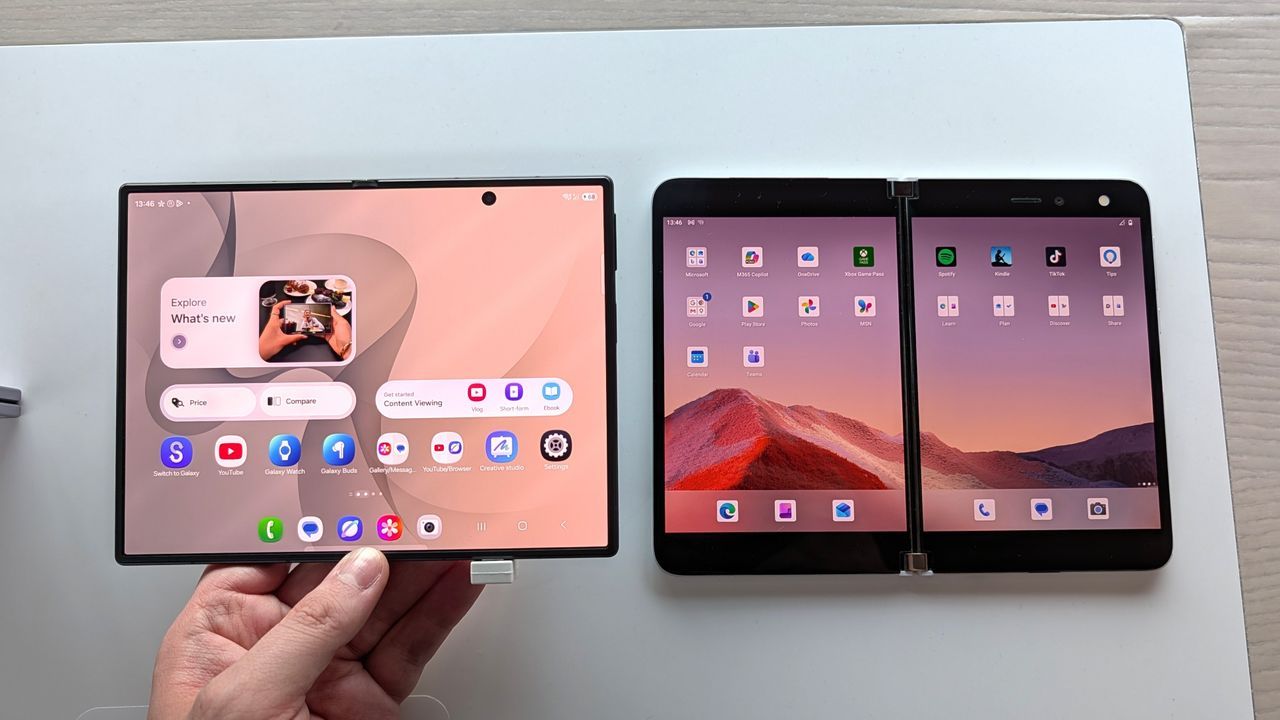
For many of us who entered the smartphone world during the foldable revolution, our journey began with Microsoft. Ever since Microsoft launched the Surface Duo five years ago, I found myself in a unique position—what I jokingly call “smartphone homeless.”
The early days were filled with flipping between different systems, seeking a perfect form factor until the Surface Duo arrived in 2020. For those few years, both the Surface Duo and the Surface Duo 2 served as my daily companions. I was excited by the potential of this device, fully believing that Microsoft would continue to push the boundaries of this unique design.
But the lifespan of that specific form factor proved to be short. Despite its charm, Microsoft eventually put the Surface Duo to rest, releasing a new model after the Surface Duo 2 had already been superseded. While I admired the Surface Duo for its shape and size, the ultimate draw was undeniably its novelty. It was a true conversation starter, turning heads in public, but its lasting appeal lay in its practical utility: the ease of typing in single-screen mode and the potential for multitasking via dual screens.
When the Samsung Galaxy Z Fold 8 was unveiled, I was instantly intrigued by its proportions. It represented the first widely available short but wide smartphone since the Surface Duo. While it lacked the complex triple-screen hinge of the Surface Duo 3 prototypes, it tapped into the same core aesthetic appeal.
When you put their specifications side by side, the similarities in design intent become clear. The goal of both devices is to maximize screen real estate while maintaining a manageable profile. Whether comparing the 5.6-inch display of the Surface Duo to the 5.5-inch display of the Galaxy Z Fold 8, the differences are minimal when it comes to overall width and folding dimensions.
|
Spec |
||
|---|---|---|
|
Form Factor |
Dual dual-screen displays joined by a 360° physical hinge |
Flexible single inner screen with an external cover screen |
|
Unfolded Dimensions |
145.2 × 186.9 × 4.8 mm |
123.9 × 161.4 × 4.5 mm |
|
Folded Dimensions |
145.2 × 93.3 × 9.9 mm |
123.9 × 81.9 × 9.7 mm |
|
Weight |
250 g |
201 g |
|
Main / Inner Display |
8.1″ dual display (3:2 total ratio, 2700 × 1800) split by a physical hinge seam |
7.6″ seamless flexible display (4:3 aspect ratio, 1848 × 2448) |
|
Individual / Cover Display |
Two 5.6″ screens (4:3 aspect ratio each); no dedicated external cover screen |
5.5″ outer cover screen (10:16 aspect ratio, 1248 × 1972) |
While the Surface Duo was a unique expression of form, the Galaxy Z Fold 8 successfully dethroned it in pure aesthetics. It felt like home—a seamless blend of short-but-wide design and refined execution.
The experience difference often came down to multitasking philosophy. The Surface Duo offered automatic multitasking, dynamically adjusting apps across both screens. This was a genuine delight, as switching between applications felt intuitive and effortless.
The Galaxy Z Fold 8 still requires manual action for multitasking. However, this is where the trade-off lies. While the Z Fold 8 offers superior camera performance and is significantly lighter, it doesn’t automate the dual-screen experience. The Surface Duo excelled because it made complex tasks automatic; the Z Fold 8 makes you manually orchestrate them.
Ultimately, even with this minor distinction, the Galaxy Z Fold 8 stands as a near-perfect successor to the Surface Duo in terms of physical dimensions and overall feel. It has better cameras and lighter weight, proving that the short but wide aspect ratio is the future for smartphones. Microsoft may have missed the mark by giving up so soon, but the trend is undeniable: people are finally waking up to the power of a screen that is both short and wide.
Buy on Amazon
Credit