How Core 2 Duo took the CPU crown from AMD
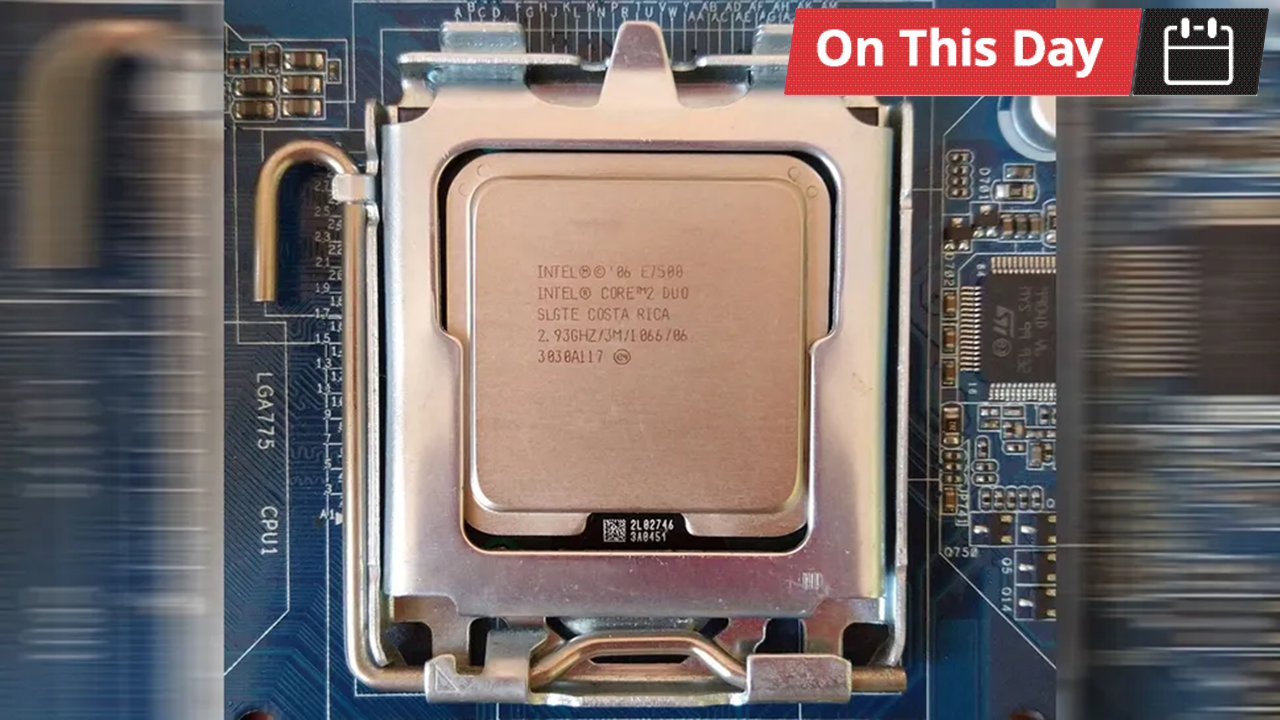
Two decades have flown by since Intel introduced the Core 2 Duo processors, codenamed Conroe, marking a pivotal moment not just for personal computers but for the entire landscape of silicon innovation. Launched on July 27, 2006, these ten processors—including the Core 2 Duo and Core 2 Extreme lines—didn’t just enter the market; they redefined what performance meant in the age of multi-core computing.
For years, the tech world was obsessed with the GHz race. Clock speed had become the dominant metric for judging a processor’s worth. However, Intel and the community were about to demonstrate that raw frequency was only one piece of the puzzle. The arrival of Conroe signaled an architectural revolution, showing that efficiency and smart design could easily trump brute clock speed.
The shift was dramatic. While competitors chased ever-higher Gigahertz numbers, Intel focused on internal refinement. The Core 2 Duo chips delivered a generational performance uplift, boasting up to a forty percent increase in performance and being significantly more energy efficient than previous Intel processors. This wasn’t just incremental improvement; it was a fundamental redesign.
This breakthrough came from deep architectural innovations. Conroe integrated higher transistor counts—a whopping 291 million transistors—and introduced smarter internal structures like shared Smart Cache, shorter pipelines, and improved branch predictions. These refinements, built upon Intel’s newest 65nm process technology, meant that the chips weren’t just faster; they were fundamentally smarter about how they executed instructions.
With these architectural leaps, Intel managed to retire its previous flagship architecture, Netburst, demonstrating that thoughtful engineering could displace raw power consumption. The result was a processor that offered superior real-world performance, even outperforming older flagship lines despite running at half the clock speed of their contemporaries.
The legacy of Conroe extends far beyond its initial launch. It set the stage for multi-core processing to become mainstream, forcing developers and hardware designers to optimize applications for multiple threads rather than focusing solely on a single core. This foundation was crucial for future advancements.
Furthermore, Conroe became the direct ancestor of some of the most successful CPU families that followed, most notably the Core 2 Quad processors. These quad-core chips took the next logical step in processing power by combining two Conroe dies into a single package, pushing the boundaries of multi-core design.
Ultimately, the Core 2 Duo established the groundwork for Intel’s enduring dominance in the CPU market for over a decade. It proved that true technological leadership is achieved not just through speed, but through intelligent, efficient, and forward-thinking architectural design.
Buy on Amazon
Credit