Intel Starfire Chip Puts CPU into Orbit
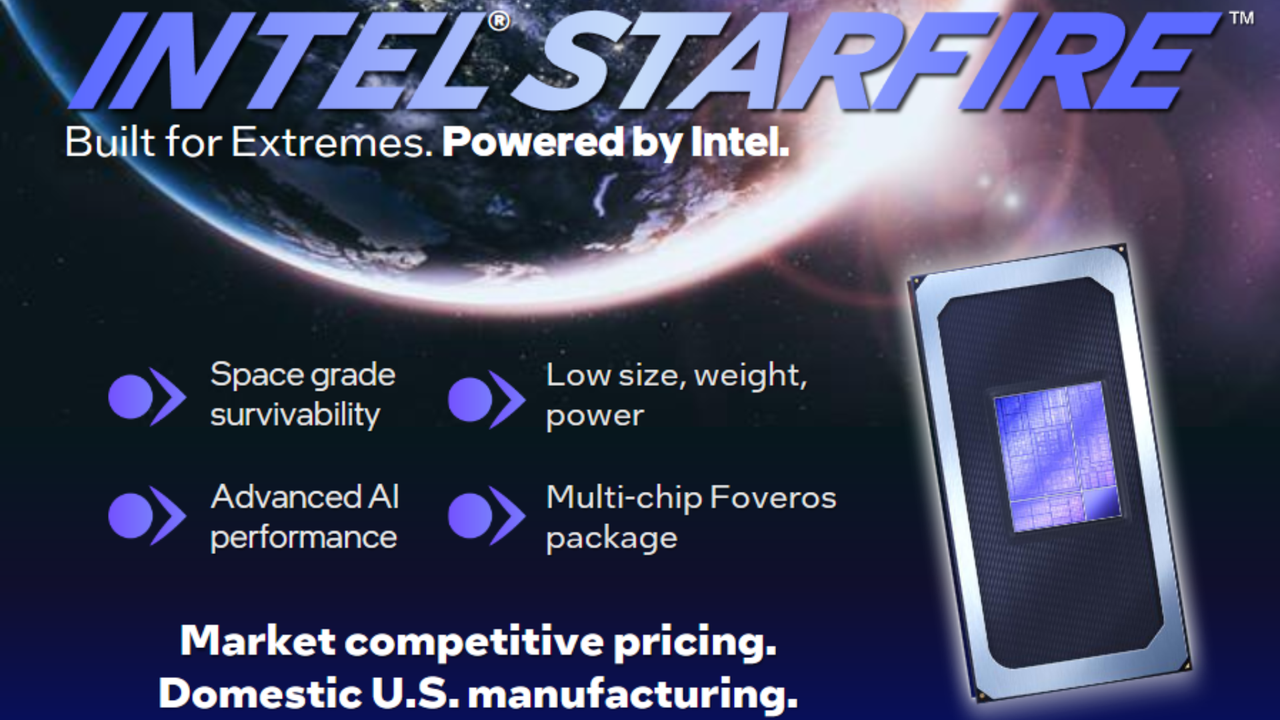
Intel has dropped a bombshell in the high-performance computing arena, unveiling Starfire, a specialized system-on-chip engineered specifically for demanding U.S. government applications in extreme environments. This isn’t just another processor; it’s a cutting-edge solution designed to redefine what is possible when pushing silicon to its absolute limits.
Starfire masterfully combines the power of two distinct process technologies: the advanced Intel 18A node for its CPU and Neural Processing Unit (NPU), paired with the mature Intel 3 graphics tile. All this powerhouse architecture is neatly packaged into a single Foveros package, creating a highly integrated solution.
The design flexibility allows Starfire to offer two distinct configurations, catering to varied operational needs: a lower-power version drawing 10 W, which delivers up to 45 TOPS of performance, and a more powerful 35 W SKU capable of reaching 75 TOPS. To ensure stability in these intense scenarios, the chip is rated to operate reliably between -55 and 125 Celsius.
Under the hood, Starfire is built for efficiency and longevity. Both SKUs share a sophisticated layout featuring four Intel 18A P-cores, four low-power efficiency cores, and a three-tile NPU integrated onto the 18A process. The graphics capability relies on a four-core Xe GPU with 64 execution units based on Intel 3.
The chip is cleverly split into performance components: the Low Power variant clocks its cores at modest speeds, while the Performance variant pushes the limits, clocked up to 3.1 GHz for P-cores and 2.0 GHz for the GPU. Regardless of the configuration, Starfire features 12 PCIe Gen4 lanes and supports either LPDDR5 or DDR5 memory, ensuring a robust data pipeline with an impressive projected lifetime of over ten years.
This innovative design tackles the formidable challenge of spaceflight computing. The market for such systems has long relied on radiation-hardened technology, like BAE Systems’ RAD750. Starfire steps into this crucial role, positioning itself perfectly for demanding on-orbit AI inference rather than traditional telemetry and control.
The true genius lies in the process choice: Intel leverages its advanced 18A node for the core compute elements while utilizing Intel 3 for graphics, mirroring the efficient division used in previous high-performance solutions like Clearwater Forest. This approach highlights Intel’s strategy of pushing leading-edge logic while managing the inherent challenges of radiation exposure.
While full radiation qualification is still underway, Intel provides comprehensive radiation data covering total ionizing dose and single-event effects as part of the characterization process. This effort is managed by Intel Government Technologies, ensuring that the powerful Starfire system meets stringent governmental standards.
Intel Foundry, a key player in domestic U.S. chip manufacturing with Trusted Foundry status, is driving this innovation. The development of 18A nodes for these demanding applications is tightly linked to major Pentagon programs, including RAMP-C and SHIP, reinforcing Intel’s commitment to providing the critical hardware needed for future space exploration and defense missions.
Credit