Modder runs RTX 4060 on Huawei Arm with modified driver
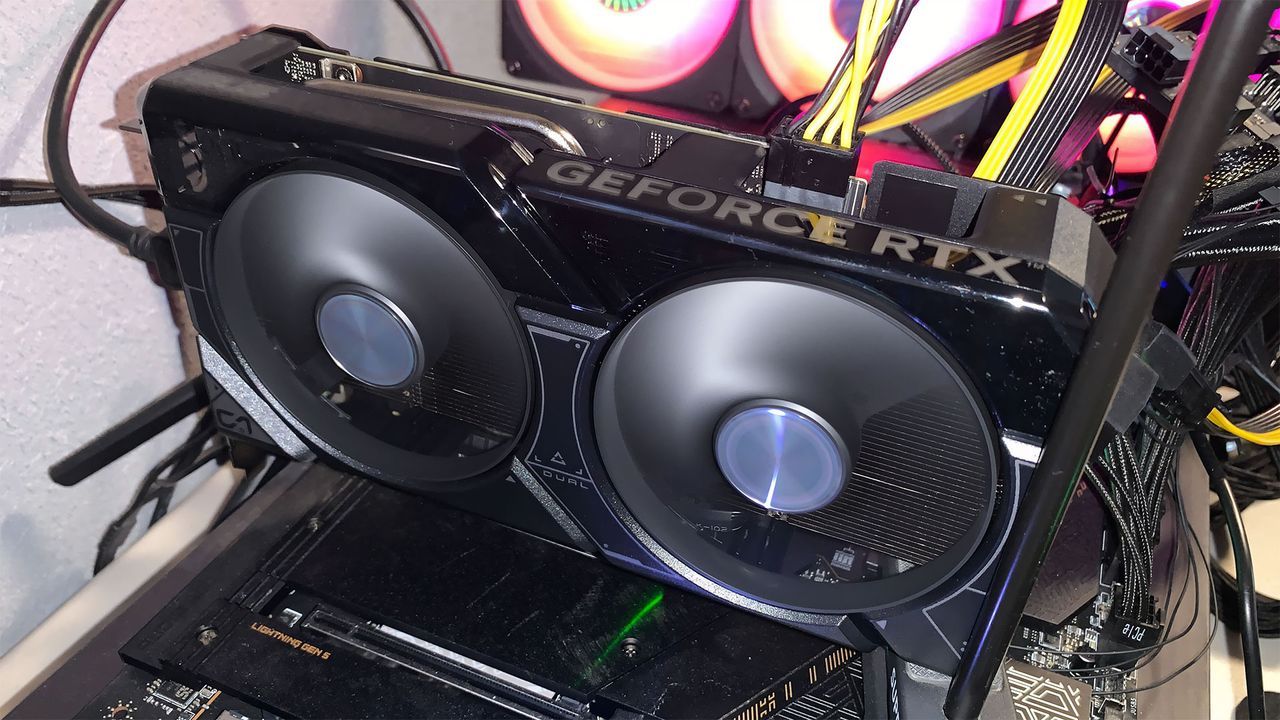
When Microsoft and Qualcomm introduced their Copilot+ PCs powered by the Snapdragon X Elite processors, the raw CPU performance was undeniably stellar. But as with many cutting-edge hardware promises, a nagging question remained: did the integrated graphics deliver true horsepower? The answer hinted at a software or hardware gap that needed bridging—specifically concerning GPU performance.
The obvious solution to this deficit would be adding a discrete graphics card. However, achieving this configuration on an Arm-based platform has proven exceptionally complex. It required pushing boundaries far beyond standard compatibility, leading to an unexpected feat of engineering by an enterprising hacker in China.
This individual successfully achieved what many believed was impossible: running an Nvidia GeForce RTX GPU on an Arm-based platform using Windows 11. This wasn’t merely a theoretical experiment; it involved complex workarounds to make disparate pieces of hardware communicate, demonstrating how close the community is to unlocking new possibilities for mobile computing architecture.
The experiment utilized a Huawei Qingyun W510 workstation, featuring the Kunpeng 920 processor instead of Snapdragon. While the Kunpeng 920 chip was a significant milestone when first introduced in 2019, its gaming performance was severely hampered by architectural limitations. Even with a powerful Nvidia GeForce RTX 4060 8GB card attached, the overall experience revealed the inherent friction between x86 emulation and Arm architecture.
Benchmark comparisons offered a stark reality. While the system could handle some graphical tests, games like Black Myth Wukong struggled to achieve playable frame rates, hitting only about 21 FPS in 1080p medium settings. This performance gap was primarily attributable to the limitations of the Kunpeng CPU, which offered only about a sixth of the single-core performance of high-end x86 counterparts. Furthermore, attempts to run certain software were blocked by incompatibility issues, such as restrictive anti-cheat measures, preventing games like Arknights: Endfield from launching altogether.
The biggest technical hurdle was not processing power, but the graphics pipeline itself. Despite having the powerful RTX 4060, getting a video signal out of the GPU proved elusive. This often stemmed from the Nvidia Arm driver being optimized for specific architectures, lacking the necessary code to properly handle HDMI and DisplayPort encoders on desktop graphics cards. To overcome this, the hacker utilized complex streaming solutions, relying on software to trick the system into displaying visuals headlessly.
This fascinating saga highlights a critical future trajectory for mobile hardware. The fact that such disparate components can be coaxed into working together under an operating system that doesn’t natively support them suggests a strong path forward. This groundwork bodes well for upcoming hardware, such as Nvidia’s RTX Spark processors, which are designed from the ground up with Arm CPUs and Blackwell GPUs in mind.
As these new architectures arrive, consumer laptops should experience capable gaming performance. If developers can ensure compatibility and manage anti-cheat systems, the power of mobile integrated graphics combined with modern Arm cores promises to deliver genuinely robust experiences for the next generation of PC gaming.
Buy on Amazon
Credit
